




Choosing among China Trimmer Suppliers is not simply a matter of comparing quotations, machine dimensions, or stated processing capacity. For factories that need to recycle nonwoven edge trims, the more important question is whether the proposed equipment can handle the actual waste generated by their production process and deliver fiber that can be used again. A machine demonstration is useful only when it reflects the buyer’s real material and production needs. A short run with an easy sample does not prove reliable production performance. Before approving an Edge Trim Opener, buyers should use the test to collect evidence for a decision.
Start with a Representative Sample, Not the Easiest Sample
The quality of a machine test depends heavily on the material supplied. A clean, thin, uniform strip may open easily, while the factory’s everyday waste may include thicker sections, variations in bonding, different widths, or occasional changes in fiber composition.
Sending only the easiest material can produce an overly optimistic result. Instead, prepare samples that reflect normal production conditions. If the waste changes between product types or production lines, identify those differences and provide separate samples where practical.
A representative sample set should include typical production trim, frequently occurring thick or firmly bonded sections, and any materially different grades that the factory regularly processes. Include normal variation in width and condition rather than selecting only uniform pieces. Do not add contamination that is not normally present.
Record the fabric type, known fiber composition, bonding method, approximate trim width, and collection method. Photos before testing help both sides identify the material being evaluated.
Define the Intended Reuse Before Testing
“Good opening” is not a complete acceptance standard. The fiber recovered from edge trim may be intended for different applications, and each application can tolerate a different output condition.
For example, fiber used as filling may not require the same degree of separation as material intended for another nonwoven process. If the recovered fiber will return to a production line, the buyer may need to pay closer attention to remaining bundles, fiber length, consistency, and the way the material feeds into the next stage.
Explain the intended reuse before the test. If the final application is undecided, describe the likely options and ask what output condition the proposed configuration can realistically deliver. This avoids approving a machine that opens the trim but does not produce fiber suitable for the buyer’s process.
Agree on the Test Conditions in Advance
A meaningful test needs a clear record of how it was carried out. When evaluating China Trimmer Suppliers, buyers should confirm that the proposed testing conditions reflect their actual production requirements. Otherwise, two demonstrations may appear comparable even though they used different materials, feeding rates, machine settings, or operating periods.
Before the trial, agree on the basic conditions:
| Test item | What buyers should confirm |
|---|---|
| Sample identity | Material type, composition, and production source |
| Sample quantity | Enough material for a representative run |
| Feeding method | Manual or connected feeding, and how material is presented |
| Machine configuration | Opening unit and any supporting collection equipment |
| Operating settings | Relevant adjustments used during the test |
| Test duration | Long enough to observe stable operation, not only startup |
| Output collection | How recovered fiber and waste are separated and recorded |
Settings will vary by material; the key is to document them so the buyer can judge whether the tested arrangement matches the quoted supply. If extra equipment or a special adjustment is used, confirm whether it is included. Otherwise, the test may not represent the actual proposed system.
Evaluate the Output Against Practical Criteria
Judge the recovered fiber against its intended use, not appearance alone.
Opening condition: Check whether the output contains long, unopened strips, compact bundles, or areas that remain bonded. A small number of irregular pieces may be manageable in some applications, but persistent bundles can create problems in downstream feeding.
Fiber damage: Look for excessive short fibers, dust, or fines. Stronger opening is not automatically better. If the machine separates the material but damages too much usable fiber, the recovery result may have limited value.
Consistency: Compare samples taken at different points during the run. A good result from the first small batch is less convincing if output quality changes as feeding continues or as the material mix varies.
Downstream behavior: Where possible, take the recovered fiber and check how it behaves in the next process. Does it feed smoothly? Does it form clumps? Does it meet the practical requirements of the intended product? This is often more meaningful than judging the fiber in isolation.
A simple record sheet can make the evaluation more objective:
| Evaluation point | Evidence to keep |
|---|---|
| Remaining unopened material | Photos and estimated amount |
| Fiber condition | Representative output samples |
| Dust and short-fiber level | Visual inspection and, where available, measured data |
| Output consistency | Samples collected at several intervals |
| Reuse suitability | Trial in the intended downstream process |
Set acceptance limits with the production and quality teams before testing; universal limits rarely suit every application.
Check Whether the Machine Can Sustain the Required Feed
A short demonstration does not establish production capacity. Observe whether feeding stays steady, whether blockages or interruptions occur, how often the operator must intervene, and whether the output collection method suits the factory.
For in-line recycling, the test should also consider the relationship between edge-trim generation and the opener’s processing rate. If the recycling equipment cannot keep pace with the production line, trim may accumulate and require additional handling. For off-line use, batch size, loading effort, storage, and collection may be more important.
Ask the supplier to separate a short-run result from a capacity estimate based on the buyer’s material, operating conditions, and working schedule.
Ask for Evidence That Can Be Compared
Request a test record identifying the sample, machine configuration, settings, duration, feeding conditions, and output observations. Photos or video document the run; retained input and output samples allow the buyer’s team to review the result. A general statement that the machine “works well” is not enough.
If several suppliers are being considered, use the same sample categories and evaluation criteria wherever possible. This means each supplier should be assessed against the same production objective, even if the machines require different operating settings.
Clarify how performance may change if actual production waste differs from the test sample, and ask the quotation to state its material assumptions and limitations.
From Machine Test to a Realistic Equipment Decision
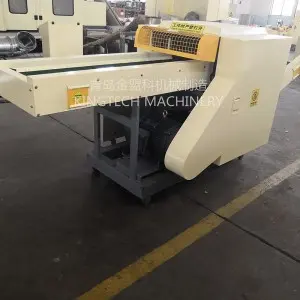
The trial should establish whether the machine is suitable, what configuration is required, and what conditions must be confirmed before ordering. An Edge Trim Opener can be arranged for in-line or off-line nonwoven trim recycling, but the setup depends on material structure, waste generation, output requirements, and fiber collection. If further processing is needed, discuss whether opening, carding, conveying, or dust collection should be included.
Kingtech Machinery offers Edge Trim Opener solutions for nonwoven edge waste, including different working-width options and configurations for various material types. When discussing a project, buyers can provide sample details, photos, production conditions, and the intended use of recovered fiber so that the proposed setup can be assessed against the actual application. See the Kingtech Edge Trim Opener for an overview of the equipment and its applications.
Conclusion
A machine test should be treated as a decision-making tool, not a product demonstration. The most useful evaluation begins with representative waste, defines the intended reuse of recovered fiber, records the test conditions, and checks both output quality and operating stability.
When comparing China Trimmer Suppliers, look for clear explanations and verifiable results, not just a successful short run or attractive capacity figure. A planned trial shows whether the Edge Trim Opener fits the material and production objective.
FAQ
1. How much material should be sent for an Edge Trim Opener test?
There is no single quantity for every project. The sample should be sufficient to represent normal material variation and allow the machine to run beyond a brief demonstration. Confirm the required quantity with the supplier based on the material and test plan.
2. Should buyers test every type of nonwoven edge trim separately?
If different materials have noticeably different fiber compositions, bonding structures, thicknesses, or behavior, separate tests are advisable. A result from one material should not automatically be applied to another.
3. Is recovered fiber appearance enough to approve a machine?
No. Appearance is only one part of the evaluation. Buyers should also consider fiber damage, output consistency, feeding behavior, and whether the fiber can be used in the intended downstream process.
4. What should be included in the final test report?
At minimum, record the sample description, machine configuration, operating conditions, test duration, output observations, photos, and any limitations identified during the trial. Retaining input and output samples can make later review more reliable.
Post time: Nov-19-2026