




When textile fibers are compressed into dense bales, the recycling process does not start from a neutral material condition. The way fibers are packed can directly affect how easily they are released, fed, opened, and transferred to the next stage. This is why a Fiber Bale Opener is not simply used to “break open” a bale. Its more important role is to turn highly compressed fiber into a more stable material condition for subsequent processing.
For recycling lines handling cotton waste, recycled fibers, textile scraps, or other baled materials, differences in bale density can lead to uneven feeding, sudden fiber lumps, unstable machine loading, and inconsistent opening results. Understanding this relationship helps operators diagnose problems that may otherwise be blamed on the wrong machine.
Fiber Bale Opener: Why Does Bale Density Become a Production Issue?
Baling reduces the volume of loose fibers, making storage and transportation easier. However, compression also changes the physical condition of the material before it enters the recycling line.
A tightly compressed bale may contain areas with different levels of density. Some sections can be released relatively easily, while others may remain compact after long periods of compression. If these differences are not handled properly during bale opening, the material entering the next machine can fluctuate considerably.
For this reason, the purpose of a Fiber Bale Opener is not simply to apply as much mechanical force as possible. The more useful objective is to gradually release the compressed fiber and create a more consistent feed condition for the next processing stage.
Highly Compressed Fiber Does Not Feed Like Loose Fiber
Loose fiber can generally be distributed more easily because individual fibers or small tufts have already separated from one another. A bale is completely different. Compression forces many fibers into a compact structure, and the material may leave the bale as large blocks or dense tufts if the opening process is not controlled.
When large tufts enter an opener, carder, or cleaner, the machine may receive much more material in a short period than it would under a stable feed condition. This can cause fluctuations in machine loading and make downstream processing less consistent.
The problem becomes more obvious when different bales have different compression levels. Even if the nominal material is the same, one bale may release easily while another requires considerably more opening effort.
What Happens When Bale Opening Is Uneven?
Uneven bale opening usually does not remain a problem at the bale opener itself. It can continue into the rest of the recycling line.
For example, if the output contains too many large compact tufts, the next opening stage has to compensate for material that should have been partially loosened earlier. If feeding suddenly becomes heavy, the downstream machine may experience a temporary increase in loading. If too much fine material is generated while trying to break dense areas aggressively, the balance between fiber recovery and dust generation can also change.
This is why operators should look beyond the bale opener when evaluating its performance. A seemingly acceptable opening result may still create unstable conditions further down the line.
Bale Density Changes the Load on the Next Machine
The relationship between bale density and downstream equipment can be understood through feed consistency.
| Bale condition | Possible opening behavior | Potential downstream effect |
|---|---|---|
| Relatively loose bale | Material separates more easily | More stable feeding |
| Medium-density bale | Moderate opening resistance | Usually manageable with controlled opening |
| Highly compressed bale | Larger compact tufts may remain | Higher fluctuation in downstream feeding |
| Unevenly compressed bale | Different areas release at different rates | Irregular machine loading |
| Long-term compressed material | Strongly bonded fiber blocks may form | More intensive opening may be required |
This does not mean that every dense bale is unsuitable for recycling. Instead, the opening process needs to account for the actual material condition rather than assuming that every bale will behave in the same way.
Not Every Bale Needs the Same Opening Intensity
One common mistake in textile recycling is treating stronger opening as an automatic solution.
If the material is difficult to separate, increasing mechanical intensity may appear to solve the problem. But excessive mechanical action can also change the fiber condition, particularly when the material already contains relatively fragile or reusable fibers.
A better approach is to consider three factors together: bale density, fiber condition, and the requirements of the next process.
For example, material going directly into another opening stage may not need to be completely separated at the bale-opening stage. The objective can instead be to remove the compact bale structure and create manageable fiber tufts. The next machine can then perform further opening under controlled conditions.
This staged approach is often more practical than asking one machine to perform all of the opening work.
How to Judge a Good Bale-Opening Result
A good result should not be judged only by how “loose” the material looks.
Several practical indicators are more useful:
1. Consistent material release
The output should not alternate between very small tufts and large compact blocks.
2. Limited residual compression
Large dense pieces remaining after opening may indicate that the material has not been sufficiently released.
3. Stable downstream feeding
If the next machine receives material relatively evenly, the bale-opening stage is doing its job.
4. No unnecessary over-processing
The objective is not to aggressively destroy every fiber cluster at the first stage. Excessive opening may create unnecessary short fibers and dust.
5. Similar behavior between batches
If one bale produces a stable feed while another produces severe fluctuations, bale condition should be investigated before immediately changing the downstream equipment.
A Simple Way to Diagnose Bale-Opening Problems
When production becomes unstable, it is useful to work backward from the symptom.
If the downstream machine suddenly receives large fiber lumps, check the bale-opening result first. If the material is already well separated but feeding remains uneven, the problem may be related to the conveying or feeding stage. If the problem only occurs with certain batches, compare bale density, moisture, fiber type, storage time, and compression conditions before changing machine settings.
This diagnostic approach is important because not every feeding problem is caused by the machine receiving the material. Sometimes the instability has already been introduced at the bale-opening stage.
Where a Fiber Bale Opener Fits in a Recycling Line
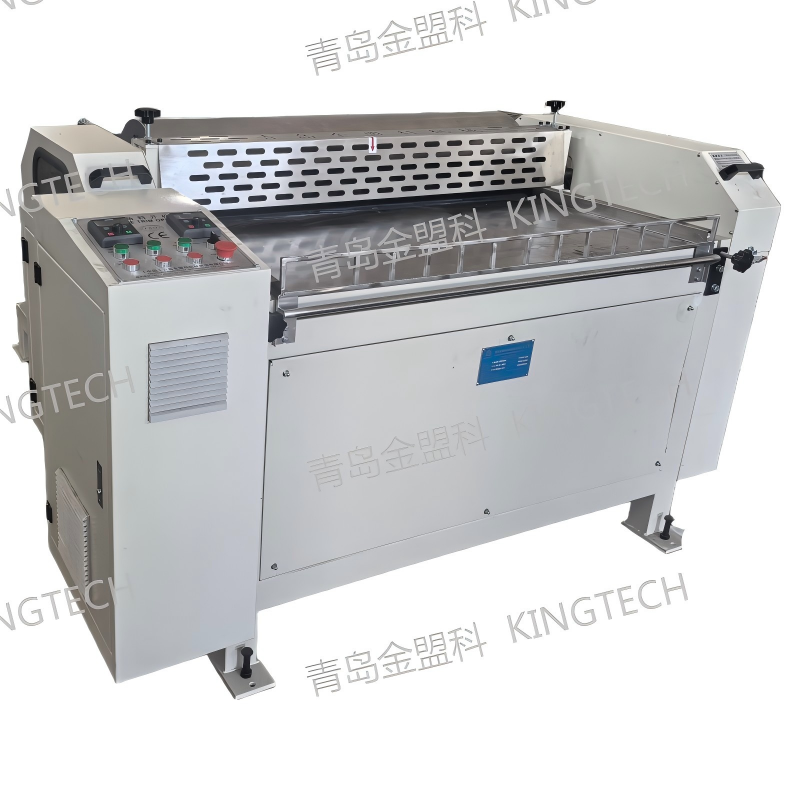
A Fiber Bale Opener is typically positioned near the beginning of a recycling process, where compressed raw material needs to be released before further opening, cleaning, carding, or other processing.
Kingtech Machinery lists a dedicated Fiber Bale Opener as part of its textile recycling equipment range, alongside systems such as its Customizable Combination Openers System, Edge Trim Opener, Mini Recycling Lab Type Test Line, Cotton Waste Recycling Machine, and FT Series Cotton Conveying Blower.
The appropriate configuration should ultimately be determined by the actual fiber material, bale condition, required throughput, and downstream process. For this reason, evaluating the raw material before selecting the complete recycling setup is often more useful than choosing equipment based only on nominal capacity.
Conclusion
Bale density is more than a storage parameter. It changes how compressed fibers are released and can influence feeding stability throughout the recycling line. A Fiber Bale Opener should therefore be evaluated by what happens after the bale is opened: whether the material is released consistently, whether large compact tufts are reduced, and whether the next machine receives a more manageable feed.
For textile recycling operations, this shift in perspective can make equipment selection and troubleshooting much more practical. Instead of simply asking whether a machine can open a bale, the more useful question is whether it can create the material condition required by the next stage.
FAQ
What materials can a Fiber Bale Opener process?
The suitable material depends on the specific machine configuration and recycling line. Typical applications involve compressed textile or fiber materials that need to be loosened before subsequent processing.
Does higher bale density always require stronger opening?
Not necessarily. Higher density can increase opening resistance, but stronger mechanical action is not automatically the best solution. The fiber condition and downstream requirements should also be considered.
Why does one bale sometimes feed differently from another?
Bales can differ in compression, moisture, fiber composition, storage conditions, and internal density distribution. These differences can affect how quickly the material separates during opening.
Should bale opening completely separate the fibers?
Not always. In a multi-stage recycling line, the bale opener may primarily need to release the compressed bale structure and create a stable feed for the next opening or cleaning stage.
Post time: Sep-24-2026