




A Flax Opening Machine needs to handle more than simply separating compressed fiber. Flax has a different physical structure from many commonly recycled textile fibers, and its fiber bundles, length, stiffness, and raw-material condition can all affect how consistently the material opens.
For recycling and fiber preparation processes, understanding these characteristics is important because opening too aggressively can create unnecessary fiber damage, while insufficient opening can leave compact fiber bundles that affect the next process. The real objective is therefore not simply to make flax look loose, but to create a stable and manageable fiber condition for subsequent cleaning, carding, blending, or other processing.
Flax Opening Machine: Why Is Flax More Difficult to Open Consistently?
Flax fibers are naturally long and relatively strong, and they are often present in bundles rather than as completely separated individual fibers. Depending on the source material, the raw material may also contain different degrees of entanglement, compression, impurities, or processing residue. This means that two batches of flax can behave differently even when they are classified as the same material. One batch may separate relatively easily, while another may contain more compact bundles that resist opening. A Flax Opening Machine therefore needs to work with the actual condition of the incoming material rather than relying on a single fixed assumption about how the fiber should behave.
Fiber Bundles Are More Important Than Simply Making the Material Loose
One of the most important points in flax processing is the difference between surface looseness and actual fiber separation. A material may appear much more open after mechanical treatment while still containing tightly connected fiber bundles. If these bundles enter a carding or downstream opening process, they may create uneven feeding or require additional mechanical action. At the same time, trying to eliminate every visible bundle at the first opening stage is not necessarily the right approach. Excessive mechanical action can increase short fibers and dust and may reduce the usable fiber fraction. The better target is usually controlled opening: reducing large compact structures while preserving as much useful fiber length and integrity as possible.
Raw Material Condition Can Change the Opening Result
The performance of a flax opening process is strongly affected by the condition of the incoming material. Differences in moisture, storage time, compression, fiber length, and the amount of attached impurities can change how easily the material separates. Material that has been stored under different conditions may also show different levels of compactness or entanglement. This is why adjusting the machine based only on the name of the raw material can be misleading. “Flax” describes the fiber type, but it does not fully describe the condition of the material entering the machine. Before changing mechanical intensity, it is useful to determine whether the problem comes from the fiber itself or from differences in the incoming material.
What Happens When Flax Is Over-Opened?
More opening is not always better. If the machine applies excessive mechanical force to relatively long or already loosened fibers, the material may experience unnecessary fiber breakage. The result can be a higher proportion of short fibers and fine dust, even though the material visually appears more thoroughly opened. This can become particularly important when the recovered fiber needs to retain sufficient length for later carding, blending, web formation, or other applications. The opening stage should therefore be considered as part of the complete process rather than evaluated independently. The best setting is the one that produces a suitable feed for the next stage, not necessarily the setting that creates the most aggressive opening at the machine outlet.
What Happens When Flax Is Under-Opened?
The opposite problem occurs when the mechanical action is insufficient for the actual raw material condition. Large fiber bundles may remain after opening, and these bundles can enter the next machine together, causing irregular feeding, uneven fiber distribution, or additional load on downstream equipment. Under-opening can also make the following carding or cleaning stage less predictable because the downstream machine has to compensate for material that was not sufficiently prepared at the beginning. A useful way to judge the opening stage is therefore to look at the size and consistency of the fiber bundles leaving the machine, rather than simply asking whether the material has become visibly loose.
How Should a Flax Opening Process Be Evaluated?
Several indicators can be considered together when evaluating the opening result. Large compact bundles remaining in the output may indicate that the opening intensity is insufficient for the material condition, while an unusually high amount of short fiber or dust may suggest excessive mechanical action. Significant differences between batches can point to variations in raw-material condition, while unstable downstream feeding may indicate problems with opening consistency or the feeding and conveying system that follows. These observations should not be interpreted separately because a single symptom can have several possible causes. For example, dust may come from excessive opening, but it can also be influenced by impurities already present in the raw material.
| Observation | Possible meaning |
|---|---|
| Large compact bundles remain | Opening intensity may be insufficient |
| Fiber appears very short and dusty | Mechanical action may be too aggressive |
| Output changes significantly between batches | Raw-material condition may be inconsistent |
| Downstream feeding fluctuates | Opening or feeding consistency needs investigation |
| Fiber bundles are smaller and more uniform | Material is better prepared for the next stage |
When Should Flax Opening Be Combined With Further Processing?
Not every flax recycling process requires the same number of stages. If the incoming material contains relatively loose fiber with limited impurities, a simpler preparation process may be sufficient. More compact or heterogeneous material may require additional opening, cleaning, or carding after the initial stage. This is why the Flax Opening Machine should be considered according to the complete material route. The opening stage prepares the fiber, while subsequent equipment determines how far that preparation needs to go. For applications requiring finer and more uniform fiber, combining opening with carding or cleaning can provide greater process control than attempting to achieve the entire result through one aggressive opening step.
How Can Operators Reduce Variations Between Batches?
Batch consistency starts before the material enters the machine. If possible, incoming flax should be classified according to relevant characteristics such as fiber condition, compression, contamination level, and approximate fiber length. Keeping significantly different materials from being processed as though they were identical can make machine adjustment more predictable. Operators should also compare the output from different batches. If one batch produces noticeably larger bundles or more dust than another, recording these differences can help distinguish a machine-setting issue from a raw-material issue. This approach is particularly useful when the recycling line handles several types or sources of flax material because operators can establish processing conditions for clearly defined material groups instead of continuously changing machine settings.
Choosing the Right Flax Opening Approach
There is no single opening intensity that is ideal for every flax application. The appropriate approach depends on the condition of the raw material and what the fiber needs to become after opening. Important considerations include initial fiber bundle size and compactness, fiber length and strength, moisture and storage condition, impurity level, required output consistency, whether cleaning or carding follows, and the fiber quality required by the final application. The main objective is to achieve a balance between fiber separation and fiber preservation, rather than simply pursuing the highest possible opening intensity.
Kingtech Flax Opening Machine
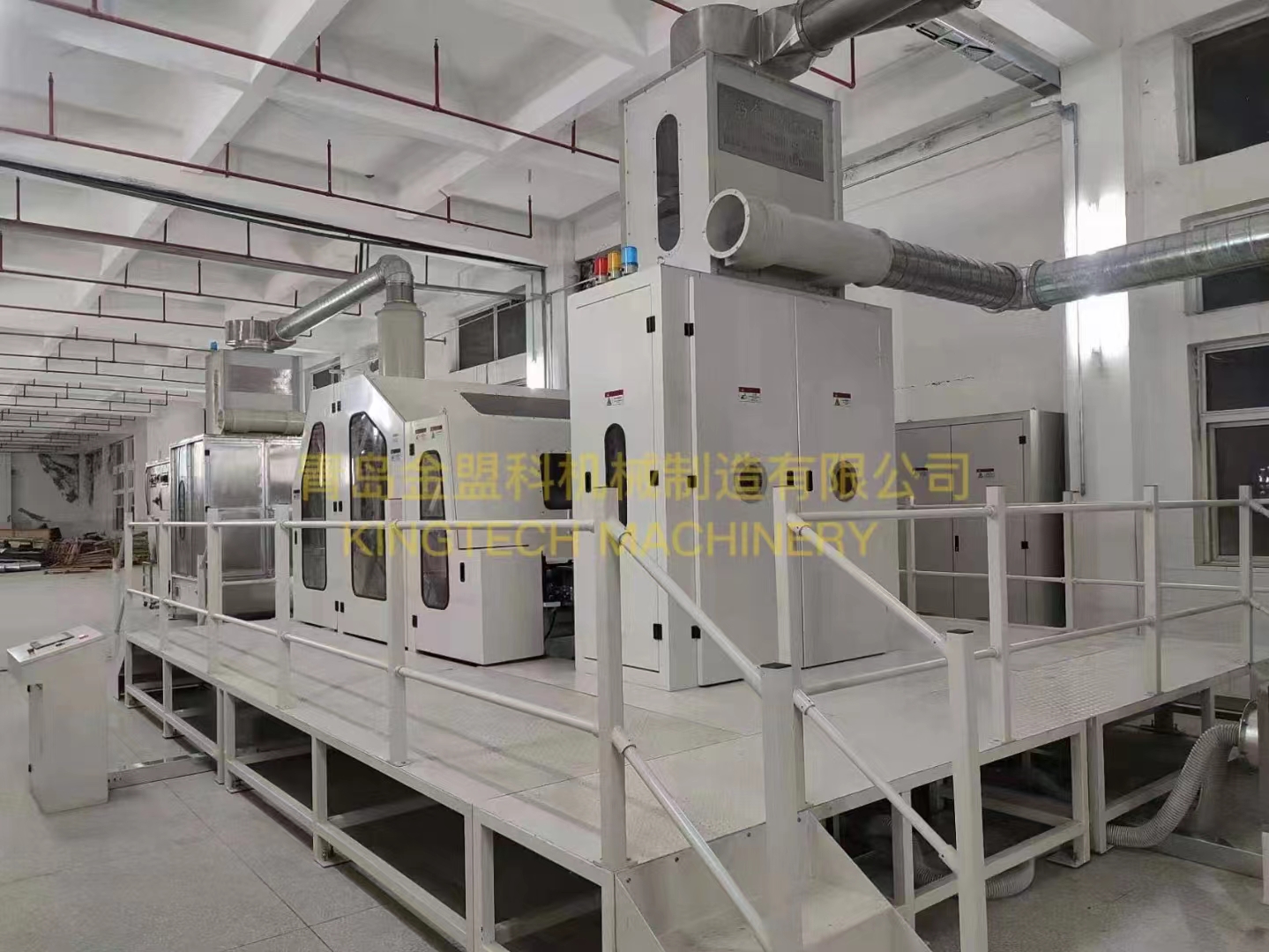
Kingtech Machinery offers a dedicated Flax Opening Machine for flax fiber preparation as part of its broader textile fiber processing and recycling equipment range. The company’s equipment portfolio covers opening, cleaning, carding, cutting, conveying, and other related processes, allowing the processing route to be considered according to the characteristics of the material and the required output. For an actual production project, the equipment configuration should be evaluated according to the raw material condition, processing capacity, and downstream requirements. Testing representative material samples before finalizing the setup can also help determine how much opening and subsequent processing are actually required.
Conclusion
The difficulty of processing flax is not simply a question of whether the material can be opened. The more important issue is whether the fibers can be separated consistently without unnecessary damage. A Flax Opening Machine needs to balance opening intensity with fiber preservation while adapting to variations in raw-material condition. Large remaining bundles may indicate insufficient opening, while excessive short fibers and dust may indicate that the material is being processed too aggressively. For this reason, a successful flax preparation process should be evaluated by the condition of the fiber after opening and by how consistently that material performs in the next stage. This process-focused approach can help improve stability while preserving more of the useful fiber.
FAQ
Why is flax difficult to open consistently?
Flax can contain long, strong fibers and compact fiber bundles, while differences in moisture, compression, storage, and raw-material condition can also change its opening behavior.
Can a Flax Opening Machine completely separate every fiber?
It does not always need to. In a multi-stage process, the opening machine may prepare the material for subsequent cleaning or carding rather than performing complete fiber separation by itself.
Does stronger opening always produce better flax fiber?
No. Excessive mechanical action can increase short fibers and dust. The appropriate intensity depends on the condition of the raw material and the requirements of the following process.
What should be checked when flax opening results vary between batches?
Compare raw-material condition, fiber length, compression, moisture, impurities, and other relevant characteristics before changing machine settings. This helps determine whether the variation comes from the material or the processing conditions.
Post time: Sep-29-2026