




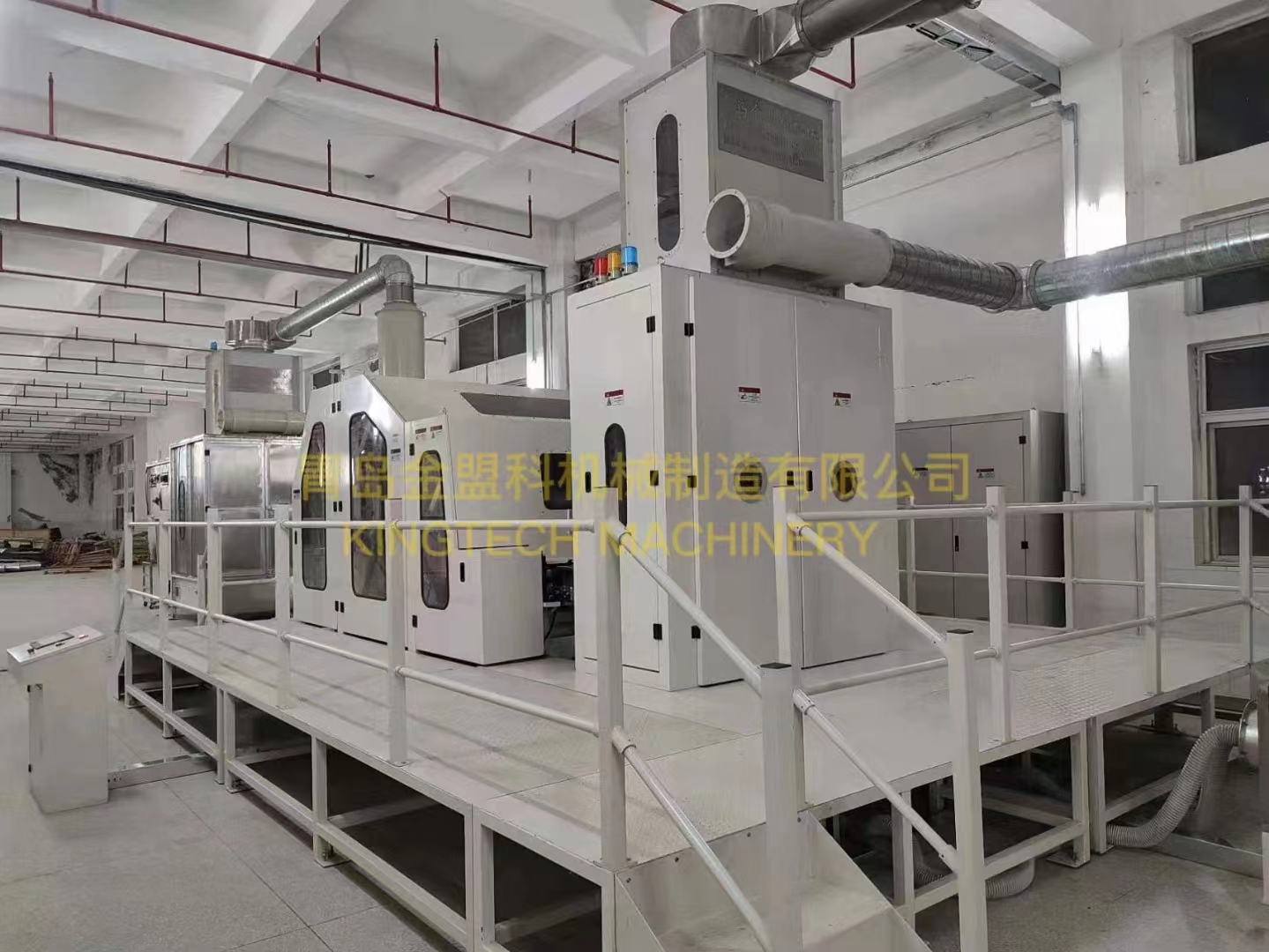
Contaminated and mixed cotton waste is difficult to recycle because of its complex composition and varied impurities, which can degrade yarn quality if reused directly. A cotton fiber opening machine separates, opens, and cleans this waste to produce reusable fiber. Understanding how it handles different waste types helps recyclers judge whether the process fits their needs.
Challenges of Contaminated and Mixed Cotton Waste
Cotton waste comes from many sources, including spinning mill waste such as roving ends and yarn breaks, weaving and knitting edge trim, garment cutting scraps, and post-consumer textiles. Each source has different contamination levels and fiber properties. Spinning waste contains high dust but retains good fiber length, while weaving waste may carry sizing agents, oils, and dyes. Cutting scraps often include buttons, zippers, and sewing threads, and post-consumer waste can be mixed with synthetics, metal, and plastic. Hard waste has tight structure and high twist, soft waste is looser but contains more impurities, and mixed-color waste is difficult to separate. Metal pieces can damage cylinder wire and create sparks, plastic tends to wrap around cylinders, oil makes fibers stick together, and synthetic fibers mixed in make it hard to set opening parameters that suit all components. Mixed waste also faces inconsistent color, length, maturity, and twist. Cotton-polyester blends remain mixed fibers after opening and cannot be separated back into pure cotton. For these reasons, sorting and metal detection before opening are essential, and the opening machine alone cannot solve every contamination problem.
Processing Steps of a Cotton Fiber Opening Machine
For contaminated and mixed cotton waste, the opening machine usually works with sorting, pre-shredding, metal detection, air separation, and dust collection to form a processing line. The main steps are:
- Sorting: Remove large non-cotton components, obvious contaminants, and different colored waste to reduce the load on downstream equipment.
- Pre-shredding and cutting: Reduce large fabric pieces, yarn waste, and hard waste to a size suitable for opening, avoiding wrapping and blockages.
- Metal detection: Remove ferrous metal before feeding to prevent damage to the cylinder and sparks.
- Opening: Rotating cylinders and wire clothing gradually separate fiber clumps while allowing some dust and impurities to fall out.
- Air separation: Use airflow to separate fiber from heavier impurities, plastic fragments, and metal particles.
- Dust collection: Remove fine dust and some short fibers through screens and dust collection systems to improve recovered fiber cleanliness.
- Output: Loose, reusable fiber is delivered to the next stage of blending or spinning.
Each step must match the material characteristics. When processing high-dust hard waste, pre-shredding and dust collection loads increase significantly. When processing mixed-color soft waste, sorting and blending become more critical.
Dealing with Different Contaminants and Mixed Waste
Different contaminants affect opening performance and safety in different ways, and mixed waste adds further complexity. Metal impurities such as screws, wires, and fragments must be removed by metal detectors and magnetic separators at the front end. Plastic and rubber from labels, packaging film, and elastomers are difficult to open and tend to wrap around cylinders, so manual or air separation is needed. High dust content increases the burden on dust collection and raises fire and explosion risks, requiring larger air volume and more frequent cleaning. Oil and chemical residues cause fibers to stick together, reducing opening efficiency and potentially corroding equipment, so pre-treatment or downgrading is often necessary. When synthetic fibers, wool, or hemp are mixed in, a single set of opening parameters cannot suit all components, affecting fiber consistency. Moist or mildewed cotton is difficult to open and should be dried or aired before processing. Mixed cotton waste also faces inconsistent fiber properties and colors. Different colors cannot be separated after opening and are usually limited to dark yarns or nonwovens. Length differences mean long and short fibers require different opening intensities. Maturity and twist differences between batches cause unstable quality, and blended fabrics such as cotton-polyester yield mixed fibers that cannot be separated. These challenges mean mixed cotton waste opening must balance multiple quality indicators, typically through multi-stage opening and blending ratios, but the machine cannot completely separate blended fibers or remove color.
Quality and Uses of Recovered Fiber
The use of recovered fiber depends on its quality after opening. Fiber from contaminated and mixed cotton waste usually has high short fiber content, high impurity content, and inconsistent color, so it is mainly used in products with lower raw material requirements:
- Coarse yarn: Lower requirements for fiber length, can accept higher short fiber and impurity content, and is the main destination for this type of recovered fiber.
- Open-end spinning: Suits shorter fibers and tolerates some impurities, allowing a higher ratio of recovered fiber.
- Nonwovens: Such as filling cotton, wiping cloth, and geotextiles, with loose requirements for color and length and large consumption of recovered fiber.
- Filling materials: Such as sofa stuffing and pet bedding, with the lowest cleanliness requirements but needing dust and odor control.
- High-count ring spinning: Strict requirements for fiber length, impurity content, and color consistency, which recovered fiber from contaminated mixed waste usually cannot meet.
Quality grading is based mainly on fiber length, short fiber content, impurity content, color consistency, and strength. Graded fiber is priced accordingly to avoid using high-quality fiber for low-value applications.
Limitations and Practical Considerations
A cotton fiber opening machine can recover part of the fiber and reduce waste volume, but it has clear limitations. It cannot separate blended fibers, and cotton-polyester blends remain mixed after opening. It cannot remove color, so mixed-color waste is limited to dark or non-appearance products. Multiple opening passes increase short fiber content and restrict high-count yarn applications. Oil and chemical residues may remain on the fiber and affect downstream processing. High dust and metal impurities increase fire and explosion risks, requiring dust collection and fire protection measures. Opening recovery works best as a middle stage in mechanical recycling, handling relatively single or known-composition waste. For highly mixed and heavily contaminated waste, opening recovery is not the optimal solution and needs to be combined with other recycling routes.
In industry practice, handling such mixed waste often requires support from a complete recycling system. Some suppliers specializing in fabric recycling solutions provide integrated systems from edge trim opening to fiber recovery, helping enterprises of different scales convert waste fabric into reusable fiber. This conversion reduces material waste and aligns with the textile industry’s growing focus on environmental responsibility and resource circulation. For recyclers facing mixed waste challenges, working with a supplier experienced in system integration can more effectively address sorting, opening, and cleaning needs, making fiber quality and output more stable.
Conclusion
Cotton fiber opening machines process contaminated and mixed cotton waste by working with sorting, pre-shredding, metal detection, air separation, and dust collection. Different contaminants such as metal, plastic, oil, and dust require different handling priorities. Mixed waste faces challenges of inconsistent color, length, and composition, and the recovered fiber remains blended, mainly used in coarse yarn, open-end spinning, nonwovens, and filling materials. Opening recovery has limitations, including the inability to separate blends, irreversible color mixing, and increased short fiber content. It is best suited as a middle stage in mechanical recycling and should be evaluated from a system perspective.
FAQ
1. Can a cotton fiber opening machine handle cotton waste containing metal impurities?
Yes, but metal detectors and magnetic separators must be installed at the feed end. Metal entering the machine can damage cylinder wire and generate sparks that cause fire. For high metal risk waste, spark detection and automatic fire suppression should also be included. The opening machine itself does not separate metal, and metal removal depends on pre-treatment.
2. What products can mixed-color cotton waste be used for after opening?
Mixed-color cotton waste cannot be restored to white or light fiber after opening, so it is mainly used in dark yarns, coarse yarn, open-end spinning, nonwovens, filling materials, and industrial textiles. Light-colored recycled cotton requires color sorting at the front end, and the cost of manual or machine sorting is high, with economic viability depending on product value and scale.
3. What is the typical recovery rate for contaminated cotton waste opening?
Recovery rate varies widely with contamination level, fiber length, and process configuration. Clean soft waste achieves a relatively high recovery rate, while contaminated mixed hard waste drops significantly, with some materials losing over thirty percent. Short fiber, dust, and impurities removed are the main sources of loss. Actual recovery rate should be determined by batch testing rather than fixed values.
4. What are the main operational risks when processing this type of waste?
Main risks include fire and explosion, equipment wear, and unstable recovered fiber quality. High dust and metal impurities increase spark risk, plastic and long fibers wrap around cylinders easily, and batch variation causes frequent process adjustments. Operations should strictly follow cleaning schedules, metal detection, spark monitoring, and dust collection maintenance, while establishing incoming material inspection and blending ratio procedures to stabilize final product quality.
Post time: Oct-15-2026