




Polyester fabric is widely used in clothing, upholstery, home textiles, and industrial products. Cutting and manufacturing processes generate scraps of different lengths, thicknesses, and shapes. Although these materials can be processed through mechanical shredding, their flexible structure creates a common challenge: fabric strips may wrap around rotating shafts or cutter assemblies instead of being cut into smaller pieces.
For a Polyester Fabric Shredder, material winding can interrupt feeding, reduce processing efficiency, and increase maintenance requirements. Understanding the relationship between fabric characteristics, cutting performance, and material flow helps operators identify the cause and improve shredding consistency.
Why Polyester Fabric Is Difficult to Shred Consistently
Unlike rigid materials, polyester fabric bends, folds, and deforms when subjected to mechanical force. When a fabric scrap enters the cutting chamber, it may move with the rotating components before the blades can sever it. If the cutting mechanism cannot grip the material effectively, the scrap may continue moving around the shaft or cutter assembly.
Fabric construction also influences its behavior. Thin woven polyester, knitted fabric, thick upholstery material, and multilayer textile waste respond differently to cutting forces. Knitted fabrics may deform more readily, while long strips can remain intact even after repeated contact with the cutters. Seams, elastic bands, labels, and loose threads can further complicate processing.
Polyester’s durability does not necessarily make it easy to shred. If the cutting edges cannot separate the fibers and fabric structure efficiently, the material may slide or fold instead of breaking apart. A Polyester Fabric Shredder must therefore match the physical characteristics of the incoming waste rather than relying solely on motor power or nominal processing capacity.
Common Causes of Fabric Winding
Fabric winding usually results from a combination of material properties and operating conditions. Identifying the first point of accumulation is more useful than repeatedly clearing the same obstruction.
- Long fabric strips: Narrow, elongated scraps can enter the cutting chamber lengthwise. If they are not severed quickly, they may follow the direction of rotation and wrap around shafts or cutter hubs.
- Ineffective cutting action: Worn blades, unsuitable cutter geometry, or an inappropriate cutter arrangement may prevent the machine from gripping and cutting fabric efficiently. The material can then be dragged through the chamber rather than separated.
- Uneven feeding: Large bundles of loose fabric may enter the machine irregularly. Some scraps are cut immediately, while others become trapped between incoming material and rotating components.
- Mixed textile waste: Different fabric structures, seams, elastic components, and attached threads can change how scraps move through the cutting area, increasing the likelihood of inconsistent cutting.
- Material accumulation: When shredded fragments cannot leave the cutting chamber efficiently, they may collect near moving parts. Continued feeding can increase congestion and make winding more frequent.
These causes require different responses. Reducing the feed rate may help when the cutting chamber is overloaded, but it will not necessarily solve winding caused by unsuitable cutter geometry. Effective troubleshooting starts with identifying whether the problem originates in the material, cutting mechanism, feeding process, or discharge system.
How Shredder Design Affects Fabric Processing
The cutting assembly determines how fabric is captured, restrained, and separated. Equipment designed mainly for rigid waste may not handle flexible textiles equally well. The important consideration is not simply whether the blades can cut polyester, but whether the entire cutting arrangement can manage material that bends and moves during contact.
Cutter spacing, blade profiles, shaft arrangement, and the interaction between moving and stationary cutting elements all influence performance. Effective cutting separates fabric into smaller pieces before it can follow the rotating components. If the material repeatedly passes through the cutting area without being severed, winding becomes more likely. Internal clearances also deserve attention. Narrow gaps can collect threads and thin strips, while unsuitable clearances may affect material movement. However, increasing the gap is not a universal solution because the appropriate configuration depends on the machine design, fabric thickness, and required output size.
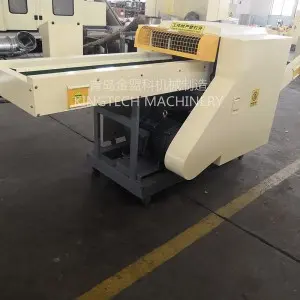
Discharge performance is equally important. Even successfully shredded material must leave the cutting chamber. If the outlet is restricted or fragments accumulate faster than they can be discharged, the resulting congestion can interfere with continued processing. For this reason, evaluating a Polyester Fabric Shredder requires consideration of feeding, cutting, and discharge as one connected process.
Operating Practices That Reduce Winding
Machine configuration is only part of the solution. Changes in scrap dimensions, feed volume, or textile composition can affect processing stability even when the equipment is suitable for the material.
Long strips and tightly bundled scraps may need preliminary separation or size reduction. More consistent incoming material helps the cutting mechanism engage effectively and reduces the chance that oversized pieces will remain around rotating components. Feed rate should also remain within the machine’s intended capacity. Introducing too much material at once can overwhelm the cutting assembly and cause loose fabric to accumulate. Increasing feed speed does not necessarily increase actual output if the machine cannot cut and discharge material at the same rate.
Operators can improve consistency through several practical measures:
- Prepare material appropriately: Separate unusually long strips, oversized bundles, and obvious foreign objects where practical. Record changes in fabric thickness, construction, and attached components.
- Maintain stable feeding: Avoid sudden surges of loose fabric, particularly when processing lightweight or highly flexible scraps. Adjust the feed to the machine’s operating requirements.
- Inspect cutting and discharge areas: Check for recurring accumulation points, damaged cutting edges, and restricted outlets. Follow the manufacturer’s procedures before inspecting or servicing internal components.
These measures help distinguish operational problems from equipment limitations. If winding continues despite consistent feeding and appropriate material preparation, the cutting arrangement or machine suitability may require further assessment.
Troubleshooting Persistent Fabric Winding
The location and timing of winding can provide useful clues. If long strips repeatedly collect around a shaft or cutter hub, the machine may not be severing them before they follow the rotating components. Accumulation between cutters may indicate a problem involving blade condition, cutter arrangement, or the collection of threads in narrow gaps.
If congestion develops throughout the cutting chamber, inspect the relationship between feed volume and discharge capacity. When a problem begins immediately after introducing a new textile waste stream, compare the new material’s length, thickness, construction, and composition with previously processed scraps. Avoid making several adjustments at once. Changing one operating condition at a time makes it easier to determine which change improves the result. Persistent winding across different types of fabric may indicate a machine configuration issue rather than a single material-related problem.
Safety must remain a priority during inspection. Before removing wrapped fabric or checking internal components, stop the machine, isolate its energy sources, and prevent unexpected startup. Never attempt to clear winding around moving parts while the equipment is operating.
Matching a Polyester Fabric Shredder to the Waste Stream
A Polyester Fabric Shredder should be selected according to the actual textile waste being processed. Short cutting scraps, long fabric strips, bulky upholstery offcuts, and multilayer materials place different demands on the cutting and feeding systems.
Before selecting equipment, assess typical scrap dimensions, fabric thickness, material variation, expected throughput, and required output size. These details help determine whether the cutting arrangement can process the material efficiently without excessive winding or accumulation. Where waste composition varies considerably, representative sample testing can reveal whether the equipment handles different fabrics consistently. A machine that performs well with uniform scraps may need different material preparation practices when processing long strips or mixed textile waste.
Ultimately, equipment suitability should be judged by stable cutting, reliable material discharge, consistent processing, and manageable maintenance requirements—not by motor power or nominal throughput alone.
Conclusion
Fabric winding in a Polyester Fabric Shredder occurs when flexible scraps are dragged around rotating components instead of being cut and discharged efficiently. Long strips, ineffective cutting, uneven feeding, and material accumulation are common contributing factors. Identifying where winding begins helps determine whether the solution involves material preparation, operating adjustments, cutter configuration, or equipment selection. Matching the shredder to the physical characteristics of textile waste can improve processing continuity and reduce avoidable interruptions.
FAQ
1. Can a polyester fabric shredder process long fabric strips?
Yes, if its cutting and feeding systems are suitable for the material dimensions. Particularly long strips may require preliminary size reduction or controlled feeding.
2. Does increasing shredder speed prevent fabric winding?
Not necessarily. Higher speed cannot compensate for unsuitable cutter geometry or excessive feeding. Operating speed should follow the manufacturer’s recommendations.
3. Why is mixed textile waste more difficult to shred?
Different fabric structures, seams, elastic components, and attached threads respond differently to cutting forces, making material movement and separation less predictable.
4. How can operators identify the cause of recurring winding?
Observe where the material accumulates and whether the problem begins after a change in fabric type or operating conditions. Compare representative materials under consistent conditions and inspect the cutting and discharge systems safely.
Post time: Oct-27-2026