




A Polyester Recycling Machine is mainly used to process polyester yarn waste, polyester fabric scraps, polyester nonwoven waste, continuous edge trims, and other polyester-containing textile waste, converting the original yarn, fabric, or web structure back into reusable loose fiber. However, not all polyester-containing materials are suitable for the same mechanical recycling method. Yarn waste, woven fabric, knitted fabric, nonwoven, coated materials, and polyester blends can differ significantly in structure, bonding method, contamination level, and fiber condition.
Therefore, when selecting a Polyester Recycling Machine, it is not enough to ask whether the material is polyester. Three questions matter more: Is the fiber composition clear? What textile structure does the material have? Does it contain coatings or other composite materials that are difficult to separate? These factors often have a greater influence on recycling results than machine capacity alone, and they also determine whether direct opening, combined opening, or opening-carding is more suitable.
What Types of Polyester Waste Can a Polyester Recycling Machine Process?
Polyester textile waste can come from spinning, weaving, knitting, garment production, nonwoven manufacturing, cutting, and other processes. Even when all of these materials are classified as polyester waste, their recycling difficulty can be very different.
| Polyester Waste Type | Main Challenge | More Suitable Processing Direction |
|---|---|---|
| Polyester yarn waste | Twist, knots, tangling | Opening or opening-carding |
| Polyester woven fabric waste | Dense fabric structure | Cutting + opening |
| Polyester knitted fabric waste | Stretching and wrapping | Stable feeding + controlled opening |
| Polyester nonwoven waste | Different entanglement or bonding structures | Adjust opening according to web structure |
| Continuous polyester edge trims | Narrow, continuous, consistent material | Continuous edge-trim opening |
| Coated or composite polyester | Coating difficult to separate from fiber | Evaluate material structure first |
| Polyester blended waste | Multiple fiber types | Determine according to final application |
This table highlights an important point: the configuration of a Polyester Recycling Machine should change with the material structure rather than applying the same process to every type of polyester waste.
Why Should 100% Polyester and Polyester Blends Be Treated Differently?
100% polyester waste is generally easier to evaluate because the material composition is clear. If the yarn or fabric comes from a stable production process, fiber composition, thickness, and structure are usually more consistent, making it easier to maintain stable opening conditions and equipment configuration.
Polyester blends are more complex. For example, polyester-cotton fabric contains both polyester and cotton. Mechanical opening can break down the textile structure, but it does not automatically separate the two fiber types. The recovered material may still contain both fibers, which affects fiber consistency, batch stability, final material performance, and possible applications. Therefore, “containing polyester” does not mean the material should be processed in exactly the same way as pure polyester. The more complex the composition, the more important it is to confirm whether the final application can accept mixed recycled fiber.
Polyester Yarn Waste Needs Controlled Loosening, Not Aggressive Size Reduction
Polyester yarn waste is already relatively close to fiber form, so its recycling logic is different from that of large fabric scraps. The main challenges are usually yarn twist, knots, tangling, compact bundles, and unstable feeding. If opening action is too weak, yarn may remain in bundles; if the process is too aggressive, unnecessary fiber breakage and short-fiber generation can increase.
For this type of material, a Polyester Recycling Machine should focus more on gradual loosening and stable feeding rather than stronger tearing. If the recovered fiber will later be used in nonwoven, needle-punching, or other processes requiring better fiber uniformity, carding can be added after opening to improve fiber distribution.
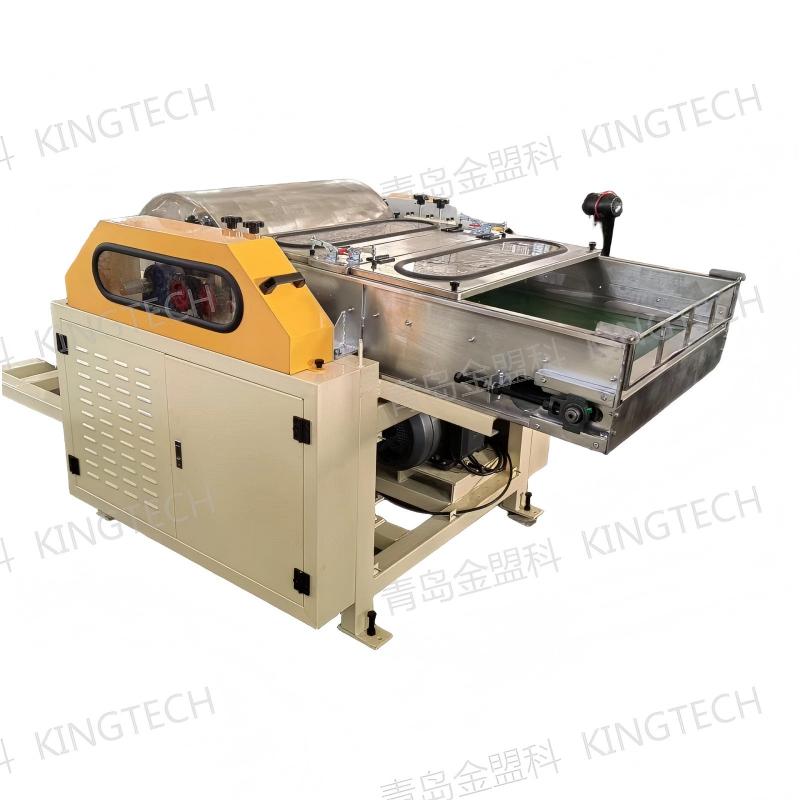
Why Does Polyester Fabric Usually Need Its Textile Structure Broken Down First?
Polyester fabric is different from yarn waste because the fibers are still held inside woven or knitted structures. Large, thick, or irregular fabric pieces may cause unstable feeding, wrapping, incomplete opening, and uneven machine load if they enter the opening section directly.
Woven and knitted polyester fabrics should also be treated differently. Woven polyester is generally more compact and requires more effective breakdown of the original fabric structure, while knitted polyester is more likely to stretch and wrap, making feeding stability more important. Before processing these materials, it is useful to check fabric thickness, piece size, stretching behavior, and whether coatings or composite layers are present, then decide whether cutting and multi-stage opening are required.
Polyester Nonwoven Waste Depends on the Original Web and Bonding Structure
“Polyester nonwoven” is not a single recycling material. Polyester fibers can be used in spunlace, needle-punched, thermal-bonded, air-through, and other nonwoven structures, and each bonding method affects mechanical recycling difficulty.
Spunlace materials usually have dense fiber entanglement, needle-punched materials may be thicker and more compact, thermal-bonded materials contain bonded points that can resist separation, while air-through materials are often bulkier and easier to loosen. Clean continuous nonwoven edge trims are different again because their composition and size are usually stable and more suitable for continuous opening. For this reason, a Polyester Recycling Machine used for nonwoven waste should first consider the original material structure before deciding between direct opening, multi-stage opening, or continuous edge-trim opening.
Why Are Continuous Polyester Edge Trims Usually Easier to Process?
Continuous edge trims generated during production are usually one of the easier polyester waste types to control. They are often clean, narrow, continuous, compositionally stable, and generated from a known process, which makes feeding and opening more predictable than with mixed fabric waste.
If these trims come directly from nonwoven or textile production, an Edge Trim Opener can continuously return the material to loose fiber without the complex sorting and multiple preparation stages often required for mixed waste. For this type of input, the objective is not to add more mechanical processing, but to minimize unnecessary fiber damage while returning clean edge waste to a reusable fiber state.
Why Do Coated and Composite Polyester Materials Need Separate Evaluation?
Polyester textiles with PVC, adhesive layers, films, rubber, or other composite layers should not be treated in the same way as ordinary clean polyester fabric. Mechanical opening can break down the textile structure, but it cannot guarantee complete separation of coatings from polyester fiber, and attached materials may remain in the recovered fiber.
These materials should be evaluated for opening behavior, fiber cleanliness, buildup inside the equipment, and whether the recovered material can still meet the requirements of its final application. Before deciding on a Polyester Recycling Machine configuration, small-batch testing is useful for composite materials to check whether coatings detach easily, whether they contaminate the equipment, and how much non-fiber material remains in the recovered fiber.
Five Questions to Ask Before Mechanically Recycling Polyester Waste
Before deciding on equipment and process configuration, the material can be evaluated through five practical questions:
- Is the polyester content known? The more consistent the composition, the easier the recovered fiber is to control.
- What structure does the material have? Yarn waste, woven fabric, knitted fabric, nonwoven, and continuous edge trims require different processing methods.
- Does it contain coatings, adhesive layers, or foreign materials? These can directly affect recovered fiber cleanliness.
- How much unopened material remains after one opening stage? Large amounts of fabric pieces or yarn bundles indicate that preparation or opening stages may need adjustment.
- What will the recovered fiber be used for? Filling, nonwoven, needle-punching, and continuous feeding processes require different levels of fiber uniformity.
These questions help determine whether a Polyester Recycling Machine should use direct opening, combined opening, or opening-carding instead of selecting equipment only by throughput.
How Does Kingtech Match Polyester Recycling Equipment to Different Materials?
Kingtech Machinery can configure different systems according to the condition of the polyester textile waste. For polyester yarn waste, fiber bundles, and materials requiring better uniformity, an Opening-Carding System can be used to further separate and arrange fibers after opening. For polyester fabric, thicker waste, or materials that are difficult to open in one stage, a Combined Opener System can gradually break down the original textile structure through multi-stage opening.
For clean, continuous polyester nonwoven edge trims, an Edge Trim Opener is more suitable for continuous processing. Therefore, the focus of a Kingtech Polyester Recycling Machine configuration is not one fixed machine setup, but selecting a more suitable processing route according to whether the waste is yarn, fabric, nonwoven, edge trim, blended, or composite material.
Conclusion
One of the most common mistakes when selecting a Polyester Recycling Machine is to focus only on whether the raw material is polyester. In practice, the main factors affecting mechanical recycling are polyester content, textile structure, and the presence of contamination or composite materials.
Polyester yarn waste is better suited to controlled opening, polyester fabric often requires breakdown of the original textile structure, different nonwovens should be evaluated according to their bonding method, continuous edge trims are more suitable for direct opening, and coated or composite materials should be tested separately. Classifying the material first, then deciding between cutting, direct opening, multi-stage opening, or opening-carding, is usually more practical than simply increasing machine intensity.
FAQ
1. What types of polyester waste can a Polyester Recycling Machine process?
Common materials include polyester yarn waste, woven and knitted fabric scraps, polyester nonwoven waste, continuous edge trims, and some polyester blended textile waste. Different structures require different equipment configurations.
2. Can all polyester waste use the same recycling process?
No. Yarn waste, fabric, nonwoven, continuous edge trims, and composite materials have different structures and therefore require different preparation, opening intensity, and equipment combinations.
3. Why is pure polyester waste usually easier to control?
Because the fiber composition is clearer and more consistent, reducing additional variation caused by mixed fiber types and making process settings easier to stabilize.
4. Which Kingtech equipment is suitable for polyester recycling?
An Opening-Carding System is suitable for polyester yarn waste and materials requiring more uniform fiber; a Combined Opener System is more suitable for complex polyester fabric waste; and an Edge Trim Opener is better suited to continuous nonwoven edge trims.
Post time: Aug-25-2026