




A Small Fabric Shredder is often used before fiber opening when fabric waste is too large, too long, or too tangled to enter the next machine smoothly. In textile waste recycling, many processing problems do not start from the opener itself. They begin earlier, when fabric scraps are fed in the wrong size or shape.
Fabric waste is flexible, soft, and easy to fold. Long strips may wrap around rollers. Knitted materials may stretch during feeding. Old garment pieces may contain seams, collars, cuffs, or layered parts. If these materials go directly into an opener without preparation, they may cause jamming, uneven feeding, lower output, and unstable recycled fiber quality.
A small fabric shredder does not complete the whole recycling process. Its main role is front-end preparation. By reducing fabric waste into smaller and more manageable pieces, it helps the following opening or combined opening process run more smoothly.
Fabric Waste Jamming Usually Starts Before the Opener
When an opener does not run smoothly, the first reaction is often to check the opening machine. However, in many cases, the problem comes from the material condition before opening.
Fabric waste may jam because:
- The pieces are too large.
- Long strips wrap around rollers.
- Knitted fabric stretches and tangles.
- Thick seams resist tearing.
- Mixed scraps feed unevenly.
- Old clothes contain multilayer parts.
- The material enters the machine in clumps.
These problems make feeding unstable. Once the feeding is unstable, the opener cannot process the material evenly. Some fabric pieces may be over-torn, while others may remain unopened.
Why Large Fabric Pieces Are Difficult to Open Directly
Large fabric scraps are not easy to control during mechanical opening. Unlike loose fiber, fabric has structure. It has yarn direction, fabric density, thickness, elasticity, and sometimes stitching. When a large piece enters the opener, the machine must first grip and tear the whole structure before fiber separation can begin.
This may lead to several issues:
- Sudden load changes
- Roller wrapping
- Uneven tearing
- More unopened pieces
- Lower processing stability
- Higher maintenance pressure
For light and clean scraps, direct opening may still work. But for large panels, long trimming waste, old clothes, or mixed fabric scraps, cutting or shredding before opening is often more practical.
Long Strips and Knitted Fabrics Need Special Attention
Long fabric strips are one of the most common causes of wrapping and feeding problems. They may come from trimming, cutting tables, edge waste, or production leftovers. Because they are narrow and flexible, they can easily twist around rollers or gather into knots.
Knitted fabric can also be difficult because it stretches. During feeding, it may elongate, fold, and move unevenly. If the material is not reduced into shorter pieces first, it may affect the stability of the whole recycling line.
A small fabric shredder helps by turning long and irregular scraps into shorter pieces. This makes the material easier to feed, easier to open, and easier to control.
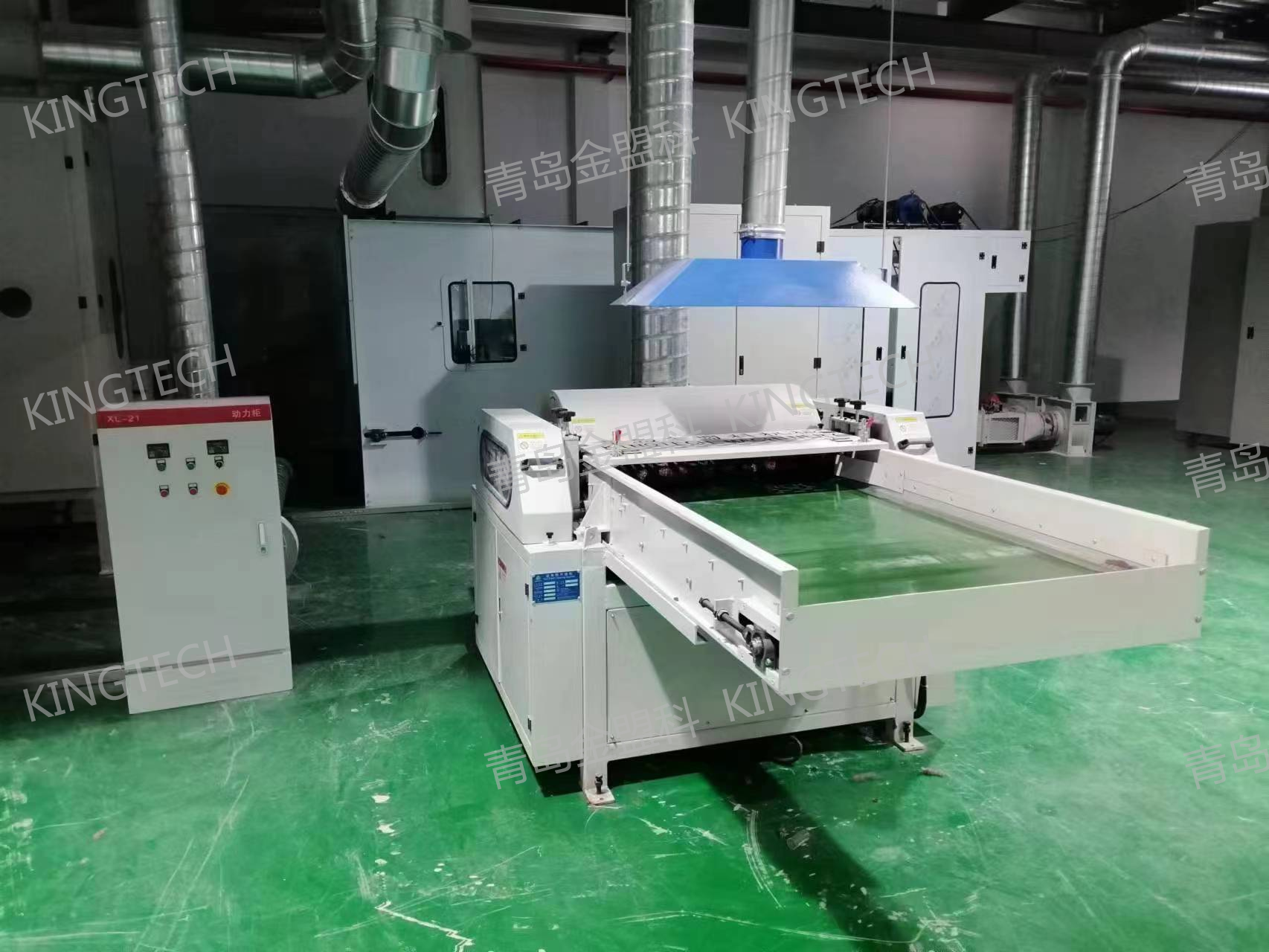
The Role of a Small Fabric Shredder in Front-End Preparation
The main purpose of a small fabric shredder is not to produce final recycled fiber. It prepares fabric waste for the next step. After shredding or cutting, the material becomes more suitable for opening, combined opening, or opening-carding.
A small fabric shredder can help:
- Reduce large fabric scraps into smaller pieces
- Improve feeding stability
- Lower the risk of roller wrapping
- Reduce sudden blockage
- Make mixed cloth waste easier to handle
- Prepare material for continuous recycling
- Support small-batch testing or lower-capacity production
This is especially useful when the recycling project handles different kinds of fabric waste rather than one clean and consistent material.
What Materials May Need Shredding Before Opening?
Not all textile waste needs the same preparation. Some clean and soft edge trims may enter an opener directly. Other materials need size reduction first.
Materials that may need shredding include:
- Large fabric offcuts
- Long trimming strips
- Old clothes
- Rejected garment pieces
- Knitted fabric waste
- Woven fabric scraps
- Thick cloth pieces
- Mixed workshop waste
- Nonwoven fabric waste
- Rags and cleaning cloth waste
The decision depends on material size, thickness, structure, and how easily it feeds into the opener. If fabric waste often bridges, wraps, or blocks during feeding, shredding before opening may improve the process.
Shredding Size Affects the Next Recycling Step
The goal of shredding is not to cut fabric as small as possible. If the pieces are too large, the opener may still have feeding problems. If the pieces are too small, fiber damage or dust may increase, depending on the material and equipment setting.
A suitable size should make the material:
- Easier to feed
- Less likely to wrap
- More stable during opening
- Suitable for the required output quality
- Compatible with the next machine
This is why the small fabric shredder should be considered together with the opener or recycling line, not as a separate machine only.
Small Fabric Shredder vs. Opener
A small fabric shredder and an opener are not the same machine. They work at different stages of textile waste recycling.
A small fabric shredder mainly reduces material size. It cuts or tears large fabric waste into smaller pieces so the material becomes easier to feed.
An opener loosens the textile structure and separates the fabric toward a fiber state. It is the key machine for fiber recovery.
In many recycling projects, both machines are needed. The shredder prepares the material, and the opener recovers the fiber. For more difficult materials, a combined opener system or opening-carding system may be added after shredding.
About Kingtech Machinery
Kingtech Machinery provides textile waste recycling equipment for different fabric waste preparation and fiber recovery needs. Its Cutting Machine can be used before opener systems to process fabric scraps, old clothes, rags, nonwoven waste, and mixed cloth pieces into smaller sizes. For further recycling, Kingtech also provides Combined Opener System, Opening-Carding System, Edge Trim Opener, Cotton Waste Recycling Line, laboratory recycling test lines, needle punching lines, blowers, metallic card clothing, and related accessories. Different machines can be combined according to material type, feeding condition, opening difficulty, required fiber quality, and final reuse application.
Conclusion
A Small Fabric Shredder is useful when fabric waste causes feeding problems before opening. Large pieces, long strips, knitted scraps, old garment parts, and mixed cloth waste may wrap, jam, or feed unevenly if they enter the opener directly.
By reducing fabric waste into smaller and more manageable pieces, a small fabric shredder helps improve front-end preparation. It supports smoother opening, fewer blockages, more stable recycling, and better control of recovered fiber quality. For textile waste recycling, solving the feeding problem before opening is often the first step toward a more reliable recycling process.
FAQ
1. What is a Small Fabric Shredder used for?
A Small Fabric Shredder is used to reduce fabric scraps, cloth waste, old clothes, and mixed textile waste into smaller pieces before opening or further recycling.
2. Why does fabric waste jam before opening?
Fabric waste may jam because it is too large, too long, too tangled, stretchy, thick, or mixed with different materials. These conditions can cause uneven feeding and roller wrapping.
3. Is a small fabric shredder enough to recycle fabric into fiber?
No. A small fabric shredder is mainly used for size reduction. To recover reusable fiber, the material usually needs an opener, combined opener system, or opening-carding system after shredding.
4. What fabric waste should be shredded before opening?
Large fabric offcuts, long trimming strips, old clothes, knitted waste, woven scraps, thick cloth pieces, rags, and mixed workshop waste may need shredding before opening.
Post time: Jul-30-2026