




Polyester fiber is widely used in pillows, cushions, quilts, and stuffed products because of its softness, resilience, and lightweight structure. However, it does not always retain its original loft throughout production. Compression during storage, repeated handling, and unsuitable processing conditions can cause fiber bundles to become dense, tangled, or difficult to separate.
Reduced loft affects more than the appearance of the material. It can influence filling volume, product consistency, material consumption, and the comfort of finished products. Understanding why polyester fiber loses its loft helps manufacturers improve material preparation and select suitable processing equipment. A Terron Fiber Opening Machine plays an important role by loosening compressed fiber and preparing it for subsequent filling operations.
Why Does Polyester Fiber Lose Its Loft?
Loft refers to the volume occupied by a fiber mass relative to its weight. In filling applications, well-opened fiber contains more space between individual fibers, creating a soft and resilient structure. Several conditions can reduce this volume. Compression during packaging and storage may cause fiber bundles to become compacted. Repeated handling can increase entanglement, while excessive pressure during feeding may push loose fibers into denser masses. When these bundles enter the production line, they may be difficult to separate evenly.
Fiber characteristics also influence loft retention. Polyester fibers vary in length, fineness, crimp, and resilience. Short fibers may behave differently from longer ones, while differences in crimp affect how well the material recovers after compression. If incoming fiber contains irregular clumps or mixed specifications, achieving consistent opening becomes more challenging. It is also important to distinguish temporary compression from permanent fiber damage. Opening equipment can loosen compressed material, but it cannot fully restore fibers that have already lost their structural resilience.
Processing Stages That Affect Fiber Loft
Fiber volume can change at several points during production. Identifying where compression or entanglement occurs helps prevent the same problem from continuing through the entire process.
- Storage and packaging: Polyester fiber is often compressed to reduce transportation and storage volume. Excessive or prolonged compression can make bundles harder to separate later.
- Material feeding: Large bundles introduced too quickly may create uneven feeding. Excessive pressure at the feeding point can further compact the fiber before opening begins.
- Mechanical opening: Unsuitable opening conditions may leave compacted sections or expose fibers to unnecessary mechanical stress. Both can affect the resulting material quality.
- Conveying and transfer: Poor material flow between processing stages may cause accumulation, repeated compression, or uneven distribution before filling.
Loft loss does not necessarily originate in the opening machine. It may develop through several handling stages, so improving only one part of the production line may not solve the problem completely.
How Fiber Opening Helps Improve Material Volume
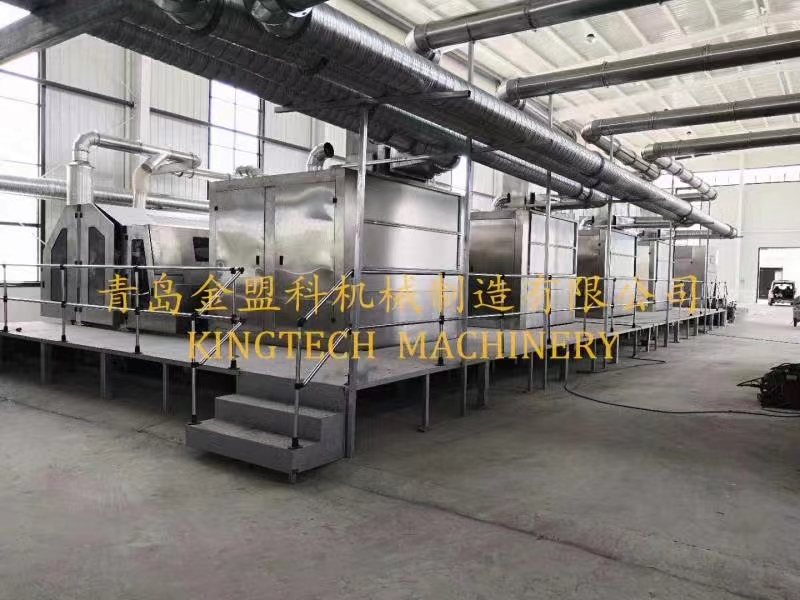
Fiber opening separates compacted fiber masses into a more dispersed and workable condition. Instead of sending dense bundles directly into filling equipment, the opening stage loosens the material and improves its distribution. A Terron Fiber Opening Machine supports this preparation process by mechanically opening polyester fiber before subsequent production stages. The objective is not simply to make the material appear fluffy, but to create a more consistent condition for feeding and filling.
Opening performance depends on the relationship between fiber characteristics and machine operation. Fiber length, fineness, crimp, and initial compression all influence how the material responds to mechanical action. A setup that works well for one polyester fiber specification may not produce the same result with another. Opening intensity also needs to be appropriate. Insufficient opening leaves compacted sections and uneven clumps. Excessive mechanical action may place unnecessary stress on the fibers. The goal is to separate the material effectively while maintaining the characteristics required for the final product.
For this reason, manufacturers should evaluate the condition of the processed fiber rather than relying only on machine speed or nominal processing capacity.
How Fiber Loft Influences Filling Quality
The condition of polyester fiber before filling directly affects how evenly it can be distributed inside a finished product. Dense clumps may cause some areas to receive more material than others, resulting in uneven volume, inconsistent softness, or irregular product shapes. In pillow and cushion production, uneven fiber distribution can affect comfort and shape retention. In quilt manufacturing, inconsistent preparation may make it harder to achieve a uniform filling layer. These problems can occur even when the original fiber quality meets the required specifications.
Effective opening helps reduce variations in the material supplied to filling equipment. When fibers are sufficiently separated and delivered at a stable rate, downstream equipment receives a more consistent input. This makes filling operations easier to control and can reduce repeated adjustments. However, opening alone cannot guarantee finished-product quality. Filling equipment, product dimensions, target weight, and material specifications also influence the final result. A Terron Fiber Opening Machine improves the condition of the fiber before filling, providing a more suitable starting point for subsequent processing.
Practical Ways to Maintain Fiber Loft
Maintaining fiber volume requires attention to incoming material conditions and the way fibers move through the production line. Increasing mechanical intensity whenever material appears compacted is not always the right response. Operators should first identify whether the issue comes from storage, feeding, opening, or transfer.
Several measures can help maintain more consistent fiber conditions:
- Check incoming material: Identify heavily compressed bundles and separate them where practical before feeding. Pay attention to differences in fiber length, fineness, and crimp.
- Maintain stable feeding: Avoid sudden increases in material volume that may overload the opening section. Consistent feeding helps the machine process fiber more evenly.
- Match opening conditions to fiber properties: Consider the material’s specifications and initial condition when adjusting the process. Avoid applying identical settings to every fiber type without evaluation.
- Monitor processed fiber: Check for persistent clumps, uneven sections, or visible signs of excessive fiber damage. Changes in output condition may indicate that the opening process needs adjustment.
- Coordinate downstream transfer: Prevent unnecessary pressure and material accumulation between opening and filling. The transfer process should preserve the condition achieved during opening.
These practices help reduce avoidable changes in fiber structure. Equipment adjustments and maintenance should always follow the manufacturer’s instructions.
Choosing a Fiber Opening Machine for Different Applications
Different polyester filling materials require different processing conditions. Fiber used in soft pillows may have different characteristics from material intended for cushions, quilts, or stuffed products. Length, fineness, crimp, resilience, and packaging condition all influence opening requirements. When evaluating a Terron Fiber Opening Machine, manufacturers should consider the actual fiber specifications, expected processing volume, and requirements of the finished products. Processing capacity is important, but it should be considered alongside opening consistency, material handling, and compatibility with downstream filling equipment.
Testing representative fiber samples can help determine whether the machine separates compressed bundles effectively without causing unnecessary fiber damage. It also provides a clearer understanding of how the opened material behaves during feeding and filling. A suitable opening solution should maintain consistent material preparation under normal production conditions. This becomes particularly important when a facility processes different fiber specifications or switches between product types. Matching equipment to the material helps reduce processing variations and supports a more predictable workflow.
Conclusion
Polyester fiber can lose its loft during processing because of compression, entanglement, uneven feeding, unsuitable opening conditions, and repeated material handling. These problems may affect fiber volume and create inconsistencies in pillow, cushion, and quilt filling. A Terron Fiber Opening Machine helps loosen compressed polyester fiber and prepare it for subsequent filling operations. Appropriate opening conditions, stable feeding, and well-managed material transfer can help preserve fiber characteristics and improve production consistency.
FAQ
1. Can compressed polyester fiber recover its original loft after opening?
Some temporarily compressed fibers can regain volume after effective opening. However, permanently deformed or damaged fibers may not fully recover their original properties.
2. Does fiber length affect the opening process?
Yes. Different fiber lengths respond differently to mechanical opening. Processing conditions should be evaluated according to the actual fiber specifications.
3. Can excessive opening damage polyester fiber?
Excessive mechanical action may place unnecessary stress on fibers and affect their condition. Opening intensity should follow the material requirements and equipment recommendations.
4. Why does opened fiber become compacted again before filling?
Material accumulation, excessive transfer pressure, and unsuitable conveying conditions can cause fiber to compress again. The entire process between opening and filling should be considered.
Post time: Oct-30-2026