




A Textile Recycling Machine Manufacturer plays a much deeper role than simply producing individual machines. In textile recycling, the final fiber quality is not determined by one piece of equipment alone. It depends on how well the recycling process matches the characteristics of different textile waste materials, including fiber composition, fabric structure, contamination level, and the condition required for the recycled fiber.
Unlike many standardized industrial materials, textile waste can vary greatly even within the same category. Cotton waste from spinning production, garment cutting scraps, polyester edge trims, nonwoven waste, and mixed textile materials all have different processing challenges. Therefore, an experienced Textile Recycling Machine Manufacturer needs to understand the relationship between raw material characteristics and equipment configuration rather than applying the same recycling solution to every material.
Understanding Textile Waste Is the Starting Point of Equipment Design
The performance of a textile recycling system begins with correctly evaluating the waste material. A common misunderstanding is that textile waste can be classified only by fiber type, such as cotton or polyester. In reality, the physical structure of the waste often has an equally important influence on recycling performance.
Cotton waste, for example, may include loose fibers, yarn waste, fabric scraps, and used textile products. Although they all contain cotton fibers, their recycling requirements are different. Loose fiber waste may require gentle processing to maintain fiber quality, while compact fabric scraps may need stronger opening action to separate the original textile structure.
Polyester waste also presents different challenges depending on its source. Continuous edge trims from production lines usually have a more stable composition and structure, while polyester fabrics or blended materials may require different processing approaches because of their thickness, bonding condition, or additional components.
Nonwoven waste creates another situation because different production methods can influence how strongly fibers are bonded together. Materials produced through different bonding methods may require different opening and separation strategies.
This is why a capable Textile Recycling Machine Manufacturer needs to focus on material behavior, not only material names.
Why Complete Recycling System Design Matters More Than Individual Machines
In textile recycling, a single machine rarely determines the final result. The overall performance depends on how different processing stages work together.
A complete Textile Waste Recycling System may involve several stages, including material preparation, cutting, opening, cleaning, and fiber refinement. Each stage has a different purpose. Cutting mainly changes oversized textile waste into a more manageable form, while opening separates compact textile structures into loose fibers. Cleaning focuses on removing unwanted materials, and carding helps improve fiber distribution when higher uniformity is required.
Problems often occur when one stage is improved without considering the whole system. Excessive cutting may create unnecessary small fragments and increase fiber damage. Overly aggressive opening can reduce fiber length and generate more short fibers. Insufficient cleaning may affect the quality of recycled fiber, while unsuitable carding conditions may influence the consistency of the final output.
Therefore, the role of a Textile Recycling Machine Manufacturer is not simply to provide separate machines, but to understand how each process stage should be combined according to the material condition and expected fiber performance.
Material Testing and Process Adjustment Are Important Parts of Recycling Solutions
Textile recycling is different from processing standard raw materials because waste conditions can change from batch to batch. Even materials with the same description may have different results due to differences in production sources, fabric structures, moisture levels, contamination, and previous processing history.For this reason, evaluating materials before designing a recycling system is an important step.
A professional manufacturer needs to consider questions such as:
- Is the waste mainly fiber, yarn, fabric, or mixed textile?
- Does the material contain coatings, adhesives, or foreign materials?
- How much opening force is required to separate the structure?
- Does the recycled fiber need additional cleaning or carding?
- What condition should the final fiber reach for the next application?
These factors directly influence the equipment combination. A system designed for clean production waste may not be suitable for old garments or heavily mixed textile waste. The more accurately the material characteristics are understood, the easier it is to create a stable recycling process.
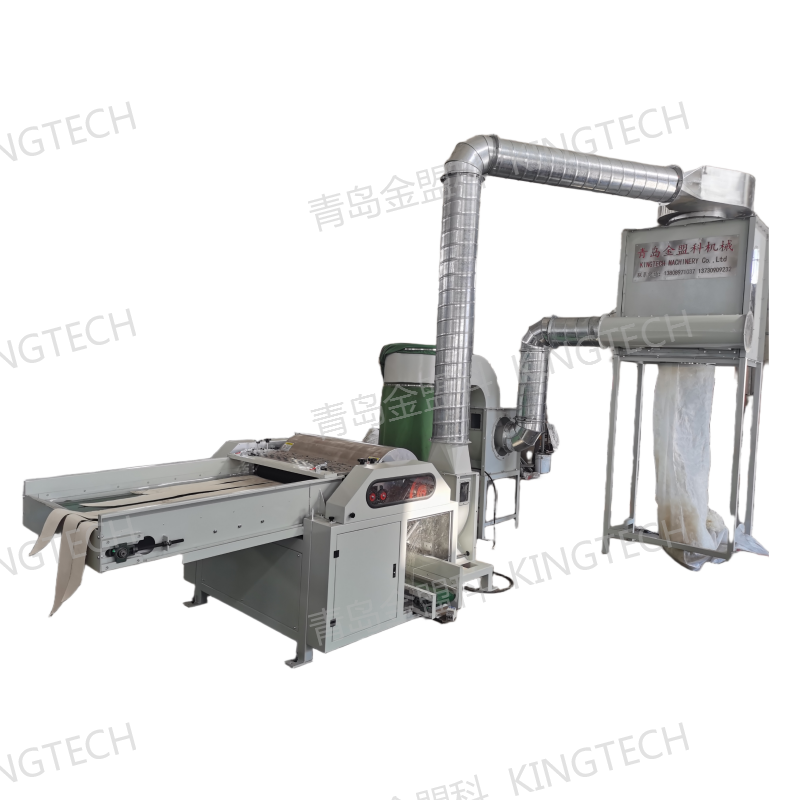
What Technical Capability Should a Textile Recycling Machine Manufacturer Have?
The technical capability of a manufacturer is reflected in how effectively it can solve practical recycling challenges.
One important capability is system customization. Textile waste sources are rarely identical, so a fixed configuration cannot always provide the same performance for different applications. The manufacturer should be able to adjust equipment combinations according to waste structure and fiber requirements.
Another important capability is balancing fiber recovery and fiber protection. The purpose of recycling is not only to separate fibers from waste but also to preserve as much usable fiber quality as possible. Excessive mechanical treatment may increase processing intensity but reduce the value of the recovered material.
A capable manufacturer should also understand the connection between equipment stages. For example, improving opening performance without considering cleaning requirements may not create a better final result. Likewise, adding more processing steps does not always mean higher fiber quality if the original material does not require them.
The real value comes from designing a balanced system where each stage supports the next one.
Why Recycling Equipment Experience Is Reflected in Process Details
In textile recycling, experience is often reflected in small but important technical decisions.
For example, deciding whether a material needs cutting before opening, whether an opener should be combined with cleaning equipment, whether carding is necessary, and how to reduce fiber damage during processing all require practical understanding.
These decisions cannot always be made only from basic material information. They often depend on previous processing experience with similar waste types and knowledge of how different materials behave inside the recycling system.
A manufacturer with deeper technical experience can usually provide more suitable solutions because it understands not only how machines operate but also how materials respond during processing.
Kingtech Textile Recycling Machine Solutions
Kingtech Machinery develops textile recycling equipment and complete recycling solutions for different textile waste applications, including cotton waste, polyester waste, nonwoven waste, fabric scraps, and other textile materials.
The equipment configuration can include cutting systems for oversized textile waste, opening systems for fiber separation, cleaning systems for impurity removal, and opening-carding systems for applications requiring improved fiber uniformity.
Rather than applying one fixed machine combination to all materials, Kingtech focuses on matching the recycling process with the actual waste condition. By considering material structure, fiber characteristics, and required output quality, the system can be configured more effectively for different recycling applications.
Conclusion
Choosing a suitable Textile Recycling Machine Manufacturer is closely related to the ability to understand textile waste and design a practical recycling system. The performance of recycling equipment depends not only on machine manufacturing but also on material analysis, process integration, and technical adjustment.
Different textile wastes require different approaches. Cotton waste, polyester waste, nonwoven materials, and mixed textiles may all need different processing methods to achieve stable fiber recovery.
A reliable textile recycling solution begins with understanding the material, designing the right process combination, and creating a system that balances fiber separation, fiber protection, and long-term production stability.
FAQ
1. What does a Textile Recycling Machine Manufacturer provide?
A Textile Recycling Machine Manufacturer provides recycling equipment, system design, and technical solutions based on different textile waste characteristics and fiber requirements.
2. Why do different textile wastes need different recycling systems?
Because textile waste varies in fiber composition, structure, contamination level, and processing history. Different materials require different opening, cleaning, and refining methods.
3. What factors influence textile recycling system design?
Important factors include material type, fiber condition, waste structure, contamination level, required fiber quality, and the expected downstream application.
4. Can one textile recycling machine process all types of textile waste?
Post time: Sep-03-2026