




A Textile Waste Recycling Line is designed to process waste clothes, fabric scraps, rags, cotton waste, nonwoven waste, yarn waste, and other textile materials into reusable fiber. Instead of treating textile waste as a disposal problem, a recycling line helps factories recover material value and prepare fibers for new applications such as nonwoven production, filling, needle punching, insulation, filtration, or spinning preparation.
Textile waste is often irregular, tangled, thick, dusty, or mixed with different material structures. Because of this, a complete recycling line usually needs more than one machine. Cutting, opening, cleaning, carding, conveying, dust removal, and fiber collection may all be involved, depending on the raw material and final fiber requirement.
Why Textile Waste Needs a Recycling Line
Many textile materials cannot be reused directly after collection. Waste clothes may contain seams, collars, multilayer parts, and long fabric sections. Fabric scraps may come in irregular shapes. Nonwoven edge trims may need to be opened back into fiber. Cotton waste may require both opening and cleaning before it can be reused.
If these materials are sent directly into one machine without proper preparation, several problems may occur:
- Unstable feeding
- Machine blockage
- Excessive fiber damage
- Uneven fiber output
- Poor opening effect
- High dust level
- Low reuse value
A textile waste recycling line solves these problems by processing the material step by step. Each machine has a specific role, making the whole recycling process more stable and efficient.
Basic Process of a Textile Waste Recycling Line
The process of a textile waste recycling line depends on the material type, but the basic logic is usually similar. The goal is to reduce large waste material into a loose fiber state and prepare it for reuse.
A common process may include:
- Sorting textile waste by material type
- Cutting large pieces into smaller sizes
- Feeding material into the opener
- Opening and loosening fabric or fiber structure
- Cleaning impurities or dust if needed
- Carding the fiber when higher uniformity is required
- Conveying and collecting recycled fiber
- Sending recovered fiber to the next production step
Some materials only need cutting and opening, while others may require multiple openers, cleaners, or carding machines. The best line configuration should always match the raw material and the expected output fiber quality.
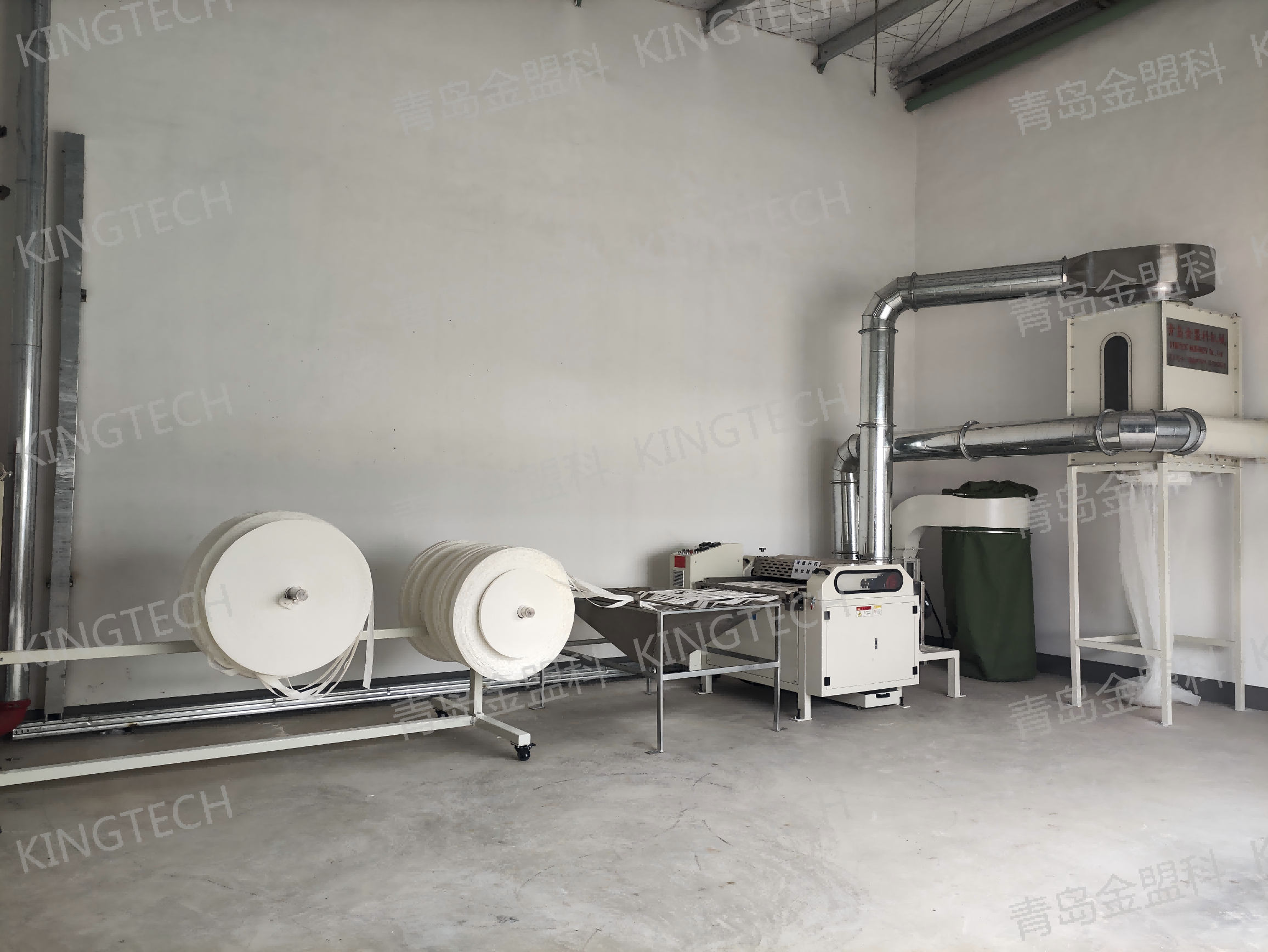
Cutting Machine for Front-End Preparation
In many recycling lines, the cutting machine is the first important step. It is used when the textile waste is too large, too long, or too tangled to enter the opener smoothly.
A cutting machine can process:
- Waste clothes
- Fabric scraps
- Garment cutting waste
- Rags
- Large nonwoven scraps
- Irregular textile waste
By cutting waste material into smaller pieces, the machine helps improve feeding stability and reduces the risk of wrapping or blockage in later equipment. For old garments, mixed fabric scraps, and thick textile waste, this step can make the whole recycling line easier to operate.
Combined Opener System for Difficult Textile Waste
After cutting, many materials need to enter an opener system. The opener tears and loosens the textile structure so the material can gradually return to a fiber state. However, some materials are more difficult to open than others.
A Combined Opener System is suitable when one opener is not enough. It can be configured with two, three, four, or more openers according to the material condition and production capacity requirement.
This type of system is often used for:
- Used clothes
- Rags
- Felt
- Automotive fabric
- Woven fabric clips
- Knitted fabric waste
- Compound nonwoven fabric
- Mixed textile scraps
By opening the material step by step, the system can reduce unopened pieces and improve the quality of recycled fiber.
Cotton Waste Recycling Line for Waste Cotton and Old Quilts
Cotton waste has its own processing requirements. Waste cotton, used quilts, cotton rags, and linen materials often need both opening and cleaning. A cotton waste recycling line usually combines openers with cleaners to make the material softer and cleaner.
This type of line can process:
- Waste cotton
- Used quilts
- Cotton rags
- Linen waste
- Textile cotton scraps
- Recycled fiber for spinning preparation
Through high-speed opening and multiple cleaning stages, cotton waste can be turned into cleaner regenerated fiber. The recovered fiber may be used for OE spinning, rotor spinning, nonwoven production, or filling applications, depending on quality.
Opening-Carding System for Better Fiber Uniformity
When recycled fiber needs to be more uniform, an Opening-Carding System can be added to the recycling line. Opening can loosen the material, but carding further separates and arranges the fibers.
This system is suitable for materials such as:
- Spunlace fabric waste
- Air-through cloth
- Wool fabric
- Aramid fabric
- Cotton yarn waste
- Polyester yarn waste
- Hemp and jute
- Waste yarn
The carding process helps reduce fiber clumps and improve fiber distribution. For factories that need recycled fiber for nonwoven production, needle punching, air-lay processes, or higher-value applications, opening and carding together can produce better results than opening alone.
Dust Removal and Safety in Textile Waste Recycling
Textile waste recycling can generate dust, short fibers, and loose particles. If the line does not include proper dust removal, the workshop may become difficult to manage, and equipment maintenance may become more frequent.
Dust removal equipment can help:
- Improve workshop cleanliness
- Reduce floating fiber and dust
- Support more stable production
- Protect workers and equipment
- Improve material handling efficiency
For some textile waste materials, safety devices such as fire detection, smoke detection, spark detection, or metal detection may also be important. These devices can help reduce risks during high-speed cutting, opening, or fiber processing.
How to Choose the Right Textile Waste Recycling Line
A textile waste recycling line should be selected according to real material conditions. There is no single standard line that fits every type of textile waste.
Important selection factors include:
- Raw material type
- Material size and thickness
- Whether the waste is woven, knitted, nonwoven, or cotton-based
- Impurity and dust level
- Required output fiber quality
- Production capacity target
- Need for cutting before opening
- Need for carding after opening
- Workshop layout
- Dust removal and safety requirements
- Final application of recycled fiber
For simple fabric scraps, a cutting machine and opener may be enough. For used clothes, rags, felt, or mixed waste, a combined opener system may be more suitable. For cotton waste and old quilts, openers combined with cleaners are usually needed. For better fiber uniformity, an opening-carding system should be considered.
About Kingtech Machinery
Kingtech Machinery provides textile waste recycling equipment for different material conditions and production goals. Its product range includes Edge Trim Opener, Combined Opener System, Opening-Carding System, Cutting Machine, Cotton Waste Recycling Line, laboratory recycling test lines, needle punching lines, blowers, metallic card clothing, and related accessories. Instead of using one fixed machine for all waste materials, factories can choose a suitable combination according to waste clothes, rags, cotton waste, nonwoven edge trims, yarn waste, felt, or mixed textile scraps.
Applications of Recycled Fiber
The fiber recovered from a textile waste recycling line can be used in many industries. The final application depends on material quality, recycling method, and fiber condition.
Common applications include:
- Nonwoven fabric production
- Needle-punched felt
- Filling material
- Furniture padding
- Automotive textile layers
- Filtration media
- Insulation products
- Cleaning and wiping products
- Air-lay recycling
- Spinning preparation in suitable cases
When the line is configured properly, textile waste can become a useful raw material source instead of a production burden.
Conclusion
A Textile Waste Recycling Line helps factories process waste clothes, fabric scraps, rags, cotton waste, nonwoven waste, yarn waste, and mixed textile materials into reusable fiber. Because textile waste varies greatly in size, structure, and cleanliness, a complete line may include cutting, opening, cleaning, carding, conveying, dust removal, and safety systems.
The right recycling line should be designed around the material and final application. With suitable equipment configuration, factories can improve fiber recovery, reduce waste handling pressure, lower raw material loss, and create more value from textile waste.
FAQ
1. What is a Textile Waste Recycling Line used for?
A Textile Waste Recycling Line is used to process waste clothes, fabric scraps, rags, cotton waste, nonwoven waste, yarn waste, and other textile materials into reusable fiber.
2. What machines are usually included in a textile waste recycling line?
A typical line may include a cutting machine, opener, combined opener system, cleaner, carding machine, blower, dust collector, and fiber collection equipment, depending on the material.
3. Can one recycling line process all types of textile waste?
Not always. Different materials require different configurations. Cotton waste, old clothes, nonwoven edge trims, yarn waste, and felt may need different machine combinations.
4. Why is dust removal important in textile waste recycling?
Dust removal helps keep the workshop cleaner, reduce floating fibers, protect equipment, and support more stable production during cutting, opening, and fiber recovery.
Post time: Jul-09-2026