




A cotton waste machine helps recover reusable fibers from textile waste, but excessive short fiber generation can reduce material value and affect downstream processing. Short fibers may cause difficulties in spinning, blending, and web formation, depending on the final application. Increasing machine speed or repeating the opening process does not always solve the problem. In many cases, it can create additional fiber damage.
Understanding why short fibers develop during recycling helps operators improve fiber recovery, maintain consistent output, and avoid unnecessary processing costs.
Excessive Mechanical Action During Fiber Opening
The primary function of a cotton waste machine is to separate tangled or compressed fibers. However, effective opening requires a balance between separation and fiber preservation. When mechanical action becomes too aggressive, fibers may break rather than separate naturally.
Several operating conditions can contribute to this issue:
- Excessive opening intensity: Strong mechanical action can damage weak fibers, particularly when the waste has already undergone repeated processing.
- Unsuitable roller speed: Higher speeds may increase impact and friction, depending on the machine design and material characteristics.
- Incorrect component clearance: Inappropriate spacing between working components can cause excessive gripping, pulling, or compression.
- Uneven feeding: Large clumps entering the opening section can create inconsistent resistance and increase localized fiber stress.
The solution is not necessarily to reduce all operating parameters. Insufficient opening may leave fibers tangled and impair subsequent processing. Instead, operators should identify the lowest effective intensity that achieves the required degree of separation.
Adjust one major parameter at a time and compare the resulting fiber quality. This makes it easier to identify which setting improves opening performance without increasing fiber breakage.
Raw Material Conditions Can Affect Fiber Length
Short fibers do not always originate inside the machine. The condition of the incoming material can significantly influence the final fiber-length distribution.
Cotton cutting waste, yarn waste, fabric scraps, and previously recycled fibers have different structures and processing histories. Some materials contain long, relatively intact fibers, while others already include damaged fibers produced during earlier manufacturing or recycling stages.
Material consistency is therefore important. Mixing different waste types without considering their characteristics may produce unstable results, even when machine settings remain unchanged.
Before processing, operators should examine the raw material for existing fiber damage, contamination, tightly compressed sections, and uneven moisture conditions. Separating materials by type and maintaining a consistent feed can help the machine work more evenly.
Moisture also affects material handling. Excessively damp waste may form clumps or feed irregularly, while very dry material may behave differently during mechanical treatment. Suitable conditions depend on the fiber composition, equipment design, and operating environment. Rather than applying one setting to every batch, operators should establish suitable conditions for each material category.
Worn Components and Incorrect Settings
Opening components experience wear during continuous operation. Worn teeth, damaged working surfaces, accumulated lint, and misaligned parts can change the way fibers are gripped and separated. Consequently, a machine that previously produced acceptable material may begin generating more short fibers.
Increasing the speed to compensate for declining opening performance can make the situation worse. It may temporarily improve separation while increasing mechanical stress and accelerating wear.
Regular inspection should focus on the condition of working components, component alignment, clearances, lint accumulation, and feeding consistency. Maintenance and replacement should follow the equipment manufacturer’s recommendations.
Production records can help distinguish equipment problems from raw material variations. A gradual increase in short fibers may indicate component wear or buildup. A sudden change following a new material batch, adjustment, or maintenance operation may point to a different cause.
Why Repeated Processing May Reduce Fiber Quality
Sending cotton waste through the machine multiple times may seem like a straightforward way to improve opening. However, additional processing does not automatically produce better fibers.
Each pass exposes the material to further mechanical action. If the fibers are already sufficiently separated, another pass may increase breakage without delivering meaningful improvements in cleanliness or usability.
Before reprocessing, identify the problem that remains. If the material contains persistent clumps, feeding conditions or opening settings may need adjustment. If contamination is the main concern, a suitable cleaning or separation stage may be more effective than stronger mechanical opening.
The intended application should guide the decision. Recycled fibers used in nonwoven products may have different requirements from fibers intended for spinning. Processing should stop when the material meets the required specifications, rather than continuing simply to achieve a more open appearance.
How to Reduce Short Fiber Generation
Reducing fiber damage requires coordinated control of raw materials, machine settings, maintenance, and output quality.
Start by collecting representative samples of the incoming waste and processed fibers. Compare their fiber-length distribution and visible condition to determine whether the damage existed before processing or increased during the recycling stage.
Then focus on the following measures:
- Optimize opening intensity: Use sufficient mechanical action to separate fibers without unnecessary pulling or impact.
- Maintain consistent feeding: Avoid sudden material surges and large clumps that create uneven loading.
- Inspect working components: Check for wear, damage, contamination, and incorrect clearances.
- Limit unnecessary processing: Add another pass only when a specific quality problem justifies it.
- Keep production records: Record material batches, machine settings, maintenance work, and quality results to identify recurring patterns.
These measures should be adapted to the material being processed. Clean cotton cutting waste may respond differently from mixed textile scraps or previously recycled fibers. A suitable operating strategy must account for both raw material characteristics and the machine’s configuration.
How to Evaluate Fiber Quality Improvements
A reduction in visible tangles does not necessarily mean that fiber quality has improved. Operators need to evaluate the output against the requirements of the intended application.
Fiber-length distribution is a key indicator, especially when the recycled material will be used in spinning. Depending on the application, impurity content, usable fiber recovery, output consistency, and reprocessing requirements may also need to be monitored.
For meaningful comparisons, collect samples under consistent conditions. Changing several machine settings simultaneously makes it difficult to determine which adjustment produced the improvement. Controlled trials that change one major variable at a time provide more useful results.
It is also important to consider overall recovery. A process that produces cleaner fibers but damages too much usable material may not be economically effective. The objective is to balance opening performance, fiber preservation, processing efficiency, and the quality requirements of the final product.
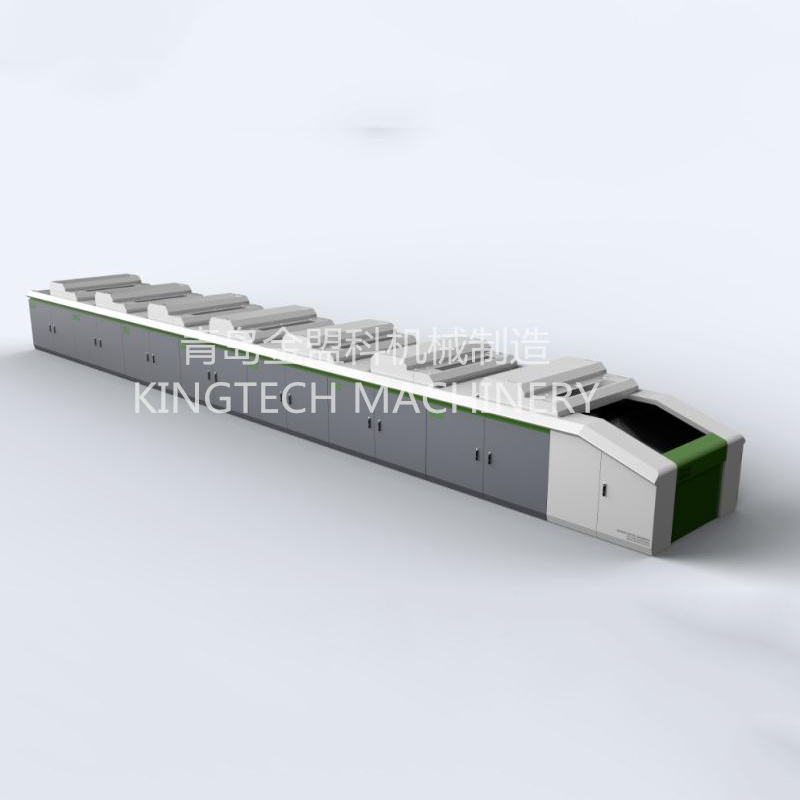
When selecting or adjusting recycling equipment, consider how feeding, opening, cleaning, and conveying work together. Kingtech Machinery offers fabric recycling solutions, including cotton waste recycling lines and opening-related systems. Matching the equipment configuration to the incoming material and intended output can help establish a more controlled process and reduce avoidable fiber damage.
Conclusion
Excessive short fiber generation in a cotton waste machine can result from aggressive opening, inconsistent feeding, unsuitable raw materials, worn components, or unnecessary repeated processing. The most effective response is to identify the actual cause instead of simply increasing machine intensity. By controlling material conditions, maintaining equipment, optimizing operating parameters, and checking fiber quality systematically, operators can improve recovery while preserving more usable fibers.
FAQ
1. Why does a cotton waste machine produce too many short fibers?
Common causes include excessive mechanical action, unsuitable roller settings, worn components, inconsistent feeding, and raw materials that already contain damaged fibers.
2. Can machine settings affect recycled cotton fiber length?
Yes. Roller speed, opening intensity, component clearance, and feeding consistency can affect fiber damage. Appropriate settings depend on the material and intended application.
3. Does processing cotton waste multiple times improve fiber quality?
Not always. Additional passes may improve separation but can also increase fiber breakage. Reprocessing should address a clearly identified problem.
4. How can fiber damage be monitored during production?
Compare representative samples before and after processing. Monitor fiber-length distribution, impurity content, usable fiber recovery, and output consistency under comparable conditions.
Post time: Oct-09-2026