




Metallic Card Clothing is a key working component used on rollers in fiber opening, carding, and textile recycling equipment. Although it may look like a small machine part, it directly affects how fibers are caught, opened, separated, and transferred during production. For machines such as openers, carding machines, cotton waste recycling machines, and nonwoven recycling equipment, the quality of metallic card clothing can influence fiber length, output uniformity, machine efficiency, and long-term maintenance.
In textile recycling and nonwoven production, many materials are not easy to process. Waste cotton, yarn waste, nonwoven scraps, fabric edge trims, wool, polyester, hemp, jute, or mixed textile waste may have different fiber strength, thickness, and bonding structures. If the metallic card clothing is not suitable, the machine may produce more fiber damage, more neps, uneven output, or unstable feeding. That is why choosing the right card clothing is important for both machine performance and final fiber quality.
What Is Metallic Card Clothing?
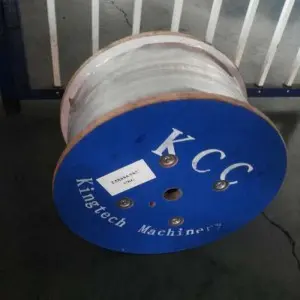
Metallic card clothing is a continuous strip of specially shaped metal wire with sharp teeth. It is wrapped around rollers, cylinders, or working parts of fiber processing machines. During machine operation, the teeth catch the fiber material, open it, comb it, and transfer it to the next working area.
It is commonly used in:
- Fiber openers
- Carding machines
- Textile waste recycling machines
- Cotton waste recycling lines
- Nonwoven production equipment
- Opening-carding systems
- Fiber cleaning and preparation equipment
The main function is to work directly with the fiber. Because it touches the material continuously during high-speed operation, its tooth shape, wire strength, hardness, and wear resistance are all important.
Why Card Clothing Matters in Fiber Processing
In fiber opening and carding, the machine does not rely only on motor power or roller speed. The actual contact between machine and fiber happens through the teeth of the metallic card clothing. If the teeth are too weak, too sharp, too dense, too sparse, or not suitable for the material, the processing result will change.
Good metallic card clothing can help:
- Open fiber more effectively
- Reduce unopened pieces
- Improve fiber separation
- Maintain better fiber length
- Reduce excessive fiber breakage
- Improve output consistency
- Support smoother machine operation
- Extend replacement intervals when maintained properly
For textile recycling, this is especially important because recycled materials are often more difficult to process than new fiber. The card clothing must handle irregular materials while still protecting usable fiber value.
Tooth Shape and Fiber Opening Effect
The tooth shape of metallic card clothing has a strong influence on the opening effect. Different tooth angles, tooth height, density, and sharpness can create different results.
For example, stronger tooth designs may be needed for compact or difficult textile waste, while finer tooth designs may be more suitable for materials that require better carding and more uniform fiber output. If the tooth shape is not matched correctly, the machine may either fail to open the material enough or damage the fiber too much.
Tooth design can affect:
- Fiber gripping ability
- Opening strength
- Fiber transfer stability
- Nep formation
- Fiber length retention
- Final fiber uniformity
This is why metallic card clothing should not be treated as a simple spare part. It is a technical component that should match the machine type and material application.
Hardness and Wear Resistance
Metallic card clothing works under continuous friction. During long-term operation, the teeth contact fiber, dust, impurities, and sometimes difficult recycled materials. If the wire material and heat treatment are not stable, the teeth may wear quickly, lose sharpness, or become uneven.
When card clothing wears too fast, several problems may appear:
- Opening efficiency decreases.
- Fiber output becomes uneven.
- More unopened material may remain.
- Machine load may increase.
- Maintenance frequency becomes higher.
- Final fiber quality may become less stable.
Stable hardness and proper heat treatment help improve durability. For factories running recycling lines or nonwoven production equipment every day, this can reduce downtime and support more predictable operation.
Metallic Card Clothing in Textile Recycling Machines
Textile recycling machines often process materials that are more complex than regular fiber preparation. Waste fabrics may contain tangled fibers, different fabric structures, dust, and uneven thickness. Metallic card clothing used in recycling equipment must provide enough opening force while avoiding unnecessary fiber damage.
In a fabric recycling machine or cotton waste recycling line, metallic card clothing can affect:
- How quickly waste material is opened
- Whether fiber clumps remain after processing
- How much fiber is shortened during opening
- Whether the output fiber is suitable for reuse
- How stable the machine runs under continuous feeding
For materials such as used clothes, rags, waste cotton, nonwoven scraps, or yarn waste, the correct card clothing selection can make the recycling process more stable and valuable.
Metallic Card Clothing in Carding Machines
In carding machines, metallic card clothing plays an even more precise role. After the material is opened, carding further separates and aligns the fibers. The card clothing on the carding parts helps control fiber distribution and output uniformity.
A suitable carding surface can improve:
- Fiber separation
- Web formation
- Fiber parallelization
- Fiber layer uniformity
- Downstream processing stability
For opening-carding systems, the relationship between opener card clothing and carding machine clothing is also important. The opener prepares the material, while the carding machine refines it. If both parts are matched properly, the recycled fiber quality can be much better than using opening alone.
Different Materials Require Different Metallic Card Clothing
The selection of metallic card clothing should first depend on the material being processed. Different fibers vary in strength, length, crimp, impurity level, and compactness, so their requirements for tooth shape and working intensity are also different. If the same card clothing is used for all materials, problems such as insufficient opening, excessive fiber damage, increased neps, or unstable output may occur.
For recycled materials such as waste cotton, used clothes, rags, and mixed textile waste, the card clothing usually needs stronger gripping and opening ability. These materials often have irregular shapes, tangled fibers, compacted structures, or remaining impurities. If the teeth do not grip the material well enough, the material may slip and the opening effect will become poor. If the tooth design is too aggressive, it may cause excessive fiber breakage and reduce the reuse value of the recycled fiber.
For nonwoven edge trims, spunlace fabric, hot air-through fabric, or needle-punched materials, the card clothing needs to balance opening ability and fiber protection. These materials often have a certain bonded structure, so the machine needs to reopen the material while reducing short fiber and dust generation as much as possible. Suitable metallic card clothing can make the recovered fiber looser and more uniform, making it more suitable for reuse in nonwoven production, filling materials, or needle-punched products.
For carding machines or opening-carding systems, metallic card clothing also plays a more precise role in fiber separation and arrangement. At this stage, the focus is not only whether the material can be opened, but also whether the fiber layer is uniform, whether fiber transfer is stable, and whether the final output is suitable for web forming or further processing. Therefore, metallic card clothing should be matched according to material condition, machine position, and final product requirements, rather than only by technical specifications.
About Kingtech and KINGSUN Metallic Card Clothing
Kingtech Machinery has long experience in textile waste recycling and nonwoven machinery, and its KINGSUN metallic card clothing is used for fiber opening, carding, and related equipment. The product focuses on wire quality, tooth design, heat treatment, and inspection, helping machines work more stably in textile recycling, nonwoven production, cotton waste recycling, and fiber preparation applications. For factories using openers, carding machines, recycling lines, or opening-carding systems, suitable metallic card clothing can help improve machine performance and recovered fiber quality.
Conclusion
Metallic Card Clothing is a key component that directly affects fiber opening and carding quality. It determines how fibers are caught, opened, separated, transferred, and prepared for the next process. In textile recycling and nonwoven production, the right card clothing can help improve fiber uniformity, reduce fiber damage, lower unopened pieces, and support more stable machine operation.
For factories processing waste cotton, nonwoven scraps, yarn waste, fabric scraps, wool, polyester, hemp, jute, or mixed textile waste, metallic card clothing should be selected according to the machine type and material condition. A suitable choice can make the difference between rough fiber output and more usable recycled fiber.
FAQ
1. What is Metallic Card Clothing used for?
Metallic Card Clothing is used on rollers and cylinders of openers, carding machines, textile recycling machines, and nonwoven equipment to open, separate, comb, and transfer fibers.
2. Why does tooth shape matter in metallic card clothing?
Tooth shape affects how the machine catches and opens fiber. It can influence opening strength, fiber length retention, nep formation, transfer stability, and final fiber uniformity.
3. Can the same metallic card clothing be used for all materials?
Not always. Different materials, such as waste cotton, yarn waste, nonwoven scraps, wool, polyester, hemp, or mixed textile waste, may require different tooth designs and wire specifications.
4. When should metallic card clothing be replaced?
It should be replaced when the teeth become worn, opening efficiency drops, fiber output becomes uneven, more unopened pieces appear, or machine load increases noticeably.
Post time: Jul-16-2026