




A Roving Opener Machine is used to process roving waste, yarn waste, fiber bundles, and similar textile waste materials, helping compacted, tangled, or clustered fibers become loose again and ready for further reuse. Unlike fabric waste, roving waste is not a complete woven or knitted structure. It is already closer to fiber form, but it still cannot directly enter later production because the fibers may be twisted, compacted, tangled, knotted, or unevenly distributed.
This material difference means the processing method cannot be exactly the same. If roving waste is treated like thick fabric scraps or old garments with strong tearing force, it may lead to excessive fiber breakage, more short fiber, and increased dust, which can reduce the usability of the recovered fiber. A suitable roving opening process should focus on controlled loosening, fiber protection, and stable output, so the recovered fiber can enter carding, nonwoven production, filling, or other downstream applications more smoothly.
Roving Waste Is Close to Fiber Form, But Not Ready for Direct Use
Roving waste usually comes from spinning preparation, yarn processing, textile production, or material handling. It may look softer than fabric scraps, but this does not mean it can directly return to production. Many roving waste materials appear as strips, ropes, laps, clusters, or compacted fiber bundles. Some may also be twisted, tangled, or partially knotted.
Common roving and yarn-related waste includes:
- Cotton roving waste
- Polyester roving waste
- Yarn waste
- Fiber sliver waste
- Spinning preparation waste
- Tangled fiber bundles
- Mixed fiber waste from textile processing
The processing focus for this type of material is not “tearing fabric apart,” but loosening compacted or tangled fiber bundles again. If the opening force is too weak, many fiber clumps may remain. If the opening force is too strong, fiber damage may increase. Therefore, roving waste is more suitable for a stable, continuous, and controlled opening process.
Fabric Waste and Roving Waste Need Different Recycling Logic
Fabric waste and roving waste both belong to textile waste, but their structures are completely different. Fabric waste usually has a clear textile structure and needs cutting and opening to break the yarn arrangement. Roving waste is already close to fiber form, so it requires loosening, separation, and arrangement.
| Material Type | Main Problem | Processing Focus |
|---|---|---|
| Fabric waste | Woven, knitted, or nonwoven structure | Cutting and opening |
| Garment waste | Seams, layers, accessories, and mixed parts | Cutting and combined opening |
| Roving waste | Fiber bundles, compaction, and entanglement | Gentle opening and carding |
| Yarn waste | Twisting, winding, and knots | Controlled loosening |
| Mixed fiber waste | Inconsistent fiber length and structure | Opening, with carding when needed |
From this perspective, the role of a roving opener machine is not simply to increase tearing strength. Its purpose is to help fibers disperse again while reducing unnecessary damage. This is especially important for applications that require stable feeding, uniform web formation, or continuous downstream processing.
Why Strong Tearing Is Not Always Better
When processing thick cloth, old garments, or multilayer fabric, stronger mechanical action may help break the fabric structure. But for roving waste, strong tearing does not always lead to better recovery results. Since the material is already close to fiber form, excessive mechanical force may act directly on the fibers, causing fiber breakage and more dust.
Over-processing roving waste may cause:
- More short fiber
- Higher dust level
- Obvious fiber breakage
- Uneven fiber length
- Increased fiber loss
- Lower downstream feeding stability
- Limited application range for recovered fiber
Therefore, roving waste recycling needs suitable opening strength rather than simply stronger tearing. Stable machine structure, proper roller configuration, and a continuous fiber loosening process can help the material gradually change from a compacted state to a looser fiber state.
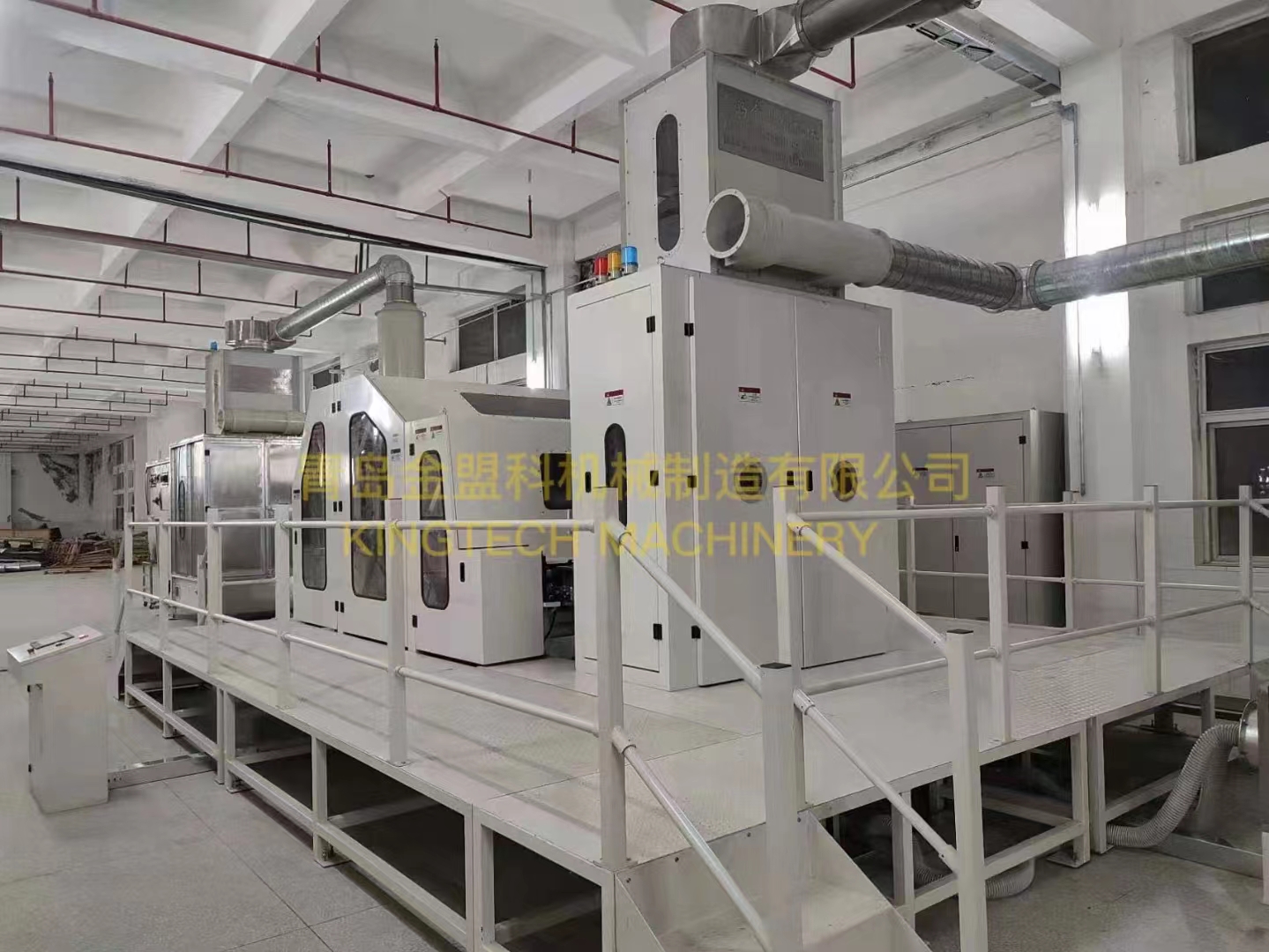
The Role of a Roving Opener Machine in Recycling
A roving opener machine is mainly used to separate compacted or tangled fiber bundles and help the material enter a more uniform and looser state. It can improve fiber feeding, reduce large fiber clumps, and prepare the material for later carding, web forming, filling, or nonwoven production.
A roving opener machine can help:
- Loosen compacted fiber bundles
- Reduce fiber entanglement
- Improve material feeding
- Lower the proportion of large fiber clumps
- Improve fiber distribution
- Prepare fiber for later carding
- Support continuous recycled fiber processing
For roving waste, yarn waste, and fiber bundle materials, the opening effect directly affects the stability of later production. If the material still enters the next machine in clumps, it may cause uneven feeding, unstable fiber distribution, or local unevenness in the final product.
When Carding Becomes More Important Than Cutting
For large fabric scraps, cutting is often the first step because fabric needs size reduction before opening. Roving waste is different. It usually does not need to be cut like large fabric pieces. What it needs more is further fiber separation and arrangement after opening.
This is where carding becomes more important. Opening can loosen fiber bundles, while carding can further separate fibers, reduce clumps, and improve fiber arrangement and distribution.
Carding is especially important when recovered roving fiber is used for:
- Nonwoven fabric production
- Needle-punched products
- Air-laid materials
- Filling materials
- Industrial textile layers
- Applications requiring more uniform fiber distribution
If the final application only needs ordinary loose filling fiber, basic opening may be enough. If more stable fiber distribution, more uniform web formation, or more continuous downstream feeding is required, an opening-carding system is more suitable.
Roving Waste Processing Affects Downstream Production
Roving waste recycling should not only focus on whether the material can be opened. It should also consider whether the recovered fiber can enter the next process smoothly. If the fiber still contains dense clumps, unopened bundles, or tangled parts, later processing will be clearly affected.
Poorly opened roving waste may cause:
- Uneven fiber feeding
- Unstable web formation
- Poor filling uniformity
- Obvious local fiber clumps
- More frequent machine adjustment
- Lower production continuity
Therefore, the value of a roving opener machine is not only in loosening waste material itself, but also in improving the stability of later processes. For nonwoven, needle punching, air-laid, and filling applications, the more stable the front-end fiber condition is, the easier the downstream process becomes to control.
What Applications Can Recovered Roving Fiber Be Used For?
After proper opening and carding, recovered roving fiber can enter different applications according to fiber type, cleanliness, length, and uniformity. Not all recovered fiber needs to meet the same quality level, and different applications have different requirements for fiber condition.
Common applications include:
- Nonwoven fabric
- Needle-punched felt
- Filling material
- Cushion and mattress padding
- Air-laid products
- Industrial textile layers
- Insulation materials
- Recycled fiber blends
If the opening and carding effect is better, the recovered fiber is easier to use in products that require stable fiber distribution. If the material is only roughly opened, it may be more suitable for ordinary filling or basic industrial uses. Equipment configuration should be determined according to the final application’s requirements for fiber length, looseness, and uniformity.
About Kingtech Machinery
Kingtech Machinery provides textile waste recycling equipment for different fiber waste and textile recycling needs. For roving waste, yarn waste, cotton yarn waste, polyester yarn waste, and similar fiber bundle materials, Kingtech’s Opening-Carding System can help achieve more stable loosening, separation, and arrangement. According to material condition and output requirements, the system can be configured with suitable opening and carding units, making recovered fiber more suitable for nonwoven, needle punching, filling, air-laid, industrial textile, and other downstream applications. Kingtech also provides Combined Opener System, Cutting Machine, Edge Trim Opener, Cotton Waste Recycling Line, laboratory recycling test lines, needle punching lines, blowers, metallic card clothing, and related accessories for different textile waste processing scenarios.
Conclusion
A Roving Opener Machine is different from equipment mainly used for fabric scraps or garment waste. Roving waste is already close to fiber form, so the processing focus is not strong cutting or heavy tearing. It is controlled opening, fiber protection, uniform separation, and preparation for carding or downstream production.
When roving waste is processed with a suitable opening and carding method, compacted fiber bundles can become looser, more stable, and more suitable for reuse. For applications such as nonwoven fabric, needle punching, air-laid materials, filling, and industrial textile layers, stable front-end fiber processing can provide a better foundation for later production.
FAQ
1. What is a Roving Opener Machine used for?
A Roving Opener Machine is mainly used to loosen roving waste, yarn waste, fiber bundles, and similar textile waste materials into a fiber condition that is more suitable for later reuse.
2. Is roving waste the same as fabric waste?
No. Fabric waste has woven, knitted, or nonwoven structure, while roving waste is already closer to fiber form but may still have compaction, entanglement, twisting, or clumping problems.
3. Does roving waste need cutting before opening?
Usually, roving waste does not need cutting like large fabric scraps. It more often requires controlled opening, and in some cases, carding is needed to improve fiber uniformity.
Post time: Aug-06-2026