




Recycling yarn waste does not automatically produce fibers that are ready for another manufacturing process. Some recovered material may contain unopened yarn fragments, tangled fiber bundles, or fibers that have become too short for their intended application. Even when the recycling process appears successful, the output may still require additional treatment before it can be reused. The performance of Yarn Waste Recycling Machines plays an important role in this process, but the final result also depends on the condition of the incoming waste and the requirements of the next production stage.
When Recycled Yarn Waste Is Not Ready for the Next Production Stage
A batch of yarn waste may look different after mechanical processing, but a change in appearance does not necessarily indicate successful fiber recovery. The material may have been loosened without being opened sufficiently, or the fibers may have sustained damage during processing.
Consider a batch of tightly twisted yarn ends mixed with tangled remnants. After entering the recycling system, some sections may separate into loose fibers, while others remain connected in small bundles. If these bundles enter a subsequent blending or carding process, they may cause uneven material distribution and require additional handling. This is one reason Yarn Waste Recycling Machines should be evaluated according to the condition of their output, not simply the amount of waste processed. A high processing rate has limited value if a substantial portion of the recovered material still needs intensive preparation.
Fibers used in nonwoven products, filling materials, or certain recycled textile applications may tolerate characteristics that would be unsuitable for conventional spinning. Recovered fibers therefore need to be assessed against a specific application rather than a universal quality standard.
Four Reasons Recovered Yarn Waste May Be Difficult to Reuse
- Incomplete opening: Tightly twisted yarn, compact knots, and tangled bundles may not separate fully during processing. Remaining yarn fragments can interfere with material uniformity and may require additional opening.
- Excessive fiber breakage: Mechanical action that is too aggressive can shorten fibers and generate more dust. Shortened fibers may still have applications, but they may be less suitable for processes that depend on a particular fiber-length distribution.
- Inconsistent material composition: When different fiber types or waste categories are mixed, the recovered output may vary in composition. Mechanical opening does not automatically separate cotton, polyester, wool, or other fibers that were blended in the original yarn.
- Contamination and unwanted residues: Labels, packaging fragments, oil, dirt, and other foreign materials can affect the usability of recovered fibers. Depending on the contamination, sorting, cleaning, or other treatment may be necessary before reuse.
These problems are not always independent. For example, a tightly tangled batch may require stronger mechanical action, but increasing the intensity can also increase fiber breakage.
How the Recycling Process Influences Fiber Usability
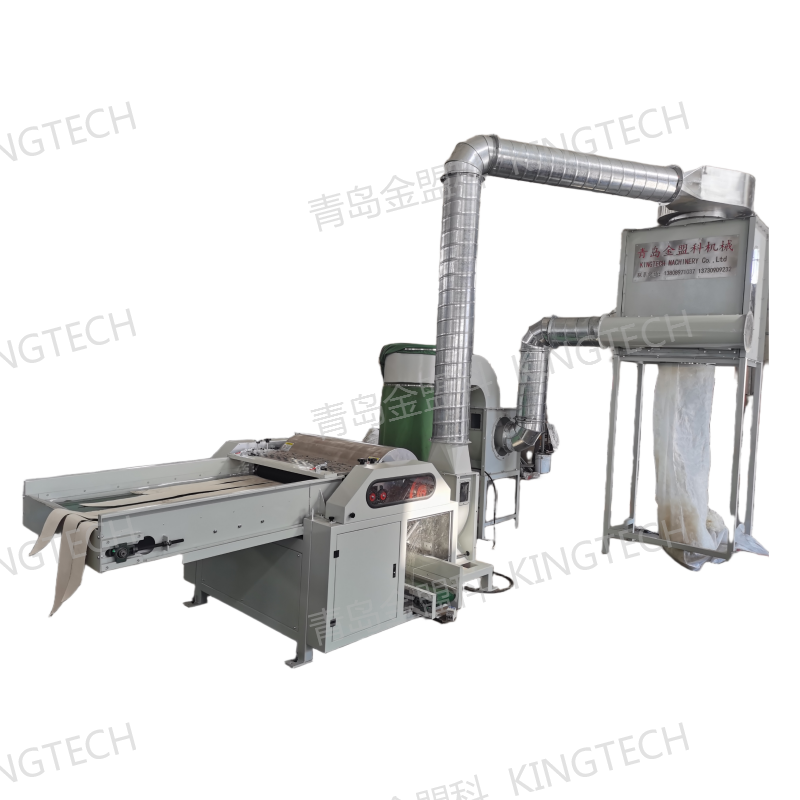
Mechanical recycling typically involves feeding yarn waste into a system that loosens, opens, or separates the material, depending on the machine configuration. The degree of opening achieved during this stage influences how easily the recovered material can be handled afterward.
If the waste enters the machine in irregular bundles, the processing load may fluctuate. Some material may receive sufficient treatment while other sections pass through without being opened adequately. Consistent feeding can help reduce these variations, although the appropriate feeding method depends on the machine design and the characteristics of the waste. The relationship between mechanical intensity and fiber quality is equally important. Too little treatment can leave tangled yarn fragments, whereas excessive treatment can damage fibers that could otherwise be reused.
Running material through the equipment repeatedly may improve opening in some cases, but it can also increase fiber damage and energy consumption. Additional passes should be based on observable improvements in the output rather than the assumption that more processing always produces better fibers. When evaluating Yarn Waste Recycling Machines, trial processing can reveal whether a particular material needs preliminary loosening, a different feeding approach, or a change in processing intensity.
Matching Recovered Fibers to Their Intended Applications
Not every recovered fiber needs to meet the same specifications. The quality requirements for recycled textile fibers depend on the manufacturing process and the properties of the finished product.
For example, conventional spinning may require closer control over fiber length, cleanliness, and consistency because these properties influence yarn formation. Some nonwoven applications can accommodate shorter fibers or a broader range of fiber characteristics, depending on the product design and production method. This difference changes how recycling results should be evaluated. A batch that is unsuitable for one application may still be useful in another. Before deciding that recovered yarn waste has little value, it is worth identifying whether the material can be redirected to a process with more appropriate requirements.
Fiber composition must also be considered. If the original yarn contains blended fibers, the recovered material may retain that blend. This is not necessarily a defect, provided the composition is compatible with the intended product. However, applications requiring a specific fiber type or tightly controlled blend ratio may need additional sorting or separation. The practical value of Yarn Waste Recycling Machines therefore depends partly on how well their output matches a realistic reuse route. Defining the target application before processing helps establish suitable quality criteria and avoids unnecessary attempts to produce a type of fiber that the incoming waste cannot reasonably deliver.
Improving Reuse Potential Through Better Equipment and Process Matching
Improving fiber usability starts before the waste enters the machine. Separating materials by composition, removing obvious contaminants, and identifying unusually compact knots can help create a more consistent feedstock. These steps may reduce processing fluctuations and make it easier to establish suitable operating conditions. Equipment selection should follow the same principle. Yarn Waste Recycling Machines need to be matched to the types of yarn waste generated, including differences in fiber composition, twist, entanglement, and expected processing volume. A setup that performs well with loose production remnants may not produce the same results with tightly knotted or heavily blended material.
It is also important to consider the entire recycling route rather than treating the machine as an isolated piece of equipment. If recovered fibers require further cleaning, opening, blending, or classification, these stages should be included when assessing the practicality of the process. When discussing equipment options with a qualified supplier, providing representative waste samples and explaining the intended reuse application can help establish realistic expectations. It allows the proposed equipment to be evaluated against actual material conditions rather than general descriptions of recycling capability.
Conclusion
Recycled yarn waste can be difficult to reuse when fibers remain incompletely opened, suffer excessive breakage, contain contaminants, or fail to meet the requirements of the next production stage. These issues depend on both the incoming material and the way it is processed. By matching Yarn Waste Recycling Machines to actual waste conditions, controlling mechanical treatment, and evaluating recovered fibers against their intended applications, operators can improve material usability and reduce unnecessary reprocessing.
FAQ
1. Why does recycled yarn waste sometimes contain unopened fragments?
Tight yarn twists, compact knots, inconsistent feeding, or insufficient mechanical treatment can prevent complete opening. The cause should be identified before deciding whether additional processing is necessary.
2. Can damaged recycled fibers still be used?
Yes, depending on the degree of damage and the intended application. Shorter fibers may be suitable for certain nonwoven products or filling materials, although they may not meet the requirements of conventional spinning.
3. Does a higher recycling output always mean better performance?
No. Processing volume alone does not indicate fiber quality. A useful assessment also considers opening completeness, fiber damage, contamination, and the proportion of material suitable for the next production stage.
4. How can manufacturers reduce the need for repeated recycling?
They can begin by sorting waste according to composition and physical condition, maintaining consistent feeding, and selecting processing conditions suited to the material. Output testing helps determine whether additional treatment provides a meaningful improvement.
Post time: Oct-24-2026