




A Cloth Waste Recycling Machine is used to process fabric scraps, cloth waste, rags, trimming waste, and mixed textile leftovers into reusable fiber. However, when cloth waste recycling results are unstable, the problem is not always caused by the machine itself. In many cases, poor recycling performance starts with mixed materials.
Cloth waste may come from garment production, textile factories, nonwoven production lines, home textile workshops, cleaning cloth production, or used textile collection. These materials may look similar from the outside, but their fiber content, thickness, fabric structure, elasticity, and cleanliness can be very different. If different fabrics are processed together without proper classification, the whole recycling process becomes harder to control.
To achieve more stable fiber recovery, cloth waste should not be treated as one single material. A more suitable recycling process should be planned according to material condition, opening difficulty, fiber quality requirements, and final application. This helps determine whether cutting, opening, combined opening, or opening-carding equipment is needed.
Mixed Cloth Waste Is Harder to Recycle Than Clean Scraps
Clean fabric scraps are usually easier to recycle because the material structure is more consistent. For example, if a factory processes only one type of cotton cutting waste or one type of polyester fabric scrap, the machine settings can remain more stable.
Mixed cloth waste is different. It may include light fabric, thick fabric, knitted waste, woven scraps, nonwoven pieces, old cloth, rags, and blended materials in the same batch. These materials do not react in the same way during cutting, opening, or carding.
Mixed cloth waste may cause:
- Uneven feeding
- Different opening effects
- More unopened fabric pieces
- Higher fiber damage risk
- More dust or short fiber
- Lower fiber uniformity
- Unstable output quality
Therefore, the first step in cloth waste recycling is not always machine operation. It is material analysis. Only when the structure, thickness, and fiber composition of the cloth waste are understood can the equipment configuration work more effectively.
Fabric Type Affects the Recycling Result
Different fabrics behave differently during recycling. Cotton fabric, polyester fabric, knitted cloth, woven cloth, and nonwoven waste each have their own processing characteristics.
Cotton cloth is usually easier to loosen, but if the processing intensity is too high, it may create dust or short fiber. Polyester fabric has stronger fiber strength and better resilience, but some dense polyester cloth can be more difficult to open. Knitted fabric has elasticity and may stretch or wrap during feeding. Woven fabric has a tighter yarn structure and usually requires a more stable opening effect. Nonwoven waste should be handled according to its specific type, such as needle-punched nonwoven, spunlace nonwoven, hot air-through nonwoven, or thermal bonded nonwoven.
If these materials are processed together without classification, the equipment needs to handle many different material reactions at the same time. This makes stable opening more difficult. For long-term continuous production, the greater the material difference, the higher the requirements for machine structure, roller configuration, feeding stability, and later fiber arrangement.
What Happens When Cotton, Polyester, Knitted, and Woven Waste Are Mixed?
When cotton, polyester, knitted, and woven waste are mixed together, the recycling line may face several practical problems.
Cotton scraps may open faster, while woven synthetic fabric may need stronger mechanical action. Knitted fabric may stretch before it tears. Thick cloth pieces may remain partly unopened. Light fabric may pass through quickly, while compacted rags may need more processing time.
As a result, the final recycled fiber may contain:
- Loose fiber
- Small fabric pieces
- Short fiber
- Fiber clumps
- Uneven fiber length
- Different fiber colors or textures
- Dust from over-processed materials
This does not mean mixed cloth waste cannot be recycled. It means the recycling process needs to be designed more carefully. The equipment combination, feeding method, opening stages, and final application should match the material condition. For complex cloth waste, one single machine often cannot balance all material characteristics, while multi-stage processing can provide more stable results.
Sorting Before Recycling Improves Fiber Recovery
Not every factory needs a very complex sorting system, but basic classification can greatly improve recycling stability. Even simple sorting by material type, thickness, cleanliness, or fabric structure can make a difference.
Useful sorting methods include:
- Separating cotton and synthetic fabric when possible
- Keeping knitted and woven waste in different groups
- Separating clean cutting scraps from dirty rags
- Removing hard accessories or foreign objects
- Separating thick fabric from light fabric
- Keeping nonwoven waste separate from garment scraps
After sorting, each material group can be processed with more suitable machine settings. This helps reduce problems such as blockage, wrapping, and uneven opening. It also allows recovered fiber to enter later applications more smoothly, such as filling, nonwoven production, needle punching, or industrial textile use.
When Is a Combined Opener System Needed?
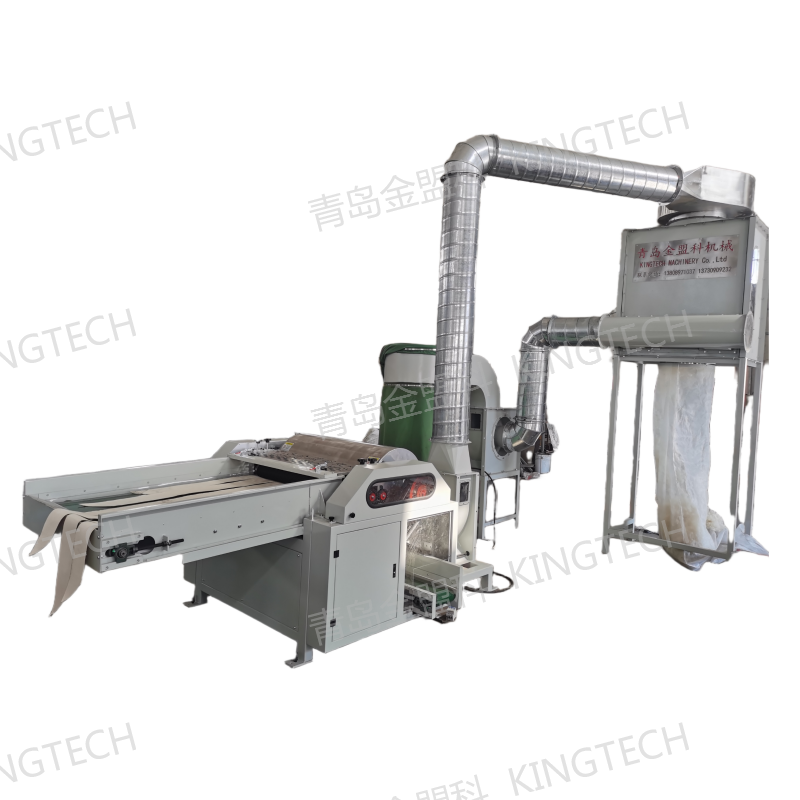
A single opener may be enough for clean and simple fabric scraps. But when the waste is mixed, thick, compacted, or difficult to open, a combined opener system is often more suitable.
A combined opener system processes cloth waste through multiple opening stages. Instead of forcing all materials through one strong tearing stage, it gradually opens the fabric structure. This helps reduce unopened pieces and improves fiber looseness.
A combined opener system is suitable for:
- Mixed cloth waste
- Rags and old cloth
- Thick woven scraps
- Knitted and woven mixed waste
- Compacted fabric pieces
- Cloth waste with different structures
- Recycling lines that require more stable output
For difficult materials, multi-stage opening makes the recycling process more controllable. Through the continuous action of different opening units, cloth waste can gradually change from blocks, sheets, or tangled pieces into a looser fiber state, reducing pressure on later processing.
When Can Opening-Carding Improve Fiber Quality?
Opening can loosen cloth waste, but it does not always produce uniform fiber. If the final application only needs coarse filling material, basic opening may be enough. If the recovered fiber requires better distribution, carding can improve the result.
An opening-carding system is suitable when recycled fiber will be used for:
- Nonwoven fabric production
- Needle-punched products
- Air-laid materials
- Higher-quality filling
- Industrial textile layers
- Applications requiring more even fiber distribution
Carding further separates and arranges fibers after opening. For mixed cloth waste, this helps reduce fiber clumps and improves downstream processing stability. However, whether carding is needed should depend on the material. Some waste materials are suitable for carding, while others may only require opening.
How to Build a More Stable Cloth Waste Recycling Process
A stable cloth waste recycling process should be based on the material, not only on machine capacity. Before configuring a cloth waste recycling machine, it is important to understand the most common waste materials being processed.
A practical process may include:
- Checking the main cloth waste sources
- Sorting materials by type or structure
- Cutting large pieces if needed
- Using a suitable opener or combined opener system
- Adding carding if better fiber uniformity is required
- Collecting recovered fiber according to final use
The goal is not to use the most complicated line, but to build the most suitable one. Clean and soft scraps may only need a simple process. Mixed and difficult cloth waste may need cutting, combined opening, and even carding.
For large fabric pieces, long edge strips, or old cloth materials, front-end cutting can improve feeding stability. For compacted, thick, or mixed-structure cloth waste, multi-stage opening can improve the loosening effect. For applications that require more uniform fiber output, an opening-carding system can further improve fiber consistency.
About Kingtech Machinery
Kingtech Machinery provides textile waste recycling equipment for different cloth waste conditions and recycling needs. Its product range includes Cutting Machine, Combined Opener System, Opening-Carding System, Edge Trim Opener, Cotton Waste Recycling Line, laboratory recycling test lines, needle punching lines, blowers, metallic card clothing, and related accessories.
For mixed cloth waste, rags, fabric scraps, nonwoven waste, cotton waste, and old textile materials, machines can be combined according to material type, opening difficulty, fiber quality requirements, capacity needs, and final application, helping make the cloth waste processing flow more stable and continuous.
Conclusion
A Cloth Waste Recycling Machine can help process fabric scraps, rags, trimming waste, and mixed textile leftovers into reusable fiber. But if different fabrics are mixed together without proper sorting or preparation, recycling results can easily become unstable.
Poor fiber quality, unopened fabric pieces, dust, fiber clumps, and uneven output are not always caused by the machine itself. They may come from material differences before processing. By classifying cloth waste more carefully and configuring suitable cutting, opening, combined opening, and carding equipment, the recycling process can become more stable, and recovered fiber can better enter later applications.
FAQ
1. What is a Cloth Waste Recycling Machine used for?
A Cloth Waste Recycling Machine is used to process fabric scraps, cloth waste, rags, trimming waste, and mixed textile leftovers into reusable fiber.
2. Can mixed cloth waste be recycled?
Yes. Mixed cloth waste can be recycled, but it usually needs better sorting, cutting, combined opening, or carding to improve the stability of recovered fiber.
3. Why does mixed fabric waste affect recycling quality?
Different fabrics have different fiber content, thickness, elasticity, and structure. When they are processed together, they may open unevenly and produce less stable fiber quality.
4. Which equipment is suitable for mixed cloth waste?
Mixed cloth waste may need a Cutting Machine for size reduction, a Combined Opener System for multi-stage opening, and an Opening-Carding System if better fiber uniformity is required.
Post time: Aug-04-2026