




Textile recycling requires more than breaking waste materials into smaller pieces. The real challenge is loosening the fabric structure and separating fibers while maintaining their condition for further use. If the opening process is too aggressive, fibers may become shorter, weaker, or more difficult to reuse. If the treatment is insufficient, fiber bundles and tangled materials may remain in the output, reducing processing efficiency.
A Combined Openers System addresses this challenge by integrating multiple opening stages into a coordinated process. Instead of relying on one machine to handle the entire operation, different stages can progressively loosen and separate textile materials. Understanding how this arrangement works helps recycling facilities improve fiber recovery while avoiding unnecessary mechanical damage.
Why Fiber Opening Requires More Than One Processing Stage
Textile waste has different structures depending on its original manufacturing process. Woven fabrics contain interlaced yarns, knitted materials have looped structures, and cotton waste may consist of loose fibers, yarn fragments, or compacted fabric pieces. These materials do not respond identically to mechanical opening.
A single opening stage may struggle to process materials with different densities and levels of entanglement. Applying excessive mechanical force to loosen tightly connected sections can also damage fibers that are already relatively easy to separate.
A Combined Openers System distributes the opening work across multiple stages. The initial stage handles larger or more compact material structures, while subsequent stages continue loosening the material and improving fiber separation. This progressive approach can make processing more manageable, especially when the incoming waste varies in condition. The objective is not to maximize the number of opening stages. It is to ensure that each stage performs a suitable part of the work without exposing the fibers to unnecessary treatment.
How a Combined Openers System Reduces Unnecessary Fiber Damage
Fiber damage often occurs when mechanical treatment is not matched to the condition of the material. Excessive impact, repeated processing, or unsuitable feeding conditions may shorten fibers and generate additional dust or fine particles.
A Combined Openers System can help control this risk by distributing material treatment across different opening stages. Rather than attempting to separate all fibers through one intensive operation, the system allows the material to be loosened progressively.
This is particularly relevant when processing cotton waste. Some materials may already contain relatively loose fibers, while others remain connected in yarn fragments or compacted fabric pieces. Treating both conditions with the same intensity may result in unnecessary processing of the easier material.
A more controlled opening process considers the following factors:
- Initial material condition: Loose cotton waste and compacted fabric scraps require different levels of mechanical treatment.
- Opening intensity: The mechanical action should be sufficient to loosen fiber bundles without causing avoidable breakage.
- Material flow: Stable feeding helps prevent concentrated batches from receiving excessive treatment.
- Output requirements: The required fiber condition should guide the opening process rather than an arbitrary number of processing cycles.
These considerations help operators evaluate whether the opening process is achieving useful separation or simply increasing mechanical treatment.
Why Different Textile Materials Need Different Opening Conditions
The performance of a Combined Openers System depends partly on the materials entering the production line. Cotton, synthetic fabrics, yarn waste, and nonwoven textiles have different physical characteristics, so their processing requirements should not be assumed to be identical.
Cotton waste is commonly generated during spinning, weaving, and garment production. It may contain loose fibers, yarn ends, fabric strips, or compacted scraps. The amount of opening required depends on how tightly the material is connected and whether it has been processed before.
Yarn waste can present another challenge. Long or tangled yarn sections may form compact bundles that need to be loosened before individual fibers can be recovered. A staged opening process can help gradually separate these structures.
Nonwoven materials require additional evaluation because their fibers may be bonded through different manufacturing methods. Some materials can be mechanically opened, while others may not be suitable for conventional fiber recovery. The intended recycling method and material construction should therefore be considered before selecting equipment.
Mixed textile waste introduces further complexity. Differences in fiber composition, thickness, and contamination can lead to inconsistent processing results. Sorting materials before opening can improve process control and help prevent unsuitable materials from entering the same treatment route.
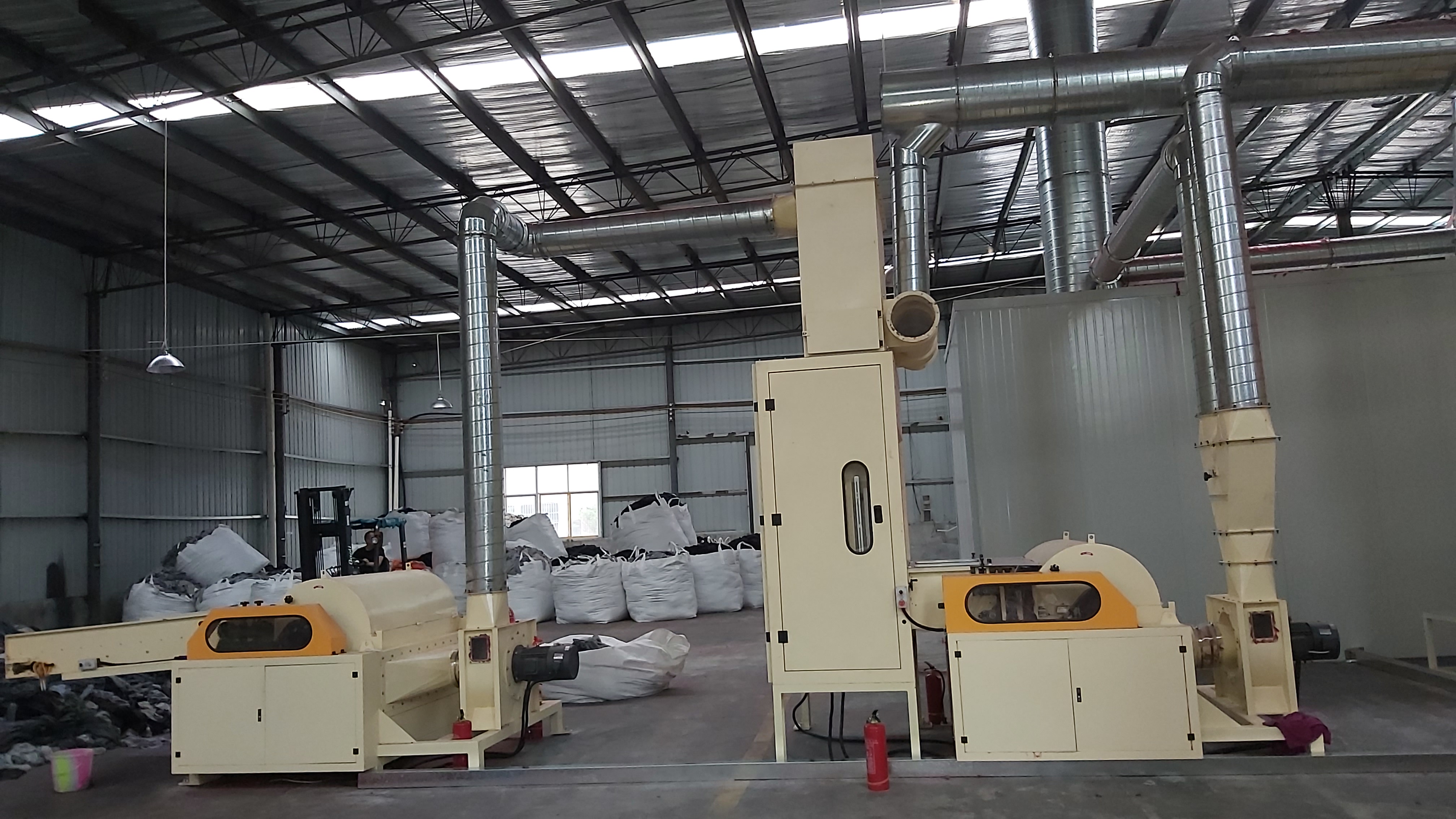
The Importance of Feeding and Material Distribution
Even a well-configured Combined Openers System may struggle when the incoming material is not distributed consistently. Large batches can overload individual stages, while irregular feeding may leave some materials insufficiently processed and others exposed to excessive mechanical action.
For example, compacted cotton scraps entering an opening machine together may create uneven material loading. This can affect the consistency of the output and make it harder to maintain stable operation.
A suitable feeding arrangement helps distribute materials more evenly before and between opening stages. Operators should also pay attention to the condition of the incoming waste. Removing unsuitable contaminants and separating materials with significantly different characteristics can reduce unnecessary processing difficulties.
Material flow should be considered across the complete line. If one opening stage processes material faster than the next stage can receive it, accumulation may occur between machines. Matching feeding speed and processing capacity helps prevent interruptions and supports more consistent production.
How to Evaluate Fiber Quality After Opening
The effectiveness of a Combined Openers System should not be judged only by processing speed or the quantity of material passing through the equipment. The condition of the recovered fibers is equally important.
A useful evaluation should consider whether fiber bundles have been sufficiently loosened, whether excessive short fibers and dust are being generated, and whether the output is suitable for the intended reuse application.
Fiber length is particularly relevant when recovered cotton is intended for further textile processing. Excessive breakage may limit the applications of the recycled material. However, fiber quality is also influenced by the original waste, previous processing history, and contamination. Opening equipment cannot restore fibers that were already damaged before entering the recycling line.
Operators should compare the incoming material with the output at different processing stages. This makes it easier to identify whether additional opening improves separation or simply increases fiber damage.
The ideal result is a balance between sufficient opening, acceptable fiber condition, and stable production. Not every textile waste stream requires the same level of separation, so the evaluation criteria should reflect the final application.
Matching the Opening System with Other Recycling Equipment
A Combined Openers System is most effective when it works as part of a coordinated textile recycling line. Before opening begins, oversized fabric pieces may need cutting or shredding to make them easier to feed. After opening, additional cleaning or separation may be required depending on the material condition and recovery objective.
For example, a cotton waste recycling line may include preliminary cutting, multi-stage opening, and subsequent material collection. The specific arrangement depends on the incoming waste and the desired output. Facilities processing used clothing, yarn waste, or nonwoven fabrics may require different preparation and treatment stages.
Equipment capacity also needs to be considered. A system with multiple opening stages should have a balanced material flow, so that no individual machine becomes a bottleneck. The goal is to coordinate each process rather than simply increase the number of machines.
Kingtech provides textile processing equipment covering cutting, fiber opening, and cotton waste recycling. When evaluating a Combined Openers System, operators can consider the material types, required fiber condition, and relationship between different processing stages. This helps determine a suitable equipment combination for the actual recycling application instead of relying on a standard configuration for every type of textile waste.
Conclusion
A Combined Openers System supports textile recycling by distributing fiber-opening work across multiple processing stages. This approach can improve material separation while helping avoid unnecessary mechanical treatment. Its effectiveness depends on the original waste condition, feeding stability, opening intensity, and coordination with other recycling equipment. By evaluating both fiber separation and output quality, recycling facilities can develop a more balanced and practical recovery process.
FAQs
Does a Combined Openers System work better than a single opening machine?
It can be more suitable for materials that require progressive opening or have varying levels of entanglement. The best choice depends on the waste characteristics and production requirements.
Can multiple opening stages completely prevent fiber breakage?
No. Some fiber damage may occur during mechanical processing, and the original condition of the waste also matters. Proper equipment selection and controlled processing can help reduce unnecessary breakage.
Is a Combined Openers System suitable for synthetic textile waste?
Suitability depends on the synthetic material’s structure and recycling method. Some materials can undergo mechanical opening, while others may require different treatment technologies.
How can operators tell whether textile waste has been sufficiently opened?
They can inspect the output for remaining compacted bundles, fiber separation, excessive dust, and consistency. The evaluation should also consider whether the recovered material meets the requirements of its intended reuse application.
Post time: Nov-10-2026