




In modern textile recycling and nonwoven production, raw cotton waste cannot be directly reused without proper processing. Cotton Fiber Opening Carding Equipment plays a crucial role in transforming compressed, mixed, or waste cotton materials into clean, uniform, and usable fibers.
For B2B manufacturers, recycling plants, and nonwoven producers, this equipment is essential for improving production efficiency, stabilizing fiber quality, and reducing overall processing costs.
What Is Cotton Fiber Opening Carding Equipment?
Cotton Fiber Opening Carding Equipment is an industrial textile machine designed to open compressed cotton fibers, remove impurities, and align fibers into a more uniform structure. It is widely used in textile recycling lines and nonwoven production systems.
Unlike simple shredding machines, this equipment focuses on fiber quality improvement rather than only size reduction.
Main processing functions include:
● Opening compressed or baled cotton fibers
● Removing dust, seeds, and small impurities
● Separating tangled fibers for better uniformity
● Aligning fibers into consistent web or sliver form
● Preparing fibers for spinning or nonwoven production
Why Cotton Fiber Opening Carding Equipment Is Important
In cotton recycling, raw material quality is often inconsistent. Without proper opening and carding, fibers remain clumped, dirty, or uneven, which directly affects final product performance.
This equipment solves these problems at the early processing stage.
Key importance includes:
● Improves fiber cleanliness and purity
● Enhances uniformity of recycled cotton output
● Reduces damage in downstream processing
● Increases efficiency of spinning or nonwoven production
● Helps stabilize product quality across batches
How Cotton Fiber Opening Carding Equipment Works
The working principle combines mechanical opening and controlled fiber separation. Raw cotton materials pass through multiple processing stages to achieve final fiber uniformity.
Typical workflow:
● Feeding system delivers raw cotton material
● Opening rollers loosen compressed fibers
● Beating and tearing system separates fiber clusters
● Dust and impurity removal system cleans materials
● Carding rollers align fibers into a uniform structure
● Output system delivers processed fiber for next stage
This multi-stage process ensures both cleanliness and fiber consistency.
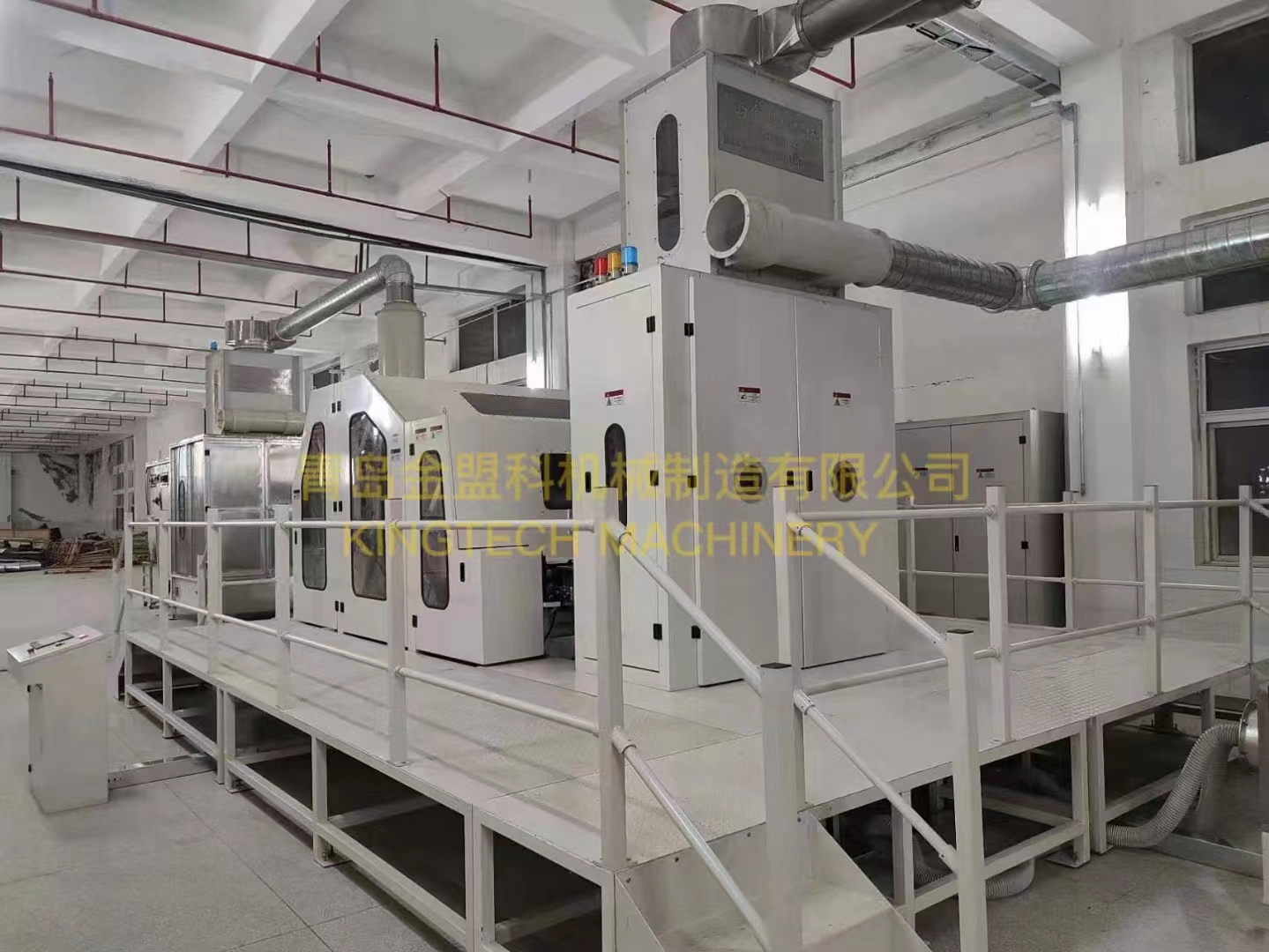
Key Features of Industrial Cotton Fiber Opening Carding Equipment
Modern machines are designed for continuous production and high stability, especially in large-scale recycling environments.
Key features include:
● Heavy-duty roller system for stable fiber opening
● Adjustable feeding speed for different materials
● High-efficiency dust removal system
● Precision carding rollers for fiber alignment
● Automatic control system for stable operation
● Durable structure for long-term industrial use
Applications in Textile and Recycling Industries
Cotton Fiber Opening Carding Equipment is widely used in both recycling and manufacturing sectors.
Main application areas:
● Cotton waste recycling plants
● Textile scrap processing factories
● Nonwoven fabric production lines
● Mattress and furniture filling material production
● Industrial wiping cloth manufacturing
● Recycled fiber blending systems
Benefits for B2B Buyers and Manufacturers
For industrial buyers, investing in cotton fiber opening and carding systems brings long-term operational advantages.
Key benefits include:
● Higher productivity with continuous processing capability
● Reduced labor dependency through automation
● Improved fiber yield and reduced material waste
● Stable output quality for downstream processes
● Lower operational cost per ton of material processed
Common Challenges in Cotton Fiber Processing
Even though cotton is widely recyclable, processing it efficiently still presents challenges.
Common issues include:
● High impurity content in waste cotton
● Fiber entanglement and uneven density
● Dust generation during processing
● Inconsistent raw material quality
● Equipment wear under heavy workloads
How to Choose the Right Cotton Fiber Opening Carding Equipment
Selecting the right machine depends on production requirements and material characteristics.
Key selection factors:
● Processing capacity per hour or per day
● Type of cotton material (raw, waste, mixed fibers)
● Level of automation required
● Dust removal efficiency
● Machine durability and maintenance cost
● Integration with existing recycling lines
Future Trends in Cotton Fiber Opening and Carding Technology
As textile recycling technology advances, cotton fiber processing equipment is also evolving toward higher efficiency and intelligence.
Future development trends:
● AI-based fiber quality monitoring systems
● Automated feeding and sorting integration
● Energy-efficient motor and roller systems
● Smart control panels for real-time adjustment
● Modular design for flexible production lines
Conclusion
Cotton Fiber Opening Carding Equipment is a key component in modern textile recycling and fiber processing systems. It transforms raw cotton waste into clean, uniform fibers suitable for high-value applications such as spinning, nonwoven fabrics, and industrial materials.
For B2B companies, this equipment is not only a processing tool but also a strategic investment that enhances production efficiency, reduces costs, and ensures consistent product quality in competitive markets.
FAQ
1. What materials can cotton fiber opening carding equipment process?
It can process cotton waste, textile scraps, recycled cotton fibers, and blended cotton materials.
2. Is this equipment suitable for large-scale production?
Yes, it is designed for continuous industrial operation and high-capacity recycling lines.
3. Does the machine improve fiber quality?
Yes, it removes impurities and aligns fibers, significantly improving uniformity and usability.
4. Can it be integrated into existing recycling lines?
Yes, it can be combined with cutting, shredding, and fiber processing machines for a complete production system.
Post time: Apr-14-2026