




A Cotton Waste Cleaning Machine is used to separate dust, short lint, loose trash, and other unwanted material from waste cotton before the recovered fiber moves into later production. However, effective cleaning does not mean removing as much material as possible.
The real challenge is more practical: how much material should be removed without losing too much usable fiber?
If cleaning is too light, impurities remain in the recycled fiber. If cleaning is too aggressive, usable cotton fiber may leave the system together with the waste. For this reason, the performance of a Cotton Waste Cleaning Machine should be judged by both impurity removal and fiber retention.
Cotton Waste Contains More Than One Kind of Material
Waste cotton entering a recycling line is rarely made up of only clean fiber. Depending on its source, it may contain loose dust, short fibers, fabric fragments, damaged yarn, lint, and other light impurities.
It is useful to separate the material into three practical groups:
| Material After Processing | What It Means | Processing Goal |
|---|---|---|
| Usable fiber | Fiber still suitable for further use | Retain as much as practical |
| Removable impurities | Dust, loose trash, very short lint and unwanted fragments | Separate from recovered fiber |
| Avoidable fiber loss | Usable fiber discharged with waste | Keep as low as possible |
This distinction is important because cleaner discharge is not automatically “waste.” If a large amount of relatively long, usable fiber appears in the discharged material, the cleaning process may be too aggressive.
How Can You Tell If Cleaning Is Too Light?
A Cotton Waste Cleaning Machine needs enough cleaning action to separate unwanted material from the fiber. When cleaning is insufficient, impurities remain mixed with the recovered cotton.
Common signs include:
- Visible dust remaining in loose fiber
- Small fabric or yarn fragments after processing
- Uneven fiber cleanliness
- Excessive fine material entering the next machine
- Unstable fiber preparation for later processes
In this situation, additional cleaning may be useful. But simply adding more cleaners is not always the correct answer. The original material condition, opening effect, feeding uniformity, and cleaner settings should also be checked.
How Can You Tell If Cleaning Is Too Aggressive?
The opposite problem is easier to overlook.
A recycling line may appear to clean very effectively because large amounts of material are discharged. But the important question is: what is actually being discharged?
If the waste stream contains many recognizable, usable fibers, cleaning intensity may be too high.
Useful signs to check include:
- Long fibers visible in cleaner waste
- Increasing fiber loss after additional cleaning stages
- Cleaner output improving only slightly while waste volume continues to increase
- Recovered fiber becoming noticeably shorter
- More fine fiber and dust generated during repeated processing
A simple practical test is to regularly inspect both the recovered fiber and the discharged waste. Looking at only one side gives an incomplete picture.
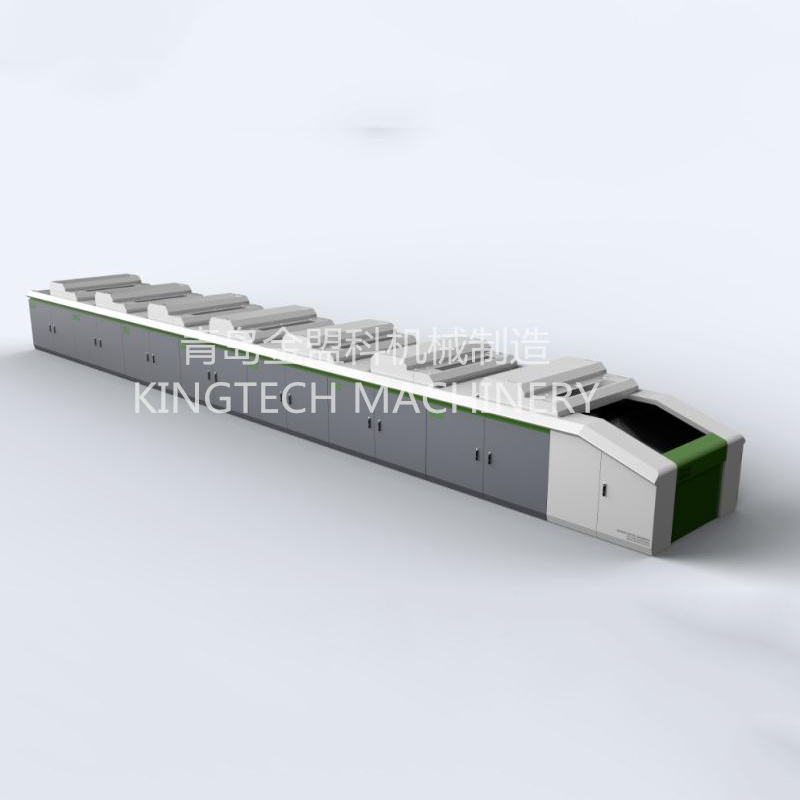
Why More Cleaners Do Not Always Mean Better Fiber
Cotton recycling systems can use several cleaning stages, especially when the input contains more impurities. Multiple cleaners give the material more opportunities to release dust and loose unwanted particles.
However, every additional mechanical stage also acts on the fiber.
More cleaning stages may be useful when:
- Impurities remain after earlier cleaning
- Waste cotton contains a high level of loose dust or trash
- Fiber bundles still trap contaminants
- Cleaner discharge mainly contains unwanted fine material
Additional stages may provide less value when:
- The fiber is already reasonably clean
- Cleaner waste contains increasing amounts of usable fiber
- Short-fiber generation begins to rise
- Each additional stage produces only a small cleanliness improvement
The correct number of cleaners should therefore depend on the actual material rather than a fixed “more is better” rule.
Opening and Cleaning Need to Work Together
Cleaning becomes more effective when impurities can first be released from compacted textile material.
This is why cotton waste recycling often combines opening and cleaning instead of relying on cleaning alone.
Opening helps loosen waste cotton, rags, yarn waste, or compacted fiber bundles. Once the material becomes more open, trapped dust and loose impurities are easier to separate in the cleaning section.
The relationship can be understood simply:
Opening releases the material. Cleaning separates what should not remain in the fiber.
If the opening stage is insufficient, impurities may stay trapped inside compact fiber bundles. Increasing cleaning intensity alone may then create more fiber loss without solving the original problem.
Different Cotton Waste Needs Different Cleaning Intensity
Not all cotton-related waste has the same impurity level or structure.
Clean Cotton Production Waste
Relatively clean cotton waste may mainly need opening and light cleaning. Excessive cleaning can add unnecessary mechanical action.
Yarn and Spinning Waste
These materials may be compacted, twisted, or tangled. Opening quality becomes particularly important before cleaning.
Rags and Used Textile Waste
Rags can contain more dust, fabric fragments, mixed structures, and contamination. They may require stronger preparation and more cleaning stages.
Used Quilts and Similar Materials
These materials can be bulky and compacted after long use. Effective opening is often needed before the cleaning section can work efficiently.
The correct Cotton Waste Cleaning Machine configuration therefore depends on material source, cleanliness, fiber condition, and the required recycled fiber quality.
A Simple Way to Evaluate Cleaning Performance
Cleaning performance can be judged through four practical observations rather than relying only on the amount of waste discharged.
| Check Point | Good Sign | Warning Sign |
| Recovered fiber cleanliness | Less visible dust and trash | Impurities remain |
| Fiber length | Useful fibers remain relatively intact | Excessive short fiber |
| Cleaner discharge | Mainly unwanted fine material | Many usable fibers |
| Downstream stability | Fiber feeds consistently | Frequent adjustment or contamination |
The best cleaning result is not the highest waste discharge rate. It is the point where impurity reduction improves while usable fiber loss remains controlled.
Kingtech Cotton Waste Recycling Equipment
Kingtech Machinery provides Openers Combined With Cleaners for processing waste cotton, rags, used quilts, linen, and similar textile waste. The system can combine one or two opening units with multiple cleaners according to material condition and processing requirements.
The opener section loosens compact textile material before the cleaner section removes dust and unwanted particles. For different cotton waste conditions, the number of opening and cleaning stages can be adjusted instead of applying the same configuration to every material.
This combination is suitable when both fiber recovery and cleaning are important before the material moves into applications such as rotor spinning or nonwoven production.
Conclusion
A Cotton Waste Cleaning Machine should not be judged by how much material it removes.
A better question is whether it removes the right material.
Too little cleaning leaves dust and impurities in recycled fiber. Too much cleaning can discharge useful fiber and increase short-fiber loss. The most effective process keeps impurity removal and fiber retention in balance.
For cotton waste recycling, this balance depends on input cleanliness, opening quality, cleaner stages, fiber condition, and final application. Regularly checking both recovered fiber and cleaner discharge is one of the simplest ways to determine whether the process is working correctly.
FAQ
1. What does a Cotton Waste Cleaning Machine remove?
It mainly separates dust, loose trash, short lint, small fragments, and other unwanted material from opened cotton waste.
2. Does adding more cleaners always improve cotton waste quality?
No. Additional cleaners can improve impurity removal, but too many cleaning stages may also increase usable fiber loss and short-fiber generation.
3. Why should opening come before cotton waste cleaning?
Opening loosens compact fiber bundles and releases trapped impurities, making it easier for the cleaning section to separate unwanted material.
4. How can excessive fiber loss during cleaning be identified?
Inspect the discharged waste. If it contains a large amount of relatively long and usable fiber, the cleaning intensity or number of cleaning stages may need adjustment.
Post time: Aug-18-2026