




In today’s highly competitive textile industry, managing cotton waste effectively has become a critical factor for improving operational efficiency and meeting sustainability goals. A Cotton Waste Machine is no longer just a supporting device in production—it has evolved into a core solution for converting waste into reusable fiber resources.
For B2B manufacturers, recycling facilities, and nonwoven producers, integrating advanced cotton waste processing equipment can significantly reduce raw material costs, stabilize product quality, and support long-term environmental strategies.
What Is a Cotton Waste Machine and Why It Matters
A Cotton Waste Machine is an industrial system designed to process various forms of cotton waste, including spinning waste, fabric scraps, and post-industrial residues, into reusable fibers. These machines are widely used in textile recycling production lines where consistency and efficiency are essential.
Unlike basic shredding equipment, a cotton waste machine focuses on fiber recovery and quality improvement, ensuring that the processed output can be reused in high-value applications.
Core processing functions include:
● Opening compressed cotton waste to loosen fiber structure and improve processing efficiency
● Removing dust, impurities, and unwanted particles to enhance fiber cleanliness
● Separating tangled fibers into more uniform and usable forms
● Preparing recycled fibers for downstream applications such as spinning or nonwoven production
● Supporting continuous industrial processing with stable output performance
Key Types of Cotton Waste Machines in Production Systems
Cotton waste processing typically involves a combination of machines that work together as a complete system. Each machine performs a specific function that contributes to the overall efficiency of the recycling process.
Common equipment in cotton waste processing includes:
● Opening machines, which are responsible for loosening compressed cotton fibers and improving material flow into subsequent stages
● Carding machines, which align fibers and enhance uniformity, ensuring better performance in downstream applications
● Cleaning machines, which remove dust and impurities to improve fiber quality
● Cutting or shredding machines, which reduce material size for easier handling and processing
● Fiber processing units, which prepare recycled fibers for specific industrial uses
This combination of equipment ensures that cotton waste is processed efficiently and consistently.
How Cotton Waste Machines Improve Industrial Efficiency
For B2B users, one of the most important considerations is how equipment can enhance productivity while reducing operational costs. Cotton waste machines directly address these needs by optimizing material utilization and improving workflow.
Key efficiency benefits include:
● Increased recovery rate of usable fibers, reducing dependence on virgin raw materials
● Consistent fiber quality, which supports stable production in spinning and nonwoven processes
● Reduced labor requirements through automation, lowering operational costs
● Improved material flow within the production line, minimizing bottlenecks
● Faster processing cycles, enabling higher production capacity
These advantages make cotton waste machines a valuable investment for industrial-scale operations.
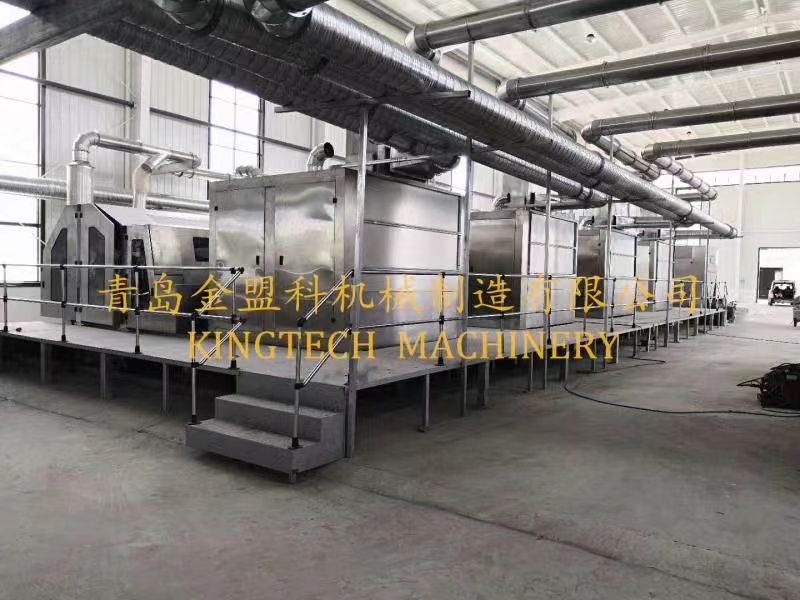
Working Process of Cotton Waste Machine Systems
A cotton waste machine operates through a structured mechanical process that transforms raw waste into usable fiber. This process ensures both cleanliness and uniformity in the final output.
Typical processing stages include:
● Feeding raw cotton waste into the system in a controlled manner
● Opening fiber bundles to separate compacted material
● Cleaning and removing impurities during mechanical processing
● Carding fibers into a uniform structure for better usability
● Delivering processed fibers for further manufacturing processes
Each stage plays an essential role in maintaining product quality and operational stability.
Applications of Cotton Waste Machine in Textile Industry
Cotton waste machines are widely used across different sectors where recycled fiber plays an important role in production. Their versatility allows businesses to expand product applications and improve resource efficiency.
Main application areas include:
● Textile recycling plants that process large volumes of cotton waste
● Nonwoven fabric production lines that require consistent fiber quality
● Yarn manufacturing facilities using recycled cotton fibers
● Furniture and mattress industries for filling materials
● Industrial wiping cloth production from recycled textiles
These applications demonstrate the broad industrial value of cotton waste processing technology.
Supporting Sustainable Manufacturing with Cotton Waste Machines
Sustainability has become a central concern for global textile businesses, and cotton waste machines play a significant role in achieving environmental targets. By converting waste into reusable resources, these machines contribute to a more sustainable production model.
Sustainability contributions include:
● Reducing reliance on virgin cotton resources and conserving natural materials
● Minimizing textile waste sent to landfills
● Lowering overall energy consumption compared to producing new fibers
● Supporting circular economy practices within the textile industry
● Helping companies comply with international environmental regulations
These factors make cotton waste machines essential for companies aiming to build environmentally responsible operations.
Integration into Complete Textile Recycling Lines
Cotton waste machines are typically integrated into comprehensive recycling systems, working alongside other equipment to create a continuous production flow.
Common system integrations include:
● Fabric shredders for initial size reduction of textile waste
● Opening and carding systems for fiber preparation
● Cleaning units for impurity removal
● Nonwoven or spinning production lines for final product manufacturing
● Fiber packaging systems for storage and distribution
This integration allows for efficient and scalable recycling operations.
Future Trends in Cotton Waste Machine Technology
As the textile recycling industry continues to evolve, cotton waste machines are becoming more advanced, offering higher efficiency and improved performance.
Key development trends include:
● Increased automation and intelligent control systems for optimized operation
● Advanced fiber quality monitoring technologies to ensure consistent output
● Energy-efficient designs to reduce operational costs
● Modular systems that allow flexible production line configurations
● Integration with digital manufacturing and smart factory solutions
These trends are shaping the next generation of textile recycling equipment.
Conclusion
Cotton Waste Machine technology has become a cornerstone of modern textile recycling and sustainable manufacturing. By transforming cotton waste into valuable fiber resources, these machines improve production efficiency, reduce costs, and support environmentally responsible practices.
For B2B companies, adopting advanced cotton waste processing solutions is not only a practical step toward optimizing operations but also a strategic move to remain competitive in an increasingly sustainability-driven market.
FAQ
1. What types of cotton waste can be processed by a cotton waste machine?
Cotton waste machines can handle spinning waste, fabric scraps, recycled cotton fibers, and other post-industrial textile residues.
2. Is a cotton waste machine suitable for continuous industrial production?
Yes, it is designed for large-scale, continuous operation with stable performance and high processing capacity.
3. How does a cotton waste machine improve production efficiency?
It automates fiber opening, cleaning, and alignment processes, ensuring consistent material quality and reducing manual labor.
4. What industries benefit from cotton waste machine applications?
Textile recycling, nonwoven manufacturing, yarn production, and industrial material processing industries widely use cotton waste machines.
Post time: Apr-23-2026