




When evaluating a Cotton Waste Recycling Machine, processing capacity is often one of the first specifications that attracts attention. However, a machine capable of handling a large amount of cotton waste per hour does not necessarily deliver the highest usable fiber output. Some material may become too short, remain tangled, or be removed together with dust and impurities during processing. For textile recycling operations, the more meaningful question is how much usable fiber can be recovered from the incoming waste. Understanding the relationship between processing volume, fiber quality, and material loss helps factories evaluate equipment based on its actual production value rather than capacity figures alone.
Processing Capacity and Usable Fiber Output Are Different
Processing capacity describes how much raw material enters the machine within a certain period. Usable fiber output refers to the portion of that material that meets the requirements of a downstream application.
These two figures should not be treated as interchangeable. A machine may process cotton waste quickly, but if the output contains excessive short fibers, unopened bundles, or impurities, part of the recovered material may have limited reuse value.
For example, a recycling line processing cotton rags may produce a relatively large volume of opened material. However, the output still needs to be evaluated for fiber condition and cleanliness. If a significant portion cannot be used in the intended spinning or nonwoven process, the effective recovery result will be lower than the initial output volume suggests.
This is why equipment performance should be assessed through both material throughput and the quality of the recovered fiber. A suitable Cotton Waste Recycling Machine should balance these factors according to the factory’s actual production objective.
Understand Where Material Loss Occurs During Recycling
Cotton waste recycling involves mechanical opening and, depending on the system, additional cleaning stages. During these operations, not all incoming material becomes reusable fiber. Understanding where losses occur helps identify whether the process is removing unwanted material or unnecessarily reducing the usable fiber content.
Dust and impurities: Used cotton materials may contain dust, loose particles, and other unwanted substances. Cleaning helps remove these materials, but the amount removed should be considered when evaluating total recovery. A cleaner output may have a lower weight than the original input without indicating poor performance.
Short fiber generation: Mechanical action separates entangled material, but excessive processing can also shorten fibers. If too many fibers become unsuitable for the intended application, the factory loses part of the material’s potential value.
Unopened bundles: Material that remains tightly entangled may not be suitable for direct reuse. It may require additional processing, which increases operating time and can create further fiber damage if the process is not properly controlled.
Material removed during cleaning: Different cleaning configurations may remove different amounts of unwanted material. Buyers should understand what is collected as reusable fiber and what is discharged as waste instead of judging performance only by the weight at the machine outlet.
Evaluate Recovered Fiber by Application Grade
Not every recovered fiber needs to meet the same quality standard. The value of a recycling result depends on whether the output can serve its intended purpose.
For example, fiber intended for certain filling applications may tolerate a different length and cleanliness level from fiber intended for spinning preparation. Nonwoven applications also vary according to product structure and performance requirements.
A practical evaluation should therefore divide recovered material according to its usability rather than treating all output as one uniform product.
| Evaluation factor | Why it matters |
|---|---|
| Fiber length | Helps determine suitability for the intended reuse |
| Short fiber content | Indicates how much material may have limited application value |
| Opening condition | Shows whether bundles remain in the recovered material |
| Cleanliness | Affects downstream processing and product requirements |
| Consistency | Determines whether output quality remains stable between batches |
This approach gives a more realistic picture of recovery efficiency. A batch that produces slightly less fiber but delivers a larger proportion of material suitable for the target application may be more valuable than a higher-volume output with inconsistent quality.
Calculate Recovery Efficiency Using Usable Output
A useful way to compare recycling results is to calculate the proportion of incoming material that becomes usable fiber.
The basic calculation is:
Usable fiber recovery rate = Usable recovered fiber weight ÷ Incoming cotton waste weight × 100%
For example, if a test processes 100 kg of cotton waste and produces 65 kg of fiber that meets the agreed reuse requirements, the usable fiber recovery rate is 65%.
The remaining 35 kg should not automatically be classified as machine loss. It may include dust, impurities, short fibers, and material that needs further processing. Recording these categories separately helps explain the result.
For a meaningful comparison, tests should use representative raw materials and consistent evaluation criteria. If one supplier tests clean cotton waste while another tests compacted or contaminated material, their recovery rates cannot be compared fairly.
Factories should also record the processing time and energy consumption associated with each test. This makes it possible to evaluate not only the amount of usable fiber recovered, but also the resources required to obtain it.
Connect Recovery Results with Operating Costs
A high recovery rate does not automatically mean the lowest production cost. The processing time, energy consumption, labor requirements, maintenance needs, and handling of rejected material all influence the final economics.
One useful comparison is the processing cost per kilogram of usable recovered fiber:
Cost per kg of usable fiber = Total processing cost ÷ Usable recovered fiber weight
This calculation helps reveal differences that a simple capacity comparison may overlook.
For instance, a configuration that requires additional cleaning stages may involve higher energy use and maintenance. However, if it produces fiber that meets a more valuable application requirement, the additional processing may be justified. Conversely, unnecessary processing can increase operating costs without improving the usability of the output.
When evaluating a Cotton Waste Recycling Machine, factories should consider the intended product, expected operating hours, local energy costs, labor arrangements, and the value of the recovered fiber. The most suitable system is the one that achieves an acceptable balance between output quality and operating expenses.
Why Machine Configuration Affects the Final Recovery Result
Cotton waste recycling lines commonly combine opening and cleaning functions. The opener breaks down compacted waste and loosens the material, while cleaners continue processing it to improve fiber separation and remove unwanted substances.
The number and arrangement of machines should reflect the condition of the incoming waste and the required output. A configuration designed for relatively clean cotton waste may not produce the same result when processing used quilts, rags, or more compacted materials.
Adding more processing stages does not automatically improve recovery efficiency. Additional mechanical action may help with difficult materials, but it can also affect fiber length and increase operating costs. The right configuration should therefore be established through material testing rather than by choosing the largest system available.
Before finalizing equipment, buyers should request a trial using representative cotton waste. The test should record incoming weight, usable fiber output, removed impurities, processing time, and the condition of the recovered material. These results provide a stronger basis for comparing equipment configurations.
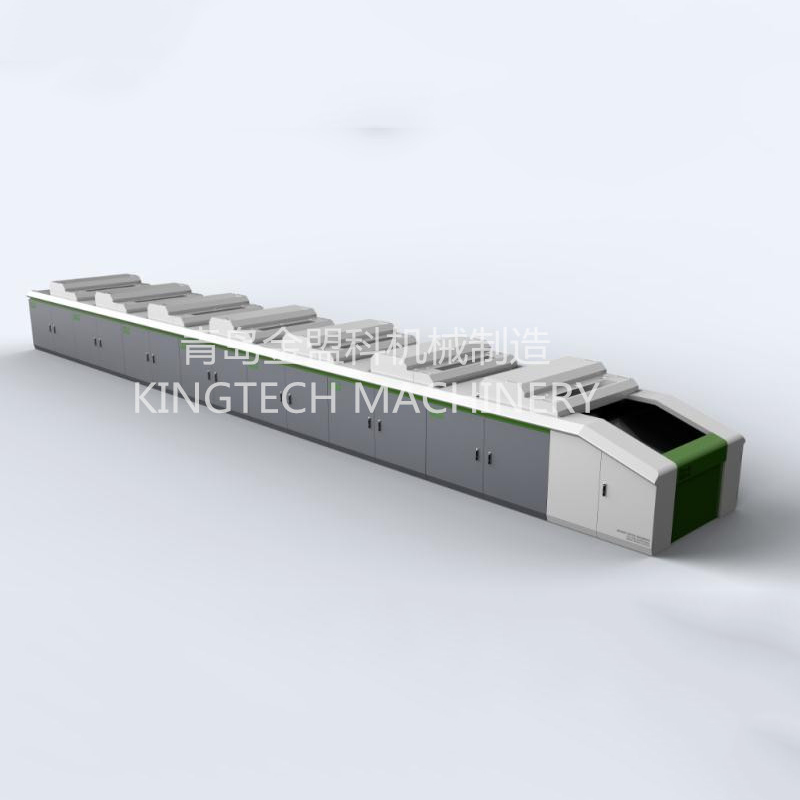
Kingtech Machinery provides cotton waste recycling equipment using opener and cleaner combinations for materials such as waste cotton, used quilts, rags, and linen. The system configuration can be considered according to the incoming material and the required recovered fiber condition. Sharing material samples and the intended reuse of the output helps establish a more relevant equipment proposal.
Conclusion
The performance of a Cotton Waste Recycling Machine should not be judged by processing capacity alone. The amount of usable fiber recovered, the condition of that fiber, material losses, and operating costs together determine the practical value of a recycling line.
By testing representative waste and recording both output quality and processing expenses, factories can make more informed equipment decisions. A well-matched recycling system should not simply process more cotton waste; it should recover fiber that can be used effectively in the next production stage.
FAQ
1. Is a higher processing capacity always better?
No. Higher capacity is useful only when the recovered fiber still meets the required quality standards. Excessive processing speed or unsuitable settings may affect fiber condition and reduce the proportion of usable output.
2. Does a lower recovery rate always indicate poor machine performance?
Not necessarily. Some incoming materials contain more dust, impurities, or unusable short fibers. These substances may be removed during cleaning, reducing the output weight while improving its suitability for reuse.
3. How can factories compare recovery efficiency between machines?
Use the same or closely matched raw materials, define the intended fiber application, and record incoming weight, usable output, removed waste, processing time, and operating conditions. This creates a more reliable comparison.
4. Should cotton waste be tested before choosing a recycling line?
Yes. Testing helps determine how the material behaves during opening and cleaning, what output quality can realistically be achieved, and whether the proposed machine configuration is suitable for the production objective.
Post time: Nov-24-2026