




In modern textile and nonwoven production, edge trim waste is one of the most consistent yet underestimated material streams. Every production line generates continuous fabric edges that are often discarded or only partially recycled. However, as raw material costs rise and sustainability requirements become stricter, manufacturers are increasingly focused on turning edge trim waste into valuable reusable fiber. The Edge Trim Opening and Carding System is designed specifically to solve this challenge by converting continuous or irregular edge trim waste into clean, uniform, and usable fiber for downstream production.
For B2B textile recyclers, nonwoven fabric manufacturers, and industrial waste processing plants, this integrated system provides a more stable, efficient, and high-quality solution compared with traditional single-function machines.
What Is an Edge Trim Opening and Carding System?
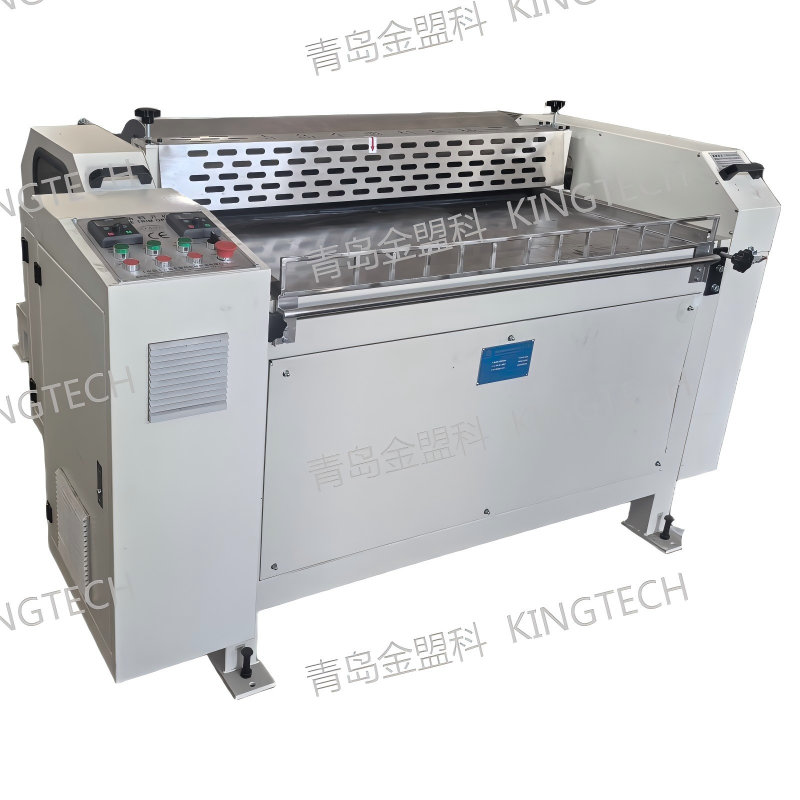
The Edge Trim Opening and Carding System is a combined industrial solution that integrates two key processing stages: opening and carding. It is designed to handle continuous edge trim waste generated from textile production lines such as nonwoven fabrics, spunlace materials, thermal bonded fabrics, and other roll-based production systems.
The opening section is responsible for loosening and separating compacted or layered edge trim materials, while the carding section refines the fibers into a more uniform and aligned structure suitable for reuse.
Main system functions include:
● Opening continuous edge trim waste into loose fiber form
● Separating compacted and layered fabric edges
● Removing fiber clumps and improving material uniformity
● Carding fibers to align and stabilize fiber structure
● Preparing recycled fibers for reuse in nonwoven or fiber blending applications
Unlike standalone machines, this system provides a complete transformation process from waste edge trim to usable fiber.
Why Edge Trim Waste Needs Advanced Processing
Edge trim waste is often produced continuously during high-speed manufacturing. Although it appears as a simple by-product, its structure is actually complex, often consisting of layered fibers, compressed edges, and partially bonded materials.
Traditional recycling equipment usually focuses only on breaking or cutting the material. However, this approach often results in inconsistent fiber quality and incomplete opening, making the output less suitable for high-end applications.
Common challenges in edge trim recycling include:
● Continuous material feeding difficulty due to long strip structure
● Uneven fiber opening caused by layered fabric edges
● Presence of fiber clumps or partially opened material
● Low consistency in recycled fiber output
● Reduced usability in downstream production processes
These issues make it difficult for manufacturers to fully utilize edge trim waste in a cost-effective way.
How the Opening and Carding System Works
The Edge Trim Opening and Carding System uses a multi-stage processing approach that combines mechanical opening with fiber alignment technology. This ensures that the material is not only broken down but also refined into a more usable fiber structure.
Typical processing workflow:
● Continuous edge trim waste is fed into the system
● Opening section loosens and separates compact fabric structures
● Fiber clusters are gradually broken down into smaller units
● Carding section aligns fibers into a more uniform layer
● Final output is delivered as stable and reusable fiber material
This combined process ensures both material breakdown and fiber quality improvement in one continuous system.
Key Advantages of the Integrated System
The integration of opening and carding functions provides significant improvements in recycling efficiency and fiber quality compared to traditional single-stage machines.
Key advantages include:
● Higher fiber uniformity compared with simple opening machines
● Reduced presence of fiber clumps and uneven material structures
● Improved recyclability of edge trim waste
● More stable output quality for industrial applications
● Better fiber alignment for downstream processing
● Increased overall utilization rate of textile waste
By combining two essential processes, the system reduces the need for multiple machines and simplifies production flow.
Applications in Textile and Nonwoven Industries
The Edge Trim Opening and Carding System is widely used in industries where continuous edge trim waste is generated during production.
Typical application sectors include:
● Spunlace nonwoven fabric manufacturing
● Air-through nonwoven production lines
● Thermal bonded fabric production
● Textile recycling and fiber regeneration plants
● Industrial fabric waste processing facilities
● Nonwoven material reprocessing systems
These industries benefit from stable waste handling and improved fiber recovery performance.
Role in Improving Fiber Quality for Reuse
One of the most important functions of this system is improving the usability of recycled fibers. Edge trim waste is often difficult to reuse directly due to its structure, but proper opening and carding significantly enhance its value.
Fiber quality improvements include:
● More uniform fiber distribution after processing
● Reduced fiber entanglement and clumping
● Improved fiber softness and usability
● Better performance in nonwoven manufacturing
● Enhanced blending compatibility with virgin fibers
These improvements allow manufacturers to reuse waste materials in higher-value applications.
Integration into Production Lines
The Edge Trim Opening and Carding System is typically integrated into complete recycling or production lines. It can operate as a continuous system alongside other processing equipment.
Common integrated equipment includes:
● Edge trim collection and conveying systems
● Fabric cutting or pre-processing machines
● Fiber cleaning and dust removal units
● Nonwoven forming and production lines
● Packaging and fiber storage systems
This integration supports continuous recycling operations and reduces manual handling requirements.
Future Development Trends
As textile recycling technology continues to evolve, edge trim processing systems are becoming more intelligent and efficient.
Future trends include:
● Intelligent feeding and monitoring systems for stable operation
● Energy-efficient motor and drive technologies
● Modular system designs for flexible production setups
● Enhanced fiber protection to reduce damage during processing
● Integration with digital factory and automation systems
These advancements will continue to improve recycling efficiency and product quality.
Conclusion
The Edge Trim Opening and Carding System provides a complete solution for processing continuous textile edge trim waste into high-quality reusable fibers. By combining opening and carding technologies in a single system, it improves fiber uniformity, enhances recycling efficiency, and reduces material waste.
For B2B textile manufacturers and nonwoven producers, this system represents a reliable and efficient approach to transforming production waste into valuable resources, supporting both cost reduction and sustainable manufacturing goals.
FAQ
1. What materials can the Edge Trim Opening and Carding System process?
The system is mainly designed to process continuous edge trim waste generated during textile production, such as spunlace nonwoven, air-through fabric, thermal bonded fabric, and other roll-based production edge trims. It can also handle partially loose or slightly tangled fiber materials.
2. What are the advantages of combining opening and carding in one system?
The opening stage loosens compressed or multi-layer waste materials into fiber form, while the carding stage further refines and aligns the fibers. This combination significantly improves fiber quality, reduces fiber clumps, and increases the overall reuse value of the material.
3. What improvements does this system offer compared to traditional single machines?
Compared with traditional single-function opening machines, this integrated system provides more stable output, better fiber uniformity, and fewer unprocessed material residues. It also reduces fiber damage caused by repeated processing stages.
4. What applications can the processed fibers be used for?
The recycled fibers can be used in nonwoven fabric production, filling materials, industrial wiping cloths, regenerated fiber blending applications, and other textile reprocessing industries, offering high secondary utilization value.
Post time: May-19-2026