




A Nonwoven Edge Trim Recycling Machine is designed to recover side trims and edge scraps produced during nonwoven fabric manufacturing. In many production lines, trimming is a necessary step to keep the final fabric width accurate and the edges clean, but it also creates continuous strips of waste material. If these side trims are collected and thrown away, factories lose usable fiber and increase waste handling costs.
For nonwoven manufacturers, edge trim recycling is not only about reducing waste. It is also a practical way to improve raw material utilization, keep workshops cleaner, and make the production process more efficient. By opening edge trims back into loose fiber, the machine helps factories reuse part of the material instead of treating it as production loss.
Why Edge Trim Waste Matters in Nonwoven Production
In nonwoven fabric production, side trimming usually happens after forming, bonding, needle punching, spunlace processing, or finishing. The trimmed edges may look like a small part of the full fabric width, but continuous production can generate a large amount of edge waste over time.
If the edge trims are not recycled, they may take up storage space, increase disposal pressure, and reduce the overall material efficiency of the production line. A nonwoven edge trim recycling machine helps solve this problem by turning side trims into reusable fiber.
What Is a Nonwoven Edge Trim Recycling Machine?
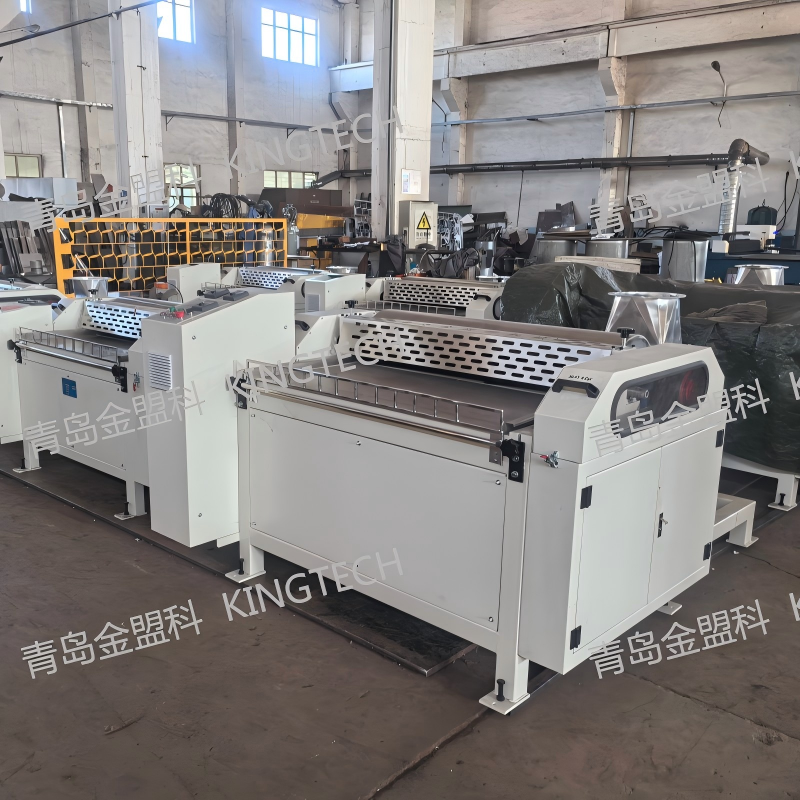
A Nonwoven Edge Trim Recycling Machine is a recycling machine used to open narrow side trims, edge scraps, and nonwoven production waste into loose fiber. It is different from a simple cutting machine because its purpose is not only to cut the material into smaller pieces, but also to recover fiber from the waste material as much as possible.
The machine is commonly used beside or after nonwoven production lines. Depending on the factory layout, it can work as an online recycling unit or as an offline machine for collected edge trims.
A suitable edge trim recycling machine can help process materials such as:
- Nonwoven side trims
- Narrow fabric strips
- Production edge scraps
- Needle-punched fabric waste
- Spunlace fabric trims
- Air-through nonwoven scraps
- Spunbond edge waste
- Thermal bonded nonwoven waste
After opening, the recovered fiber can be reused according to its quality and the factory’s production requirements.
How the Machine Works
The working process of a nonwoven edge trim recycling machine is focused on fiber recovery. The edge trims are fed into the machine, where opening parts loosen and tear the nonwoven structure. Through repeated opening action, the compact or bonded edge material is gradually turned into loose fiber.
A typical process includes:
- Collecting edge trims from the nonwoven production line
- Feeding the trims into the recycling machine
- Opening and loosening the material structure
- Reducing unopened pieces and fiber clumps
- Discharging recovered fiber for reuse or further processing
The quality of the recovered fiber depends on the material type, bonding method, fiber length, thickness, and machine configuration. For factories, the goal is not simply to break the waste apart, but to keep the recovered fiber as usable as possible.
Online Recycling or Offline Recycling?
A nonwoven edge trim recycling machine can be used in different ways. The right method depends on production scale, material consistency, workshop space, and whether the factory wants continuous recycling.
Online Recycling
Online recycling means the machine is connected with the production line. Edge trims are collected and sent directly into the machine while the main line is running. This method can reduce manual handling and make waste recovery more automatic.
Online recycling is suitable for factories with stable materials, continuous production, and regular side trim output.
Offline Recycling
Offline recycling means edge trims are collected first and processed later. This method is more flexible for factories that produce different materials, handle small batches, or do not want to connect the recycling machine directly with the main production line.
Offline recycling is also useful when different types of nonwoven waste need to be processed separately.
Benefits of Using a Nonwoven Edge Trim Recycling Machine
Using a nonwoven edge trim recycling machine brings practical benefits to daily production. It helps factories reduce material loss while improving waste management.
Main benefits include:
- Lower raw material waste
Edge trims still contain usable fiber. Recycling them allows factories to recover part of the material value instead of discarding it.
- Reduced disposal pressure
Less waste means less storage, handling, transportation, and disposal work, especially for factories with continuous production.
- Cleaner workshop environment
Continuous edge trims can quickly create messy material piles. Recycling equipment helps keep the waste flow more organized.
- Improved production efficiency
When edge trims are handled in a stable way, workers spend less time collecting and moving waste, and the production area becomes easier to manage.
- More flexible fiber reuse
Depending on the recovered fiber quality, it may be used in nonwoven production, filling materials, furniture felt, automotive layers, filtration media, insulation products, or wiping materials.
What Materials Are Suitable?
A nonwoven edge trim recycling machine is mainly suitable for nonwoven side trims and narrow production waste. However, different materials require different attention during recycling.
Suitable materials may include:
- Needle-punched nonwoven trims
- Spunlace nonwoven side waste
- Hot air-through nonwoven scraps
- Thermal bonded nonwoven waste
- Hydro-entangled fabric trims
- Spunbond nonwoven edge trims
- Soft fabric strips from production lines
- Certain woven or knitted fabric waste for filling use
Before choosing the machine, factories should consider material thickness, bonding strength, fiber type, trim width, and desired fiber quality. Some materials are easy to open, while others may need stronger opening action or additional equipment.
Applications of Recovered Edge Trim Fiber
The recovered fiber from nonwoven edge trims can be reused in different applications. The final use depends on the original material and the quality of the opened fiber.
Common applications include:
- Nonwoven fabric production
- Needle-punched felt
- Furniture padding
- Automotive textile layers
- Filtration materials
- Insulation products
- Filling materials
- Cleaning and wiping products
- Air-lay recycling processes
By matching the recovered fiber with the right application, factories can turn continuous edge waste into a useful production resource.
About Kingtech Machinery
For factories looking for practical textile waste recycling solutions, Kingtech Machinery provides equipment for different material conditions and recycling needs. Its product range includes Edge Trim Opener, Combined Opener System, Opening-Carding System, Cutting Machine, Cotton Waste Recycling Line, laboratory recycling test lines, needle punching lines, blowers, metallic card clothing, and related accessories. For nonwoven edge trim recycling, the Edge Trim Opener is a suitable choice, while other machines can be combined when the material is larger, thicker, mixed, or requires better fiber quality. This allows factories to build a more flexible recycling process according to real production conditions.
Conclusion
A Nonwoven Edge Trim Recycling Machine helps nonwoven manufacturers reduce side trim waste and recover usable fiber from production scraps. By opening edge trims back into loose fiber, the machine improves material utilization, reduces disposal pressure, and supports a cleaner and more efficient production process.
For factories producing needle-punched, spunlace, hot air-through, thermal bonded, hydro-entangled, or spunbond nonwoven materials, edge trim recycling is a practical way to reduce long-term material loss. With the right machine configuration and recycling method, continuous edge waste can become a valuable source of reusable fiber.
FAQ
1. What is a Nonwoven Edge Trim Recycling Machine used for?
A Nonwoven Edge Trim Recycling Machine is used to open side trims, edge scraps, and nonwoven production waste into reusable fiber.
2. Can this machine work online with a nonwoven production line?
Yes. It can work online with the production line or offline as a separate recycling machine, depending on the factory layout and production needs.
3. What materials can be processed by this machine?
It can process needle-punched nonwoven, spunlace fabric, hot air-through nonwoven, thermal bonded nonwoven, hydro-entangled fabric, spunbond nonwoven, and other suitable edge trim materials.
4. Why should nonwoven factories recycle edge trims?
Recycling edge trims helps reduce raw material waste, lower disposal costs, improve workshop management, and recover usable fiber for suitable production applications.
Post time: Jul-03-2026