




A Fabric Recycling Machine is used to process textile waste, fabric scraps, old clothes, nonwoven waste, and other discarded textile materials into reusable fiber. In modern textile recycling, this machine is not just a single piece of equipment, but often a complete system that may include cutting, opening, cleaning, carding, dust removal, and fiber collection. By choosing the right fabric recycling machine, factories can reduce raw material waste, lower production costs, and create more value from leftover materials.
Textile waste is produced in many forms, such as garment cutting waste, nonwoven edge trims, used clothes, rags, felt, yarn waste, and mixed fabric scraps. These materials are often irregular in size, different in thickness, and difficult to reuse directly. A fabric recycling machine helps open the waste material, separate the fiber structure, remove dust or impurities, and prepare recycled fiber for spinning, nonwoven production, filling material, or other industrial applications.
What Is a Fabric Recycling Machine?
A Fabric Recycling Machine is a machine or production system designed to recover fiber from waste textile materials. Depending on the raw material and final application, the recycling process may use different machines together, such as a cutter, opener, cleaner, carding machine, fiber conveying blower, and dust collector.
The main purpose of the machine is to turn textile waste into loose and reusable fiber. This fiber can then be used again in different production processes, helping factories reduce waste and improve material utilization.
Common materials processed by fabric recycling machines include:
- Old clothes and used garments
- Cotton rags and waste cotton
- Woven fabric scraps
- Knitted fabric waste
- Nonwoven edge trims
- Needle-punched fabric waste
- Spunlace and air-through fabric waste
- Felt, automotive fabric, and mixed textile waste
- Yarn waste, hemp, jute, and other fiber materials
Because different materials behave differently during recycling, the machine configuration should be selected according to the actual material type, impurity level, and required output fiber quality.
Why Fabric Recycling Needs More Than One Machine
Many people search for a fabric recycling machine as if it is one standard machine, but in real production, textile waste recycling often requires a complete process. A single machine may not be enough when the material is large, tangled, dirty, or difficult to open.
For example, old clothes may need to be cut before opening. Nonwoven edge trims may require an edge trim opener. Harder materials, such as felt or automotive fabric, may need a combined opener system. If the final recycled fiber needs to be longer, finer, and more uniform, an opening-carding system may be more suitable.
A complete fabric recycling process may include:
- Cutting large fabric waste into smaller pieces
- Opening and tearing the textile waste
- Cleaning dust and impurities
- Carding the opened fiber
- Conveying fiber through airflow
- Collecting dust for a cleaner workshop
- Preparing recycled fiber for the next production step
This is why choosing the right machine group is more important than simply choosing one machine name.
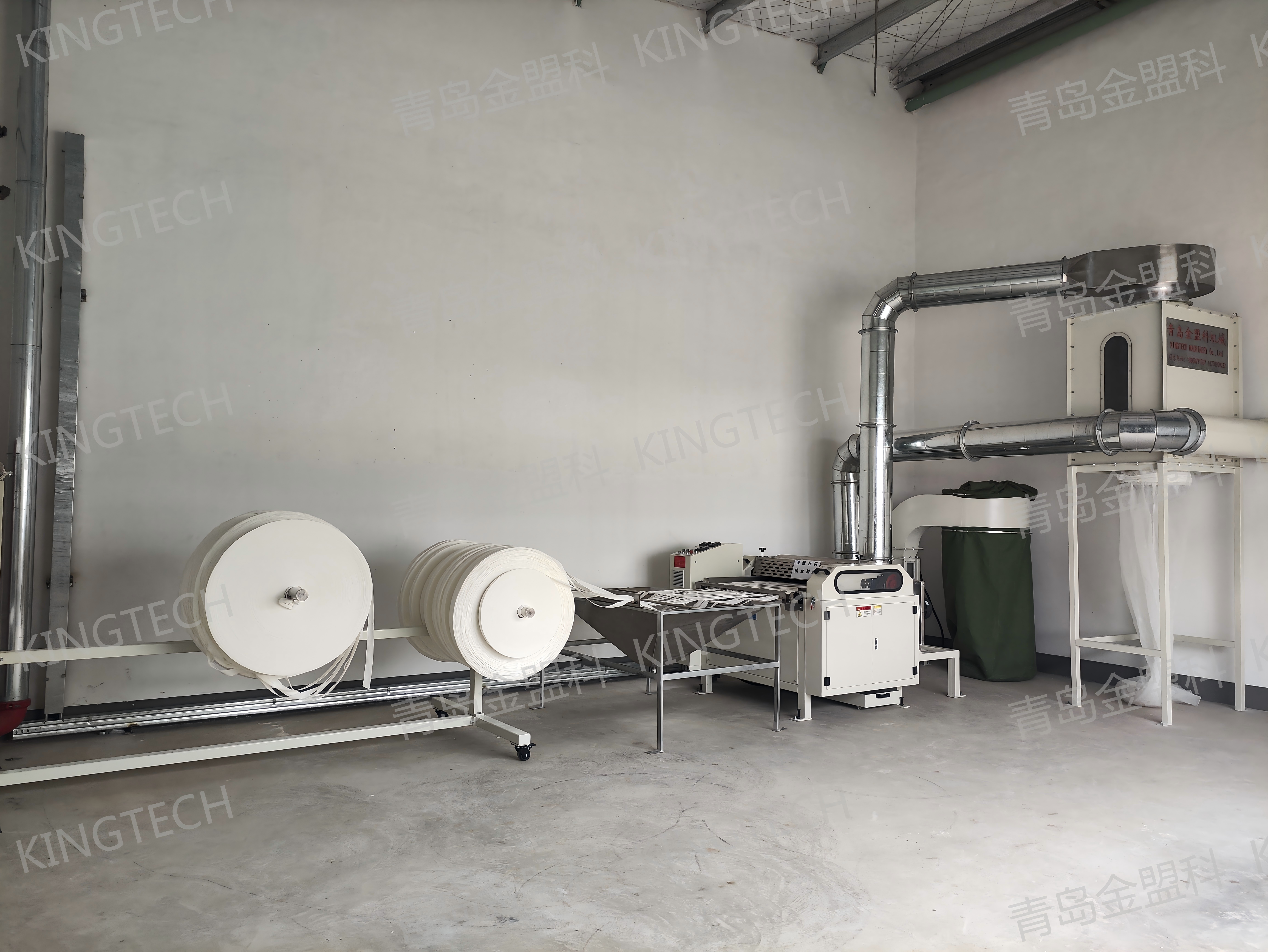
Main Types of Fabric Recycling Machines
Different fabric recycling machines are used for different stages of recycling. Understanding these types helps factories match the equipment with the correct material.
Cutting Machine for Pre-Processing
A cutting machine is used at the front of the recycling line when the raw material is too large or too long. It cuts old clothes, fabric scraps, rags, and nonwoven waste into smaller pieces before the material enters the opener.
This step helps improve feeding stability and reduces the risk of blockage in later equipment. It is especially useful for garment waste, mixed textile waste, and thick fabric scraps.
Edge Trim Opener for Nonwoven Waste
An edge trim opener is mainly used for recycling nonwoven side trims and production waste. It can open edge trim materials into fiber and help reuse them in the production system.
This type of machine is suitable for needle punching, hot air-through, spunlace, thermal bonded, hydro-entangled, and spunbond nonwoven materials. It can be used online or offline, depending on the production layout.
Combined Opener System for Difficult Materials
A combined opener system is suitable for materials that are difficult to process with only one opener. It can be configured with two, three, four, or five openers according to the material condition and capacity requirement.
This system is suitable for rags, used clothes, felt, automotive fabric, woven clips, knitted waste, and compound nonwoven fabric. It can also be equipped with a cutter, spark detector, metal detector, hopper, dust collector, and dust-eliminated system.
Opening-Carding System for Better Fiber Quality
An opening-carding system is designed for applications that require more uniform recycled fiber. After the material is opened, the carding machine further separates and arranges the fibers, making the output fiber longer, finer, and cleaner.
This system is suitable for spunlace fabric, air-through cloth, wool fabric, aramid fabric, cotton yarn waste, polyester yarn waste, hemp, jute, and other materials that need better fiber preparation.
Working Process of a Fabric Recycling Machine
Although different systems may have different layouts, the working process of a fabric recycling machine usually follows a similar logic.
First, the textile waste is sorted according to material type. If the fabric is too large, it is cut into smaller pieces. Then the material is fed into the opener, where high-speed rollers tear and loosen the fabric structure. For some materials, multiple openers may be used to gradually open the fiber.
After opening, the material may pass through cleaners or a carding machine. The cleaner helps remove dust and impurities, while the carding machine improves fiber uniformity. Finally, the recycled fiber is collected and prepared for reuse.
The process can be summarized as:
- Sorting textile waste
- Cutting large materials if needed
- Feeding material into the opener
- Opening and loosening the fiber
- Cleaning or carding according to requirements
- Collecting recycled fiber
- Sending the fiber to spinning, nonwoven, filling, or other applications
A stable process helps improve output quality and reduce production problems.
Benefits of Using a Fabric Recycling Machine
Using a fabric recycling machine brings both economic and environmental value. For textile factories, nonwoven producers, garment manufacturers, and recycling plants, it helps turn waste into usable material instead of sending it directly to landfill.
Key benefits include:
- Improved material utilization
Fabric waste can be processed into reusable fiber, helping factories reduce raw material waste and recover value from leftover materials.
- Lower production cost
Recycled fiber can be reused in different applications, which may reduce the need for new fiber materials.
- More stable recycling process
A properly configured machine system can improve feeding, opening, cleaning, and fiber collection efficiency.
- Flexible material processing
Different machines can be combined to process waste clothes, nonwoven scraps, yarn waste, rags, felt, and other textile waste.
- Support for sustainable production
Textile recycling helps reduce waste disposal pressure and supports circular use of fiber resources.
Applications of Recycled Fiber
The fiber produced by a fabric recycling machine can be used in many industries. The final use depends on the raw material quality, machine configuration, and fiber output condition.
Common applications include:
- Spinning preparation
- Nonwoven production
- Needle-punched felt
- Filling material
- Automotive textile products
- Furniture padding
- Insulation materials
- Cleaning cloth and industrial textile products
- Air-lay recycling lines
By matching the right recycling machine with the right material, textile waste can be turned into useful fiber again.
Conclusion
A Fabric Recycling Machine helps turn textile waste, old clothes, fabric scraps, nonwoven edge trims, rags, and yarn waste into reusable fiber. Instead of treating waste fabric as a disposal problem, recycling equipment allows factories to recover material value and build a more efficient production process.
Because different textile waste materials require different treatment methods, the best solution is often not one single machine, but a complete system that may include cutting, opening, cleaning, carding, conveying, and dust removal. With the right machine configuration, fabric recycling becomes more stable, more efficient, and more valuable for both production and sustainability.
FAQ
1. What is a Fabric Recycling Machine used for?
A Fabric Recycling Machine is used to process textile waste, old clothes, fabric scraps, nonwoven waste, rags, and yarn waste into reusable fiber for spinning, nonwoven production, filling, or other applications.
2. Can one machine recycle all types of fabric waste?
Not always. Different materials need different configurations. Some materials only need an opener, while used clothes, rags, felt, or mixed textile waste may require cutting, combined opening, cleaning, or carding.
3. What is the difference between an opener and a carding machine?
An opener mainly tears and loosens textile waste, while a carding machine further separates and arranges the fibers to make the output more uniform. They can be used together when better recycled fiber quality is required.
4. What materials can be processed by a fabric recycling machine?
It can process waste clothes, cotton rags, woven scraps, knitted waste, nonwoven edge trims, spunlace fabric, air-through fabric, felt, yarn waste, hemp, jute, and other textile waste materials, depending on the machine configuration.
Post time: Jun-30-2026