




A Textile Waste Shredder Machine is an important pre-processing machine in textile recycling. Before waste clothes, fabric scraps, rags, nonwoven waste, or mixed textile materials enter an opener, carding system, or complete recycling line, they often need to be cut into smaller and more manageable pieces. This step helps improve feeding stability, protect the following machines, and make the whole recycling process more efficient.
In many textile recycling plants, raw materials are not always neat or uniform. Waste fabrics may come in large pieces, long strips, tangled garments, thick multilayer cloth, or irregular edge trims. If these materials are fed directly into the recycling line without proper cutting, they may cause uneven feeding, machine blockage, lower opening efficiency, or unstable fiber output. A fabric cutting machine solves this problem by reducing large textile waste into smaller pieces before further processing.
What Is a Textile Waste Shredder Machine?
A Textile Waste Shredder Machine is used to cut, shred, or reduce textile waste into smaller pieces. In fabric recycling systems, it is often used before opening and carding equipment. Its main purpose is not to turn fabric directly into finished recycled fiber, but to prepare the raw material for the next stage.
This machine can be used for many types of textile waste, such as:
- Waste clothes
- Fabric scraps
- Garment cutting waste
- Nonwoven edge trims
- Cotton rags
- Woven and knitted fabric waste
- Mixed textile materials
- Old textile products for recycling
After cutting, the material becomes easier to feed into openers, combined opener systems, or textile waste recycling lines. For factories that handle large volumes of waste fabric, this pre-cutting process can make production more continuous and easier to control.
Why Cutting Comes Before Opening
In textile recycling, shredding or cutting is usually the first step when the waste material is too large, too long, or too tangled. Openers are designed to open and loosen fibers, but if the material enters the opener in oversized pieces, the processing load becomes much higher.
A textile waste shredder machine helps solve several common production problems:
- It reduces large fabric pieces into smaller sizes.
- It improves feeding uniformity before the opener.
- It lowers the risk of material wrapping around rollers.
- It helps the opener work more smoothly.
- It improves the stability of the whole recycling line.
- It can increase the usable value of recycled material.
For example, old garments may contain sleeves, collars, seams, and multilayer sections. If they are not cut first, they can be difficult to process evenly. After shredding or cutting, the material is much more suitable for the next opening and fiber recovery process.
Suitable Materials for Textile Waste Cutting
A good textile waste shredder machine should be able to handle different forms of fabric waste. Since recycling materials vary greatly, the machine selection should match the material type, thickness, and required cutting size.
Common suitable materials include:
- Old clothes and used garments
- Cotton fabric waste
- Polyester fabric scraps
- Nonwoven fabric waste
- Needle-punched fabric scraps
- Woven fabric clips
- Knitted fabric waste
- Rags and industrial textile waste
- Edge trims from fabric production
For softer materials, cutting can improve feeding speed and reduce manual handling. For thicker or multilayer materials, pre-cutting is even more important because it helps avoid overload in later recycling equipment.
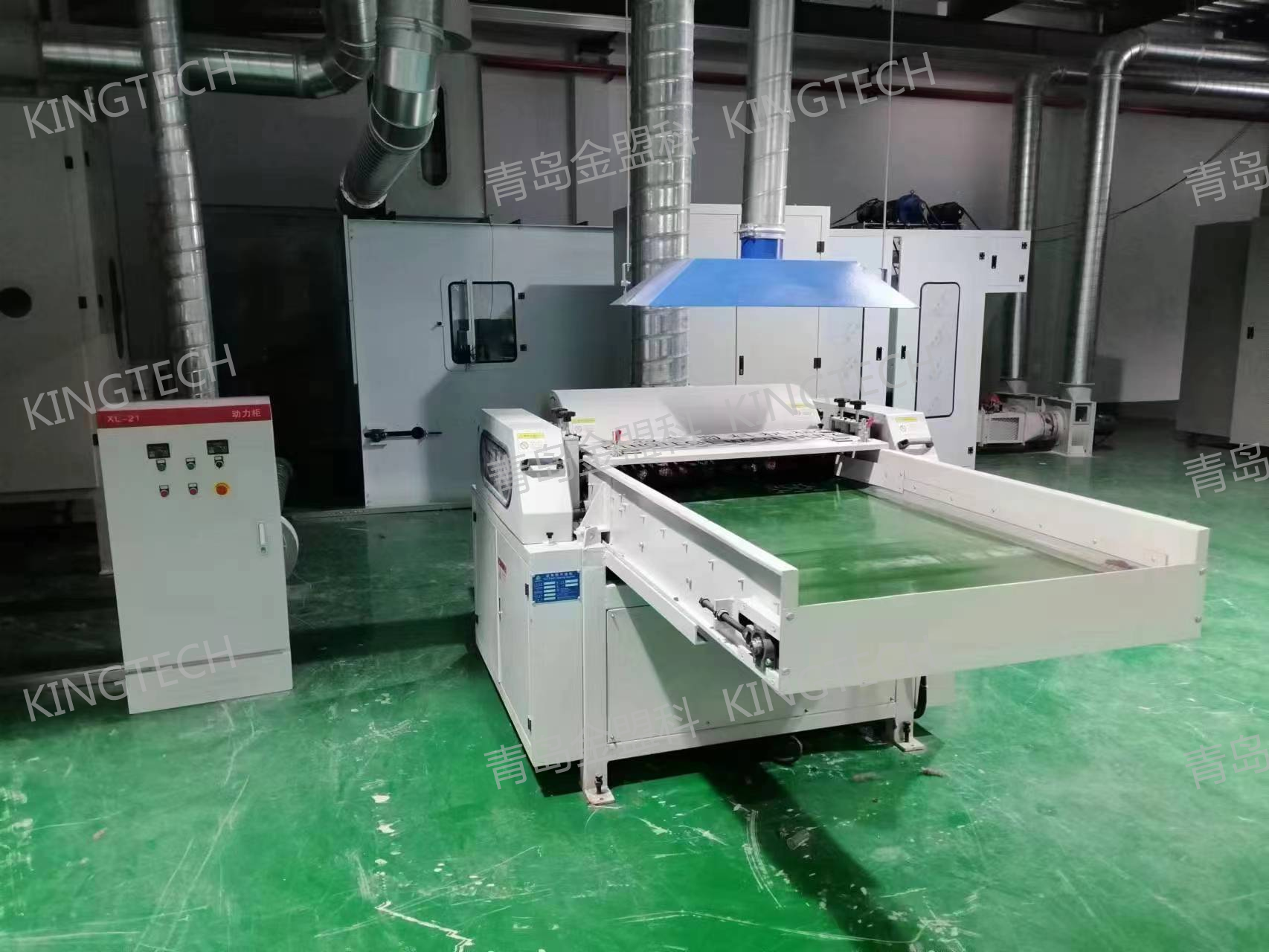
Main Types of Fabric Cutting Machines
Different recycling plants may require different cutting methods. The machine can be selected according to material width, production capacity, and cutting purpose.
Common machine types include:
Rotated Blade Cutting Machine
A rotated blade cutting machine is suitable for cutting many types of fabric waste into smaller pieces. It is often used in textile recycling lines where higher capacity is required. Depending on the model, the working width can be selected to match different feeding requirements.
This type of machine is useful for:
- Garment waste cutting
- Fabric roll waste cutting
- Nonwoven scrap cutting
- Textile recycling line preparation
- High-volume waste fabric processing
The rotated blade structure helps improve cutting efficiency and is suitable for continuous production.
Vertical Blade Cutting Machine
A vertical blade cutting machine is usually used for certain thick or wide materials that require stable downward cutting. It can be helpful when the waste material needs to be cut into sections before entering the next process.
This type is often chosen when the material is heavier, thicker, or more difficult to handle with simple manual cutting.
Small Cutting Machine for Testing or Low Output
For laboratories, small workshops, or material testing, a smaller cutting machine can be used. It is suitable when the factory needs to test recycled material performance before building a larger line.
This option is practical for:
- Sample testing
- Small-batch recycling
- New material trials
- Laboratory recycling systems
- Low-volume waste processing
How It Works in a Textile Recycling Line
A textile waste shredder machine usually works as the front-end equipment of a recycling line. The process can be described as follows:
- Waste fabric is collected and sorted.
- Large textile waste is fed into the cutting machine.
- The machine cuts the material into smaller pieces.
- The cut material enters the opener or combined opener system.
- Fibers are gradually opened, loosened, and separated.
- The recycled fiber can be used for spinning, nonwoven production, filling material, or other applications.
This process helps turn irregular textile waste into more uniform material before fiber opening. The more stable the preparation stage is, the easier it is for the recycling line to maintain continuous production.
Benefits of Using a Textile Waste Shredder Machine
Using a textile waste shredder machine brings practical benefits to recycling factories. It is not only about cutting fabric, but also about improving the efficiency of the entire production system.
Key benefits include:
- Better feeding stability
Smaller fabric pieces are easier to feed into the opener, reducing sudden material jams and uneven processing.
- Higher recycling efficiency
When waste fabric is properly cut, the following equipment can open fibers more effectively and work with less pressure.
- Lower labor intensity
Manual cutting is slow, inconsistent, and labor-intensive. A cutting machine helps reduce manual workload and improve production speed.
- Improved equipment protection
Large and tangled fabric waste may increase machine wear or cause blockage. Pre-cutting helps reduce these risks.
- Flexible production use
The machine can work with different textile waste materials and can be connected with openers, carding systems, or complete recycling lines.
Applications of Textile Waste Shredder Machine
A textile waste shredder machine can be used in many recycling and textile processing scenarios. It is especially useful when fabric waste needs to be prepared before opening, carding, or fiber regeneration.
Typical applications include:
- Textile waste recycling lines
- Used clothes recycling
- Garment factory waste processing
- Nonwoven fabric recycling
- Fabric scrap recycling
- Rag cutting and preparation
- Recycled fiber production
- Pre-processing before opener systems
As textile recycling becomes more important for cost control and sustainable production, this machine plays a valuable role in improving waste material reuse.
Conclusion
A Textile Waste Shredder Machine is a practical and necessary machine for preparing textile waste before recycling. By cutting old clothes, fabric scraps, rags, nonwoven waste, and other textile materials into smaller pieces, it helps improve feeding stability, reduce machine blockage, protect later equipment, and support continuous recycling production.
For factories using opener systems, opening-carding systems, or complete textile waste recycling lines, a suitable fabric cutting machine can make the whole process more efficient and reliable. When selected according to raw material type, output requirement, and recycling purpose, it becomes an important part of turning textile waste into reusable fiber.
FAQ
1. What is a Textile Waste Shredder Machine used for?
A Textile Waste Shredder Machine is used to cut waste clothes, fabric scraps, rags, nonwoven waste, and other textile materials into smaller pieces before they enter an opener or recycling line.
2. Is a textile waste shredder the same as a fabric opener?
No. A shredder or cutting machine mainly cuts large textile waste into smaller pieces, while a fabric opener opens and loosens the fiber structure. They are often used together in textile recycling.
3. What materials can this machine process?
It can process used garments, cotton rags, woven fabric waste, knitted scraps, nonwoven edge trims, garment cutting waste, and mixed textile waste, depending on the machine configuration.
4. Why is cutting important before textile waste recycling?
Cutting helps make the material size more uniform, improves feeding stability, reduces blockage risk, and allows the opener or recycling line to process the waste fabric more efficiently.
Post time: Jun-25-2026