




The global fashion and textile industry is producing an ever-growing volume of post-consumer clothing waste, creating significant pressure on landfills, waste management systems, and environmental sustainability goals. In this context, the Old Clothes Recycling Machine has become a key industrial solution for converting discarded garments into reusable fibers and raw materials for new production cycles.
For B2B recycling facilities, textile processors, and nonwoven manufacturers, this equipment plays an important role in turning complex mixed clothing waste into valuable industrial input. Unlike simple shredding devices, modern recycling systems are engineered to recover fiber structure while maintaining usability for downstream applications.
What Is an Old Clothes Recycling Machine?
An Old Clothes Recycling Machine is an industrial system designed to process used garments and textile waste into reusable fiber materials. These machines typically handle a wide variety of input materials, including cotton clothing, blended fabrics, polyester garments, denim waste, and mixed textile scraps collected from post-consumer sources.
The main objective is not only size reduction but also fiber recovery, allowing the processed material to be reused in nonwoven production, insulation materials, filling applications, and other textile-based industries.
Core processing functions include:
● Breaking down old garments into manageable fiber forms
● Separating tangled fabric structures for further processing
● Reducing textile waste volume for easier handling and transport
● Preparing fibers for reuse in industrial manufacturing systems
● Supporting continuous recycling production lines
Why Old Clothes Recycling Has Become a Global Priority
The rapid turnover of fashion products has significantly increased textile waste worldwide. Many garments are discarded after only a short period of use, resulting in large volumes of mixed textile waste that is difficult to manage using traditional disposal methods.
Governments, manufacturers, and recycling companies are increasingly focusing on circular economy strategies to reduce environmental impact and recover value from used textiles.
Key drivers behind textile recycling demand include:
● Increasing global textile waste generation from fast fashion
● Rising environmental regulations and landfill restrictions
● Growing demand for recycled fibers in manufacturing industries
● Pressure on brands to adopt sustainable production practices
● Economic need to reduce dependence on virgin raw materials
These factors are accelerating the adoption of industrial recycling machinery.
How an Old Clothes Recycling Machine Works
The recycling process involves multiple mechanical stages designed to gradually transform used clothing into reusable fiber material. Each stage plays a specific role in breaking down fabric structure while maintaining fiber usability.
Typical processing workflow:
● Sorting and feeding of mixed textile waste into the machine
● Mechanical tearing and opening of fabric structures
● Separation of seams, layers, and tangled materials
● Fiber loosening to improve material flexibility
● Dust and impurity removal during processing
● Output of semi-opened or fully opened recycled fibers
This step-by-step process ensures that even complex clothing waste can be converted into usable industrial material.
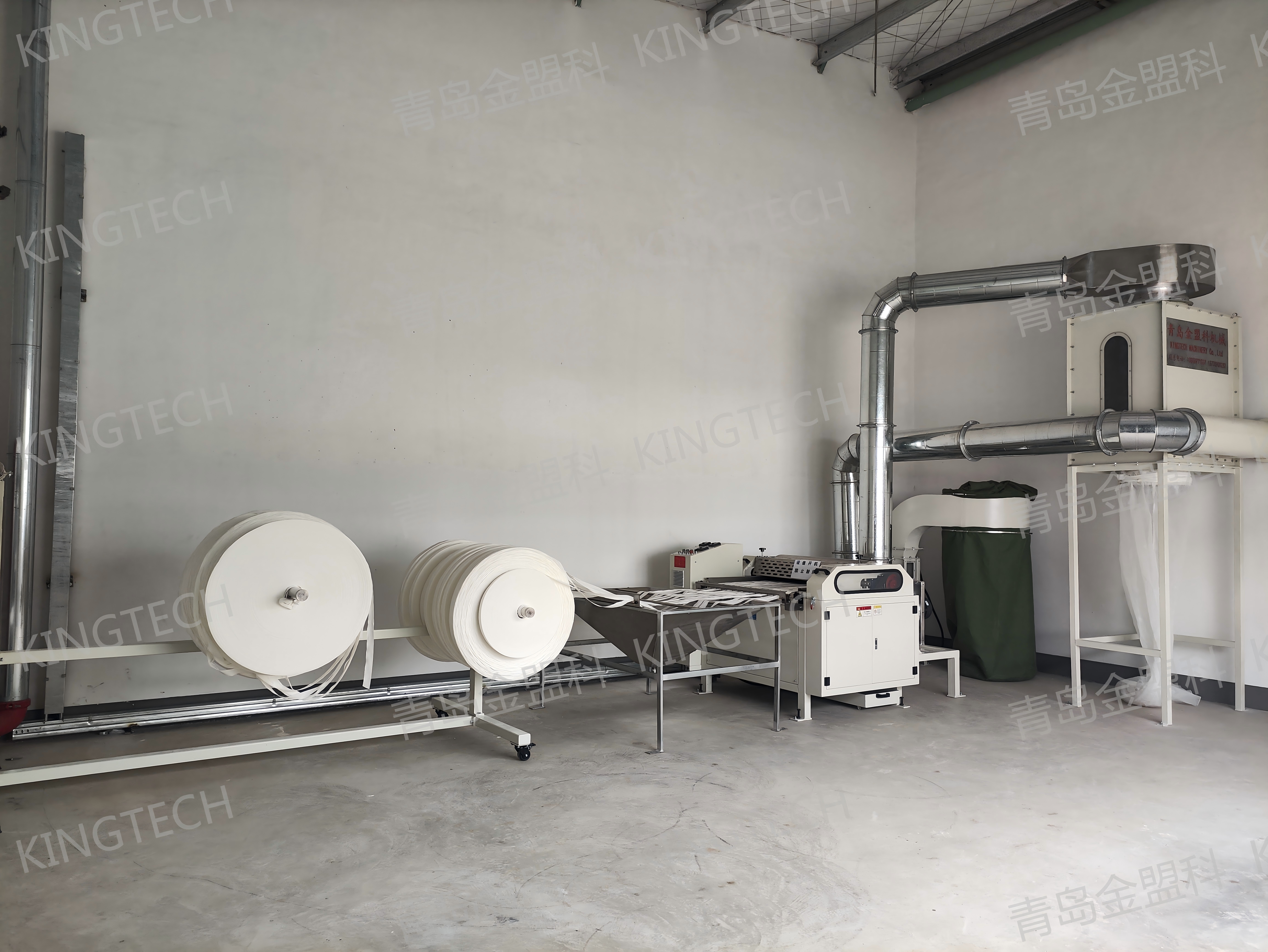
Types of Materials That Can Be Processed
Old clothes recycling machines are designed to handle a wide variety of textile waste types, making them highly adaptable for industrial recycling operations.
Common input materials include:
● Used cotton garments and t-shirts
● Polyester clothing and synthetic fabrics
● Denim and heavy textile waste
● Mixed fabric post-consumer clothing
● Factory cutting scraps and rejected garments
● Household textile waste collections
This flexibility allows recycling facilities to process both clean industrial waste and complex consumer waste streams.
Importance of Fiber Quality in Recycling Applications
In textile recycling, fiber quality directly determines the usability of the final product. Poorly processed waste may contain excessive clumps, short fibers, or contaminants that reduce its value in downstream applications.
Modern recycling machines are designed to improve fiber consistency while minimizing damage during processing.
Key fiber quality improvements include:
● Better fiber separation from mixed clothing structures
● Reduced presence of fabric chunks and unprocessed material
● Improved fiber softness and flexibility
● Enhanced suitability for nonwoven production
● More consistent blending with virgin fibers
High-quality recycled fiber is essential for producing stable industrial products.
Industrial Applications of Recycled Old Clothes Fiber
The output from old clothes recycling machines is widely used across multiple industries that rely on fiber-based raw materials.
Major application areas include:
● Nonwoven fabric manufacturing
● Insulation and thermal materials
● Furniture and mattress filling production
● Industrial wiping cloth and cleaning products
● Automotive interior padding materials
● Geotextile and construction fiber products
These applications help extend the lifecycle of textile materials and reduce dependency on virgin fiber resources.
Role in Circular Economy Development
The concept of a circular economy is becoming central to modern manufacturing strategies. Instead of discarding used clothing, the goal is to continuously recycle and reuse textile materials in new production cycles.
Old clothes recycling machines are a core technology supporting this transformation.
Contributions to circular economy include:
● Reducing textile waste sent to landfills
● Extending material lifecycle through fiber recovery
● Lowering demand for new raw material extraction
● Supporting sustainable manufacturing systems
● Improving resource efficiency in textile industries
This shift is reshaping how textile supply chains operate globally.
Benefits for B2B Recycling Operations
For industrial users, investing in old clothes recycling machinery provides both operational and economic advantages. These systems are designed for continuous production environments where efficiency and stability are essential.
Key business benefits include:
● Increased processing capacity for large-scale textile waste
● Reduced labor requirements through automation
● Improved consistency of recycled fiber output
● Lower raw material costs through reuse of waste textiles
● Enhanced environmental compliance and sustainability branding
● Stronger competitiveness in global recycling markets
These advantages make recycling equipment an important long-term investment for manufacturers.
Future Development Trends
As textile recycling technology continues to evolve, old clothes recycling machines are also becoming more advanced, efficient, and intelligent.
Future trends include:
● AI-assisted material feeding and monitoring systems
● Energy-efficient motor and drive technologies
● Modular machine design for flexible production setups
● Improved fiber protection systems to reduce damage
● Integration with digital factory automation platforms
These innovations will further improve recycling efficiency and fiber quality.
Conclusion
The Old Clothes Recycling Machine plays a critical role in transforming post-consumer textile waste into valuable reusable fiber materials. By efficiently breaking down and processing used garments, the system supports sustainable manufacturing, reduces environmental impact, and improves resource utilization.
For B2B recycling companies and textile manufacturers, this equipment represents a practical and scalable solution for building efficient circular production systems and meeting the growing global demand for sustainable textile processing.
FAQ
1. What materials can an old clothes recycling machine process?
An old clothes recycling machine is mainly used to process post-consumer textile waste, including cotton garments, polyester clothing, blended fabrics, denim, and various mixed textile waste materials. It can also handle factory cutting scraps.
2. What is the difference between an old clothes recycling machine and a regular shredder?
A regular shredder mainly focuses on size reduction, while an old clothes recycling machine focuses more on fiber recovery. It breaks down garments while preserving fiber structure as much as possible for further reuse.
3. What industries can use the recycled fibers?
The recycled fibers can be widely used in nonwoven fabric production, filling materials, insulation materials, automotive interiors, industrial wiping cloths, and geotextile applications.
4. Is the old clothes recycling machine suitable for large-scale industrial production?
Yes, the machine is typically designed for continuous industrial operation and can be integrated into a complete recycling line with opening, carding, dust removal, and baling systems for large-scale textile waste processing.
Post time: May-21-2026