




With the growing demand for sustainable materials, recycling clothing materials has become a key focus for textile manufacturers and recycling companies. At the core of this transformation are recycling clothing materials machines, which enable the conversion of textile waste into reusable fibers and materials.
For B2B buyers, selecting the right recycling equipment is essential to improve efficiency, reduce costs, and ensure stable output quality.
What Are Recycling Clothing Materials Machines?
Recycling clothing materials machines are industrial systems designed to process used garments and textile waste into reusable fibers or intermediate materials. These machines form the backbone of a textile recycling production line.
Compared to manual processing, these machines automate key steps such as cutting, shredding, opening, and fiber recovery, ensuring consistent and scalable production.
Core functions include:
● Cutting and size reduction of textile waste
● Shredding fabrics into smaller pieces
● Removing impurities such as metal and dust
● Opening fibers for improved processing quality
● Preparing materials for spinning or nonwoven production
Common Types of Machines in Clothing Material Recycling
A complete recycling system typically includes multiple machines working together, each responsible for a specific stage of the process.
Common equipment includes:
● Guillotine cutting machine:
Used to cut large textile waste into uniform sizes
● Shredding machine:
Breaks down textiles into smaller fragments
● Opening machine:
Loosens and separates fibers
● Cleaning equipment:
Removes dust and impurities
● Fiber processing machines:
Prepare recycled fibers for spinning or nonwoven applications
Understanding how these machines work together is essential for designing an efficient recycling line.
Key Advantages for B2B Manufacturers
Modern recycling machines are designed for industrial-scale operations and provide significant advantages.
Main advantages include:
● High production capacity for large-scale processing
● Stable and consistent fiber quality
● Reduced labor costs through automation
● Improved resource utilization and reduced waste
● Ability to process various textile materials
These benefits make recycling machinery a strategic investment for expanding operations.
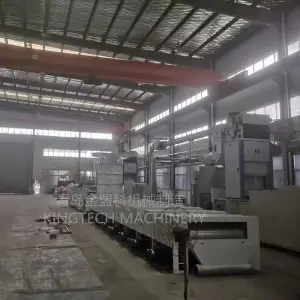
Applications of Recycled Materials
Recycled materials produced by these machines are widely used across multiple industries.
Common applications include:
● Yarn production for apparel manufacturing
● Nonwoven materials for automotive and construction industries
● Filling materials for furniture and insulation
● Industrial wiping cloths
● Sustainable textile product development
This versatility enhances the commercial value of recycled textiles.
How to Choose the Right Recycling Machines?
Selecting the right machines depends on your production requirements and operational goals.
Key factors to consider:
● Processing capacity: Match machine output with your production needs
● Material type: Different fabrics require different processing solutions
● Automation level: Higher automation reduces labor dependency
● Durability: High-quality components ensure long service life
● Integration: Compatibility with existing production systems
Making the right choice can significantly improve efficiency and reduce operational risks.
Challenges in Machine-Based Recycling
Despite technological advancements, machine-based textile recycling still faces certain challenges.
Major challenges include:
● Handling mixed or blended fabrics
● Maintaining fiber quality after recycling
● Equipment wear and maintenance requirements
● Dust control and environmental management
● Initial investment costs
These challenges can be addressed through proper system design and maintenance strategies.
How to Improve Recycling Line Efficiency?
Efficiency is a major concern for B2B buyers. Optimizing machine performance can greatly improve productivity.
Key strategies include:
● Use pre-cutting machines to standardize material size
● Implement automated feeding systems
● Optimize machine layout for smoother workflow
● Perform regular maintenance and blade replacement
● Train operators for proper equipment use
These steps help maximize output and minimize downtime.
Future Trends in Recycling Machinery
The textile recycling industry is evolving rapidly, and machinery is becoming more advanced and intelligent.
Emerging trends include:
● AI-powered sorting and automation
● Integration with smart manufacturing systems
● Energy-efficient machine designs
● Modular production lines for flexible deployment
● Advanced fiber recovery technologies
These trends are shaping the future of textile recycling.
Conclusion
Recycling clothing materials machines are essential for transforming textile waste into valuable resources. They enable efficient processing, improve product quality, and support sustainable production practices.
For B2B companies, investing in advanced recycling machinery is a strategic decision that enhances competitiveness, reduces costs, and aligns with global sustainability trends.
FAQ
1. What machines are required for clothing material recycling?
Common machines include cutting machines, shredders, opening machines, and fiber processing systems.
2. Can a single machine handle the entire recycling process?
No, a complete recycling line typically requires multiple machines working together.
3. How do recycling machines improve efficiency?
They automate processes, ensure consistent material size, and reduce manual labor.
4. Are these machines suitable for large-scale production?
Yes, modern recycling machines are designed for high-capacity industrial operations.
Post time: Apr-02-2026