




As sustainability requirements continue to reshape the textile sector, manufacturers are actively seeking equipment that can turn waste into value. Textile To Textile Recycling machines are at the core of this transformation, allowing factories to convert post-industrial and post-consumer textiles into reusable fibers efficiently.
For B2B buyers, investing in the right recycling machinery is not only about environmental compliance—it is about improving production efficiency, reducing raw material dependency, and unlocking new revenue streams.
What Are Textile To Textile Recycling Machines?
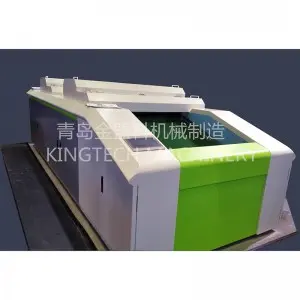
Textile To Textile Recycling machines are specialized industrial systems designed to process textile waste and regenerate it into usable fibers or intermediate materials. These machines play a critical role in building a closed-loop production system.
Unlike basic waste processing equipment, advanced textile recycling machines are engineered to maintain fiber integrity and ensure consistent output quality for further spinning or nonwoven production.
Core functions of recycling machines:
● Fiber opening and shredding of textile waste
● Removal of impurities such as buttons, zippers, and dust
● Fiber separation and blending for uniform output
● Reprocessing into spinnable fibers or filling materials
● Integration with downstream spinning or nonwoven lines
Types of Textile To Textile Recycling Machines
Different textile waste compositions require different machine configurations. Understanding machine types helps buyers choose suitable solutions based on material and production goals.
Common machine categories include:
● Mechanical recycling machines:
Used for cotton, denim, wool, and other natural fibers. These systems include tearing machines, opening machines, and carding units.
● Chemical recycling systems:
Advanced setups that depolymerize synthetic fibers such as polyester into raw materials for re-spinning.
● Fiber regeneration lines:
Integrated systems combining multiple stages (cutting, opening, cleaning, carding) to produce high-quality recycled fibers.
● Nonwoven recycling machines:
Designed to convert textile waste into nonwoven fabrics for industrial applications.
● Automated sorting systems:
AI-enabled machines that identify and separate textiles by fiber type and color, improving recycling efficiency.
Key Technical Advantages for B2B Manufacturers
Modern Textile To Textile Recycling machines are designed with efficiency, precision, and scalability in mind. For manufacturers, these machines directly impact production cost and output quality.
Key advantages include:
● High processing capacity for industrial-scale operations
● Consistent fiber length and quality control
● Reduced labor requirements through automation
● Energy-efficient operation for lower production costs
● Flexible processing of various textile waste types
By integrating these machines into production lines, companies can significantly reduce reliance on virgin materials while maintaining product performance.
Applications Across Industrial Sectors
Recycling machines enable the production of recycled fibers that can be used across a wide range of industries, extending far beyond traditional apparel manufacturing.
Major application areas:
● Yarn production for garments and textiles
● Nonwoven materials for automotive and construction
● Filling materials for furniture and insulation
● Geotextiles and industrial fabrics
● Recycled fiber blends for sustainable product lines
This versatility makes textile recycling machinery a valuable investment for companies aiming to diversify their product offerings.
Challenges in Operating Textile Recycling Machines
While the benefits are clear, implementing Textile To Textile Recycling machines comes with certain operational challenges that businesses need to address.
Key challenges include:
● Handling mixed or blended fabrics efficiently
● Maintaining fiber strength after multiple recycling cycles
● Managing dust and waste generated during processing
● Initial investment costs for advanced systems
● Technical expertise required for operation and maintenance
Proper machine selection, operator training, and process optimization are essential to overcoming these challenges.
Future Trends in Textile Recycling Machinery
The evolution of Textile To Textile Recycling machines is driven by technological innovation and market demand for sustainable solutions.
Emerging trends include:
● Smart automation with AI-based sorting and monitoring
● Integration with digital manufacturing systems
● Development of low-damage fiber processing technologies
● Compact modular recycling units for flexible deployment
● Increased compatibility with blended and synthetic fibers
These advancements are making textile recycling more efficient, scalable, and commercially viable for B2B enterprises.
Conclusion
Textile To Textile Recycling machines are a cornerstone of the circular textile economy, enabling manufacturers to transform waste into valuable raw materials. For B2B businesses, these machines represent not just an environmental solution, but a strategic investment in efficiency, cost reduction, and long-term competitiveness.
As global demand for sustainable textiles continues to grow, companies that adopt advanced recycling machinery will be better positioned to lead the next generation of textile manufacturing.
FAQ
1. What types of textiles can recycling machines process?
Most machines can handle cotton, polyester, wool, and blends, though processing efficiency depends on machine type and configuration.
2. Are Textile To Textile Recycling machines suitable for large-scale production?
Yes, modern systems are designed for industrial-scale processing with high throughput and automation.
3. How do these machines affect fiber quality?
Advanced machines are engineered to minimize fiber damage, though mechanical recycling may slightly reduce fiber length compared to virgin materials.
4. Is it difficult to integrate recycling machines into existing production lines?
With proper planning and system design, these machines can be integrated into existing workflows, especially in spinning and nonwoven production lines.
Post time: Mar-26-2026