




An Opening Carding System is used to process textile waste into cleaner, looser, and more uniform recycled fiber. In textile recycling, opening alone is not always enough. Some materials can be torn and loosened by an opener, but the output fiber may still contain small clumps, uneven fiber layers, unopened pieces, or mixed fiber density. When factories need better recycled fiber quality, a system that combines opening and carding becomes more suitable.
This type of system is especially useful for materials such as spunlace fabric, air-through cloth, wool fabric, aramid fabric, cotton yarn waste, polyester yarn waste, hemp, jute, and waste yarn. By opening the material first and then carding the fiber, the system can improve fiber separation, uniformity, and usability for the next production process.
Why Recycled Fiber Needs More Than Basic Opening
Basic opening is an important step in textile waste recycling. It helps tear waste fabric, yarn waste, or fiber scraps into a looser state. However, many recycled materials are not easy to process evenly. Some are bonded, some are twisted, some are thick, and some contain tangled fiber groups.
If the material is only opened once, several problems may appear:
- Fiber output may not be uniform.
- Small unopened pieces may remain.
- Fiber clumps may affect later processing.
- The material may not feed smoothly into the next machine.
- Recycled fiber may be too uneven for higher-value applications.
For lower-grade filling materials, simple opening may be enough. But for nonwoven production, needle punching, air-lay processes, or spinning preparation, recycled fiber usually needs better consistency. This is where an opening carding system becomes more valuable.
What Is an Opening Carding System?
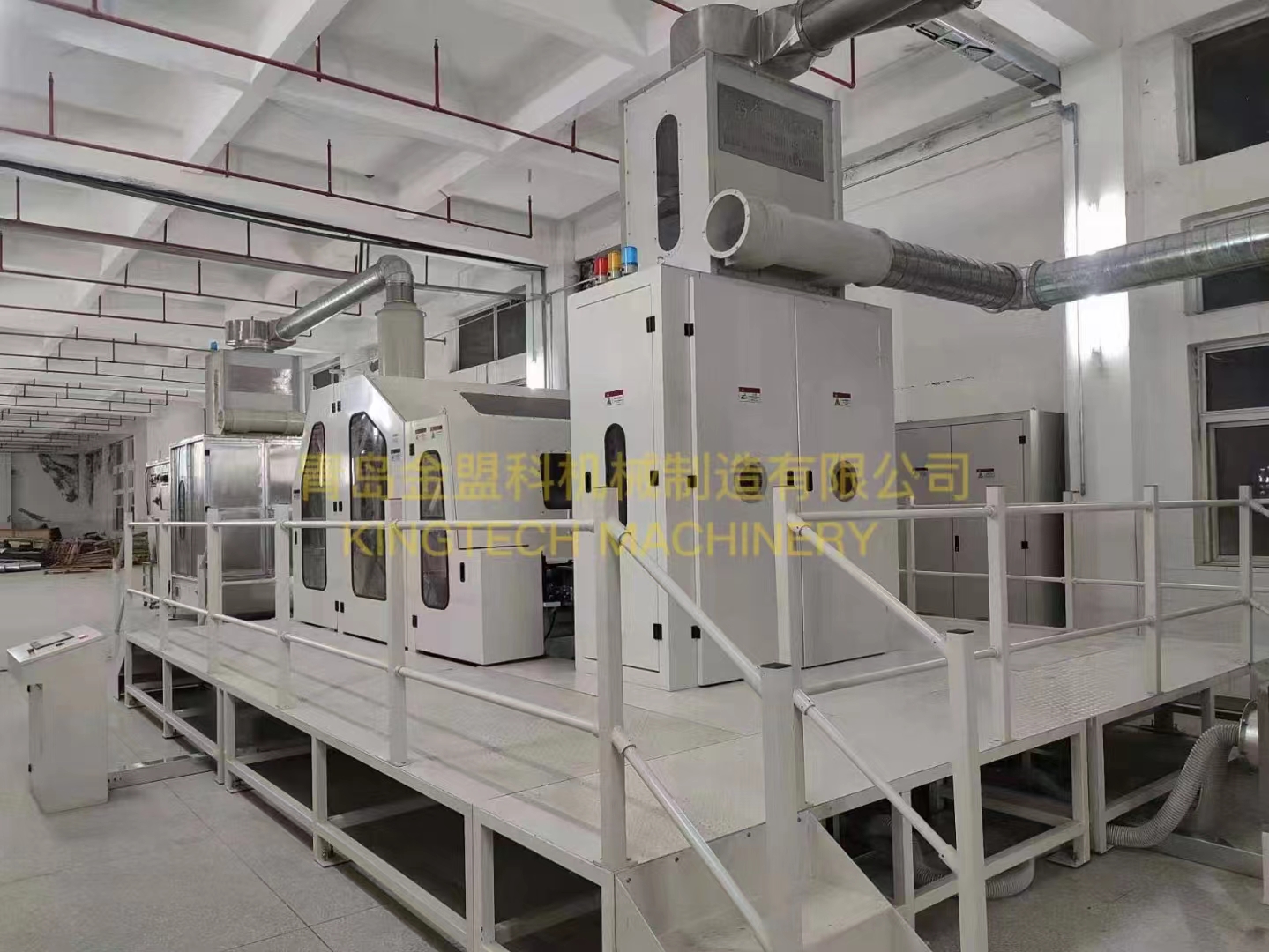
An Opening Carding System is a recycling system that combines opener equipment and carding equipment. The opener is responsible for tearing, loosening, and reducing the compact structure of textile waste. The carding machine then further separates, straightens, and arranges the fibers, helping produce a more even fiber web or fiber output.
The system may be configured with different combinations according to material condition, such as:
- One opener with one carding machine
- Two openers with one carding machine
- Three openers with one or two carding machines
- Additional feeding, conveying, dust removal, or collection equipment
The purpose of the system is not only to break down textile waste, but to improve the quality of the recovered fiber so it can be reused more effectively.
Suitable Materials for Opening and Carding
Different textile waste materials require different recycling processes. An opening carding system is suitable for materials that need more careful fiber separation or higher output quality.
Common suitable materials include:
- Spunlace fabric waste
- Air-through cloth
- Wool fabric
- Aramid fabric
- Kevlar fabric
- Cotton yarn waste
- Polyester yarn waste
- Hemp and jute fiber waste
- Waste yarn
- Soft textile scraps
- Certain nonwoven production waste
These materials often need more than rough tearing. For example, yarn waste may be tangled, wool fabric may need gentle fiber recovery, and aramid or Kevlar materials may require stronger and more controlled opening. A carding stage helps make the output fiber more usable.
How the System Works
The working process of an opening carding system follows a gradual fiber recovery logic. Instead of forcing the material through one heavy process, the system treats the textile waste step by step.
A typical process includes:
- Sorting or preparing the textile waste
- Feeding material into the opener
- Opening and loosening the compact fabric or yarn structure
- Sending the opened material to the carding machine
- Further separating and arranging the fibers
- Removing some dust or short impurities if equipped with a dust system
- Collecting more uniform recycled fiber for reuse
The opener reduces the material into a loose fiber state, while the carding machine improves fiber distribution. This combination helps reduce clumps and creates a more consistent material output.
Difference Between Opening Only and Opening Carding
Factories sometimes wonder whether they need only an opener or a complete opening carding system. The answer depends on the material and the final use of the recycled fiber.
An opener is suitable when the goal is basic fiber loosening. It is often used for fabric waste, rags, cotton waste, and other materials where the output does not need to be highly uniform.
An opening carding system is more suitable when the factory needs:
- Finer recycled fiber
- More uniform fiber output
- Better fiber separation
- Less fiber clumping
- Better preparation for nonwoven production
- More stable feeding into the next process
For factories that want to improve recycled fiber value, carding is an important step. It can help turn rough opened material into fiber that is easier to use in higher-quality applications.
Benefits of Using an Opening Carding System
An opening carding system brings practical advantages to recycling factories and textile manufacturers that need better fiber preparation.
Main benefits include:
- More uniform recycled fiber
The carding process helps separate and arrange fibers, making the final output more consistent than simple opening.
- Better usability for next processes
More uniform fiber is easier to use in nonwoven production, needle punching, filling, and other fiber-based applications.
- Reduced fiber clumps
Carding helps reduce unopened pieces and fiber balls, improving the stability of downstream processing.
- Improved material value
Better recycled fiber quality may allow the material to be used in more valuable applications instead of only low-grade reuse.
- Flexible system configuration
The system can be designed with different opener and carding machine combinations according to the material and production target.
Applications of Recycled Fiber
The fiber produced by an opening carding system can be used in many industries. The final application depends on raw material type, fiber condition, and product requirements.
Common applications include:
- Nonwoven fabric production
- Needle-punched felt
- Air-lay recycling lines
- Filling material
- Furniture padding
- Automotive textile layers
- Filtration media
- Insulation material
- Spinning preparation in suitable cases
- Industrial fiber products
When recycled fiber becomes more uniform, factories have more options for reuse. This helps improve both production efficiency and material value.
How to Choose the Right Opening Carding System
Before selecting an opening carding system, factories should understand their waste material and required output. Different materials need different machine configurations.
Important points include:
- Type of waste material
- Fiber length and strength
- Fabric thickness and bonding method
- Whether the material is yarn waste, fabric waste, or nonwoven waste
- Required fiber uniformity
- Production capacity target
- Working width requirement
- Need for dust removal
- Workshop space and layout
- Future reuse application
For soft and easy-to-open materials, one opener and one carding machine may be enough. For tangled yarn waste, thick textile scraps, or harder technical fabrics, two or more openers may be needed before carding. If the final fiber quality requirement is higher, the system should be configured more carefully.
About Kingtech Machinery
Kingtech Machinery provides textile waste recycling equipment for different material conditions and production needs. Its product range includes Edge Trim Opener, Combined Opener System, Opening-Carding System, Cutting Machine, Cotton Waste Recycling Line, laboratory recycling test lines, needle punching lines, blowers, metallic card clothing, and related accessories. For applications that require more uniform recycled fiber, the Opening-Carding System is a suitable choice, while other machines can be added before or after it according to material size, thickness, cleanliness, and final reuse purpose.
Conclusion
An Opening Carding System is a practical solution for factories that need better recycled fiber quality from textile waste. Compared with simple opening, it adds a carding stage to further separate and arrange the fibers, helping produce longer, finer, and more uniform recycled fiber.
For materials such as spunlace fabric, air-through cloth, wool fabric, aramid fabric, cotton yarn waste, polyester yarn waste, hemp, jute, and waste yarn, opening and carding can improve the stability and value of the recycling process. With the right system configuration, textile waste can be turned into more usable fiber for nonwoven production, needle punching, filling, filtration, insulation, and other applications.
FAQ
1. What is an Opening Carding System used for?
An Opening Carding System is used to open textile waste and further card the fibers, producing more uniform recycled fiber for reuse in nonwoven production, filling, needle punching, and other applications.
2. What is the difference between an opener and a carding machine?
An opener mainly tears and loosens textile waste, while a carding machine further separates, straightens, and arranges the fibers to improve output uniformity.
3. What materials can be processed by an Opening Carding System?
It can process spunlace fabric, air-through cloth, wool fabric, aramid fabric, Kevlar fabric, cotton yarn waste, polyester yarn waste, hemp, jute, waste yarn, and suitable textile scraps.
4. When should a factory choose an Opening Carding System?
A factory should choose an Opening Carding System when simple opening cannot provide enough fiber uniformity, or when the recycled fiber needs to be used in higher-quality nonwoven, needle-punched, filling, or fiber-based applications.
Post time: Jul-07-2026