




With the continuous development of the textile manufacturing and recycling industry, the efficiency of fabric waste processing directly affects production costs and resource utilization. A small fabric shredder, as a compact yet stable piece of equipment, can efficiently process various textile wastes within limited space, providing an ideal pre-treatment solution for recycling and reuse. For enterprises dealing with fabric scraps, used garments, and light industrial textiles, this type of equipment not only enhances production flexibility but also significantly optimizes overall workflow.
Definition and Functional Characteristics of Small Fabric Shredder
A small fabric shredder is a machine specifically designed for textile materials, whose primary function is to cut and tear soft or lightweight fabrics into smaller and more uniform pieces, making them suitable for further processing or recycling. Compared with large industrial shredders, small fabric shredders emphasize compact structure, convenient operation, and adaptability to multiple application scenarios while maintaining essential processing capacity.
Main functions include:
● Continuously shredding fabric waste into smaller sizes, making storage, transportation, and downstream processing more efficient
● Standardizing material size across different textile types, improving feeding stability and overall production efficiency
● Reducing manual cutting operations through mechanical processing, thereby lowering labor intensity and increasing productivity
● Providing stable raw material preparation for textile recycling, fiber regeneration, and nonwoven production
● Maintaining consistent output during operation, ensuring smooth material flow
Working Principle of Small Fabric Shredder
The machine operates by using rotating shafts and blades to cut and tear fabrics. During processing, textile materials are gradually broken down into smaller pieces under mechanical force until the desired size is achieved. Due to the flexible and entangled nature of textiles, the machine design typically optimizes blade structure and rotational speed to ensure continuous and stable shredding performance.
Typical working process includes:
● Feeding fabric waste evenly into the shredding chamber to ensure continuous processing
● Rotating shafts and blades cut and tear the material into smaller fragments
● Repeated cutting and tearing gradually reduce material size to the required level
● Processed fabric pieces are discharged through the output system for further use
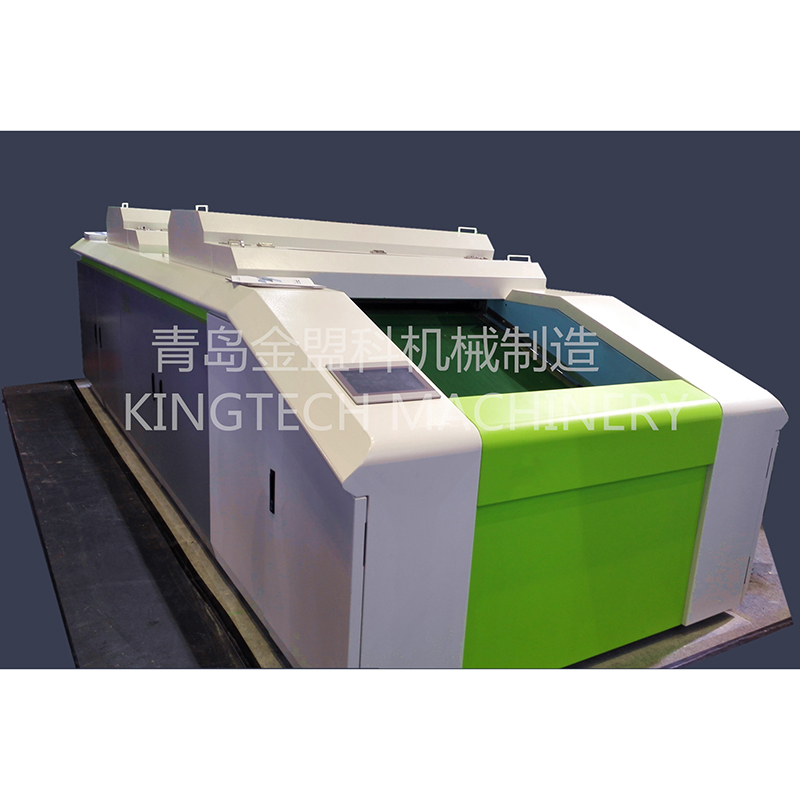
Structural and Performance Features
In practical applications, a small fabric shredder must balance stability, durability, and efficiency. Therefore, its structure is optimized for long-term operation under industrial conditions.
Main features include:
● Compact structure that allows flexible installation in limited spaces
● Wear-resistant blades that ensure long service life and reduced replacement frequency
● Stable power system that maintains shredding efficiency while minimizing vibration
● Continuous feeding and discharge system for uninterrupted operation
● Simple operation that reduces dependence on highly skilled labor
● Easy maintenance design that supports routine inspection and prolongs equipment lifespan
Applicable Material Range
Due to the diversity of textile materials, small fabric shredders are designed with strong adaptability to handle different fabric types while maintaining stable performance for soft and medium-thickness materials.
Common materials include:
● Cotton fabrics and production scraps, which are soft and easy to shred
● Polyester and synthetic textiles that can be effectively processed through mechanical shredding
● Blended fabrics that can be uniformly shredded with proper blade configuration
● Garment production waste suitable for continuous processing
● Light industrial textile materials that can be handled within appropriate power ranges
Application Scenarios
In industrial practice, small fabric shredders are commonly used as pre-processing equipment in various sectors, offering flexibility and efficiency for different production scales.
Main applications include:
● Garment manufacturing plants for centralized processing of fabric scraps to reduce waste accumulation and improve utilization
● Textile recycling workshops for initial shredding of used garments and waste fabrics before fiber regeneration
● Nonwoven production lines where materials are prepared into suitable sizes for further processing
● Industrial wiping cloth production using recycled textile materials
● Small-scale processing enterprises requiring flexible production capabilities
Operational Value of Small Fabric Shredder
In the current context of circular economy and efficiency improvement, a small fabric shredder is more than a simple shredding device. It plays an important role in optimizing production processes and improving resource utilization. By providing stable size reduction, it enhances material flow and ensures consistent input for downstream processes, thereby contributing to overall production efficiency.
Key values include:
● Reducing fabric volume to improve storage and transportation efficiency while lowering operational costs
● Enhancing downstream processing efficiency and ensuring smoother production flow
● Minimizing manual labor involvement and increasing automation levels
● Improving raw material condition for more stable recycling processes
● Supporting environmentally friendly and sustainable production practices
Conclusion
A small fabric shredder, with its compact design, flexible operation, and stable processing performance, plays an important role in textile waste processing and recycling. By effectively reducing the size of various fabric materials, it provides a reliable foundation for further processing while helping enterprises improve efficiency and achieve better resource utilization.
FAQ
1. What production scale is a small fabric shredder suitable for?
It is suitable for small to medium-scale production environments and for businesses that require flexible textile waste processing within limited space.
2. Can it process different types of textile materials?
It can process cotton, polyester, blended fabrics, and light industrial textiles with stable performance.
3. What can shredded fabric be used for?
Processed fabric can be used for fiber recycling, nonwoven production, filling materials, and industrial wiping cloths.
4. Is the machine stable during operation?
With proper structural design and blade configuration, the machine can operate continuously and maintain stable output for industrial use.
Post time: Apr-21-2026